The IFBB introduces a new mandatory pose for Men’s Physique competitors starting in 2027, emphasizing back muscles and generating positive feedback from fans.
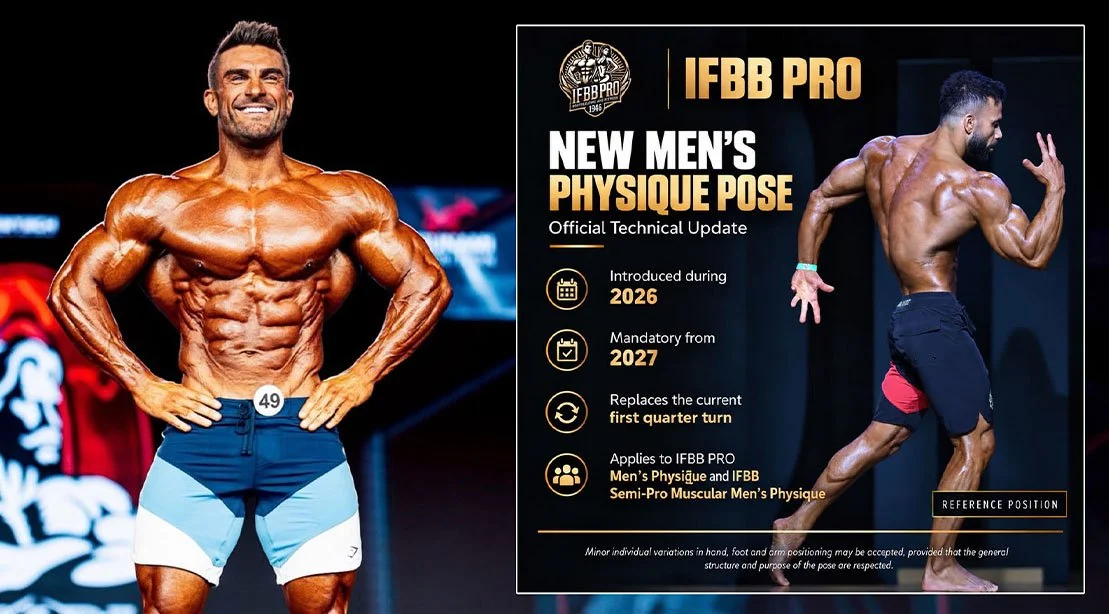
The Men’s Physique division is entering an exciting phase, especially following Ryan Terry's recent victory at the 2026 Olympia, where he clinched his fourth title. In a significant shift, the IFBB has announced that from 2027, competitors will be required to adopt a new mandatory pose.
On October 8, the IFBB shared an update via their official Instagram, stating, “Important: changes to the rules for the IFBB Pro (and Semipro) Men’s Physique poses.” This update indicates that while the new pose will start becoming familiar this year, it officially enters the competition guidelines next year.
Previous Posing Structure
Until now, athletes had to perform five specific poses during competitions. These included:
- Front Pose
- Back Pose
- Quarter Turns (for transitioning between front and back poses)
- Model Stance / Relaxed Pose
- Individual Presentation
This existing structure had been in place for some time, shaping the way competitors trained and presented themselves. Competitors would spend countless hours perfecting these poses, as each one was critical for showcasing specific muscle groups and overall symmetry. The Front Pose, for instance, highlighted the chest and biceps, while the Back Pose accentuated the rear deltoids and lats. Each pose wasn't just a formality; it was a competition in itself, with judges scrutinizing every angle. If you're working in this space, you know the stakes — a single misrepresentation could mean the difference between winning and losing.
Introducing the New Pose
The new mandatory pose, although not formally named by the IFBB, resembles a rear three-quarter turn. Athletes will face the judges with their backs slightly turned, showcasing key muscle groups. One arm will rest downward with fingers spread, while the other bends upward. This striking stance not only enhances the appearance of the latissimus dorsi but also highlights the rear deltoids and triceps, creating an elongated and dynamic form.
This move seems corrective. The existing positions had stagnated, and by introducing a fresh angle, the IFBB is likely attempting to re-energize the competition. It signals a shift that could attract new participants and fans alike. Replacing the initial quarter turn, this change will require competitors to invest additional practice time. Yet the adjustment has garnered positive reactions online. “I like that,” one user commented on Instagram, praising the new pose for better displaying muscle definition. Another user expressed admiration for the shift: “An interesting change. Great to see posing getting more attention.”
Will you adapt? The response from the community suggests that many athletes are open to innovation, especially if it benefits the sport's visual appeal. (and this is the part most people overlook) This mindset could foster a culture of continuous improvement and creativity, potentially standardizing higher expectations within the industry.
To follow the IFBB on Instagram, click here.
Implications and Future Outlook
This new direction raises questions about the future of posing in the Men’s Physique division. On one hand, it could refresh the competitive environment, prompting existing athletes to enhance their routines and drawing in newcomers eager to showcase their skills in a new light. On the other hand, it may alienate those accustomed to the previous structure, particularly if they don't adapt quickly.
There's already chatter among professionals. Some perceive this as a chance to showcase their muscles better, while others worry about the time investment required for mastering the new stance. This could lead to a divide in the community; more open-minded competitors may thrive, while traditionalists might struggle to keep up. As we watch the dynamics unfold, it poses an intriguing challenge for the IFBB and its competitors. Will they embrace this evolution, or will it become a point of contention?
Ultimately, what we’re seeing here is more than a change in rules; it’s a statement. The IFBB appears ready to prioritize aesthetics in a way that reflects the evolving tastes of spectators and judges. If the changes resonate well, expect to see even more adjustments down the line as the body of competitive posing continues to shape itself in response to audience engagement and athlete performance.


Discussion
Sign in to join the discussion.