Taylor Knibb turned last year’s Kona heartbreak into an 8:36:29 victory as defending champion Solveig Løvseth faltered late. Vincent Luis won the men’s race.
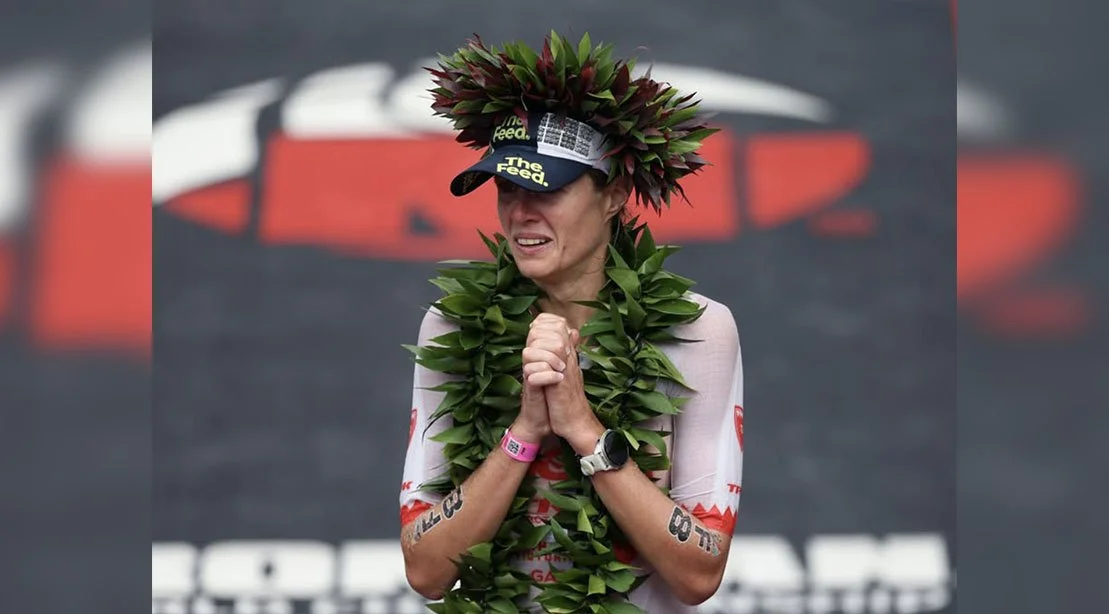
A championship decided in the closing miles
Kona’s 2026 Ironman World Championship came down to a hard fact about endurance racing: a lead built over hours can disappear in the final mile. Taylor Knibb won the women’s title in 8:36:29 after defending champion Solveig Løvseth passed her with about five miles remaining, then staggered and fell near the finish. Løvseth got back up and finished eighth. Laura Philipp of Germany took second, followed by Switzerland’s Julie Derron.
The result was decided by a dramatic reversal, but the more useful lesson is less tidy. A late pass can change the race in seconds, while the reasons an athlete can no longer respond may have accumulated over the swim, bike and run. The finishing order records who crossed the line first; it can’t explain what happened inside either athlete’s body.
A reversal of last year’s finish
The result echoed the 2025 championship, when Knibb was leading late in the marathon, faltered, and watched Løvseth pass her for the win. Knibb didn’t finish that race. Twelve months later, the roles had flipped: the athlete who had been unable to complete the course claimed the title, while the previous year’s winner struggled to the line. The parallel is striking, and it gives the result an emotional shape that a conventional race recap rarely gets.
That symmetry makes for a compelling story, but it doesn’t explain the race. Knibb had already won the 2026 Ironman 70.3 World Championship, and Løvseth arrived as the defending Kona champion. Both had the credentials to win. Yet success at another championship, or even a title on this same course, can’t settle the question of who has enough left when the marathon reaches its final miles.
At this distance, position is temporary. Athletes have to manage effort across a 2.4-mile swim, a 112-mile bike ride and a marathon, and choices made early can shape what remains late in the day. A visible lead can conceal fatigue; a runner who appears to be closing may also be near the edge of what they can sustain. The clock shows the gap, but it doesn’t show the cost of holding it.
There’s no confirmed diagnosis in the available account of why Løvseth went down. Heat, hydration, fueling and cumulative exertion are among the factors people may consider in a race like Kona, but a video of an athlete staggering can’t establish a cause. A collapse during exertion can be a medical emergency; treating it as a simple test of willpower misses the point.
Vincent Luis wins on his Kona debut
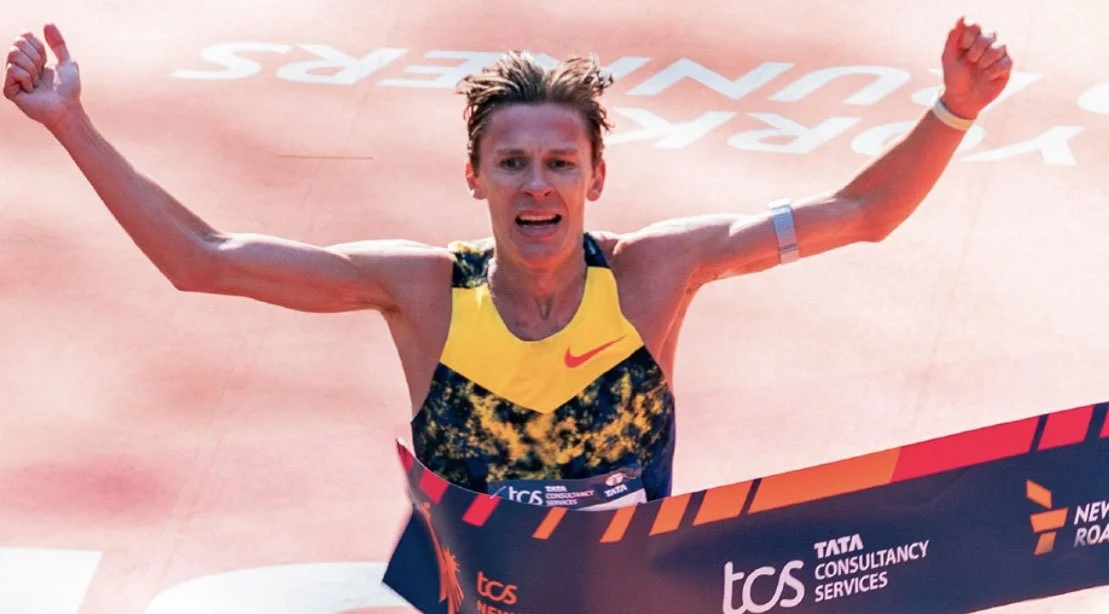
The men’s title also changed hands late. France’s Vincent Luis, 37, won in 7:47:27 on his first appearance at the Kona world championship. An Olympic competitor and world champion at shorter triathlon distances, Luis had spoken about retiring. His debut therefore carried a question beyond whether he could handle the course: could a career built around shorter events translate to the demands of a full-distance championship?
In Hawaii, Luis passed Denmark’s Magnus Ditlev during the marathon and finished roughly a minute and a half ahead of former champion Gustav Iden. American Matthew Marquardt placed third. The pass matters because it came after the swim and bike had already exacted their cost. Luis still had to run well enough to turn a late move into a winning margin, and the narrow gap to Iden shows how little separated the top of the field.
A first appearance can make a victory look like an instant arrival, but the result only establishes what Luis did on this course on this day. His standing in shorter triathlon events provided a meaningful background to the win; it couldn’t guarantee that he’d manage the longer race successfully. The performance answered that immediate question, while leaving future starts and choices open.
What the late changes reveal
Kona hosted the men’s and women’s professional championships together for the first time since 2019. Both races produced late shifts in the lead, underlining how little a strong position earlier in the day guarantees at the finish. Preparation matters across all 140.6 miles, but even careful planning can’t promise that an athlete’s body will hold up through the final stretch.
This is more significant than it looks: the late drama wasn’t simply a matter of one athlete chasing another. A race can change because one competitor finds another gear, because a leader fades, or because both things happen together. The result alone doesn’t tell observers which explanation fits, and a responsible account has to leave room for that uncertainty.
If you’re working in this space, the useful distinction is between describing what the race showed and claiming to know why it happened. Results, splits and visible events can tell a clear story about position and outcome. They can’t, by themselves, diagnose distress or reveal how an athlete felt in the moment (and this is the part most people overlook).
That said, the finish remains the measure that counts in the standings. It’s also a point where performance and welfare meet: when an athlete appears in serious distress, attention to their condition matters more than turning the moment into a neat sporting metaphor. The race is decided at the line. The human situation may call for a different response.
And yet, Kona’s closing miles are compelling precisely because they resist an easy script. A former champion can be passed; a prior collapse can be followed by a title; a first-time competitor can win. For the athletes, the final miles are the bill for every decision that came before. For everyone watching, a lead is only a lead until the finish.
Not a guarantee.


Discussion
Sign in to join the discussion.