Glute Training Guide: Exercises for Strength, Stability, and Power
Written Nov 03, 2026Audience 469Author vkim
Train all three glute muscles with varied exercises that load the hips through different positions to build strength, power, and stability.
Strong glutes need more than one kind of exercise
The glutes do much more than shape your backside. They help you sprint, squat, balance on one leg, and generate power in sports and everyday movement. That makes a training plan built around hip thrusts alone an incomplete one.
The gluteus maximus gets most of the attention, but the medius and minimus help stabilize the pelvis and control the hip. Train all three, and include movements that load the glutes when they’re stretched as well as when they’re near full hip extension. The squat-versus-hip-thrust debate misses the point: both can be useful, and neither covers every job the glutes perform.
This guide covers glute anatomy, why these muscles matter, training methods, programming, common mistakes and myths, and two sample workouts.
Each glute muscle contributes differently to hip movement and stability. Knowing those roles can help you choose exercises that do more than chase a burn.
Gluteus maximus
The largest and most visible glute muscle, the glute max gives the backside much of its size and shape. Its main jobs are hip extension and external rotation. Depending on hip position, its lower fibers can also assist with adduction, while its upper fibers help abduct the hip.
Gluteus medius
The medius sits on the outer pelvis, partly beneath the glute max. It abducts the hip and helps keep the pelvis stable. Its fibers have different roles: the front fibers assist with internal rotation, while the rear fibers can help with external rotation.
Gluteus minimus
The smallest and deepest glute muscle lies beneath the medius. It assists with hip abduction and internal rotation, helps control the femur in the hip joint, and works with the medius to steady the pelvis when one foot is off the ground.
Your hip structure affects exercise choice
The hip is a ball-and-socket joint. It can flex, extend, abduct, adduct, and rotate, but the joint’s structure varies between people. Socket depth and orientation, the angle of the femoral neck, and how far the femur turns forward or backward can all differ.
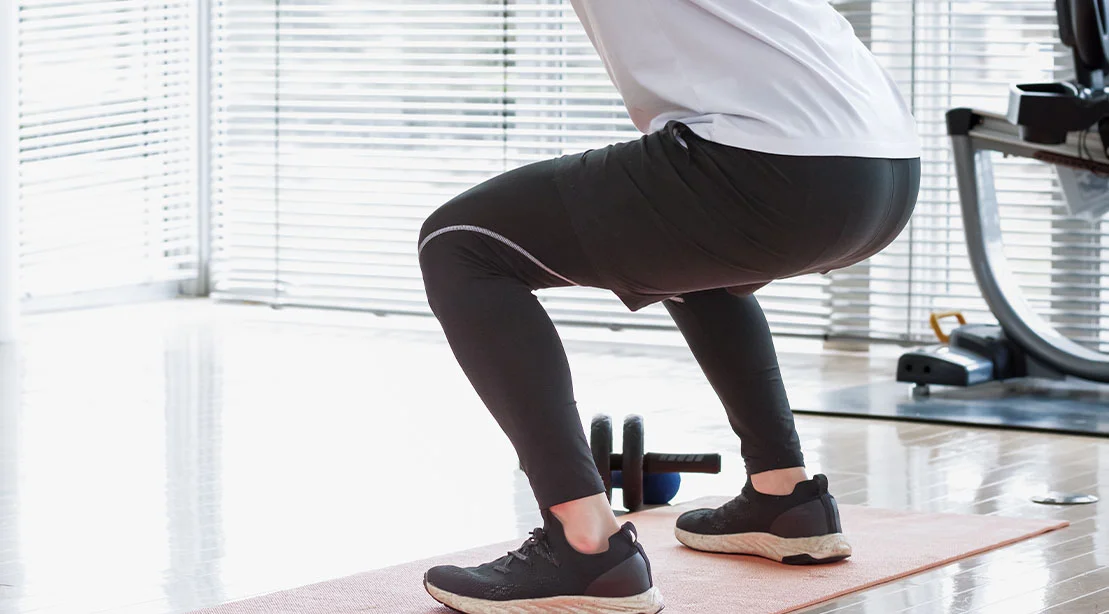
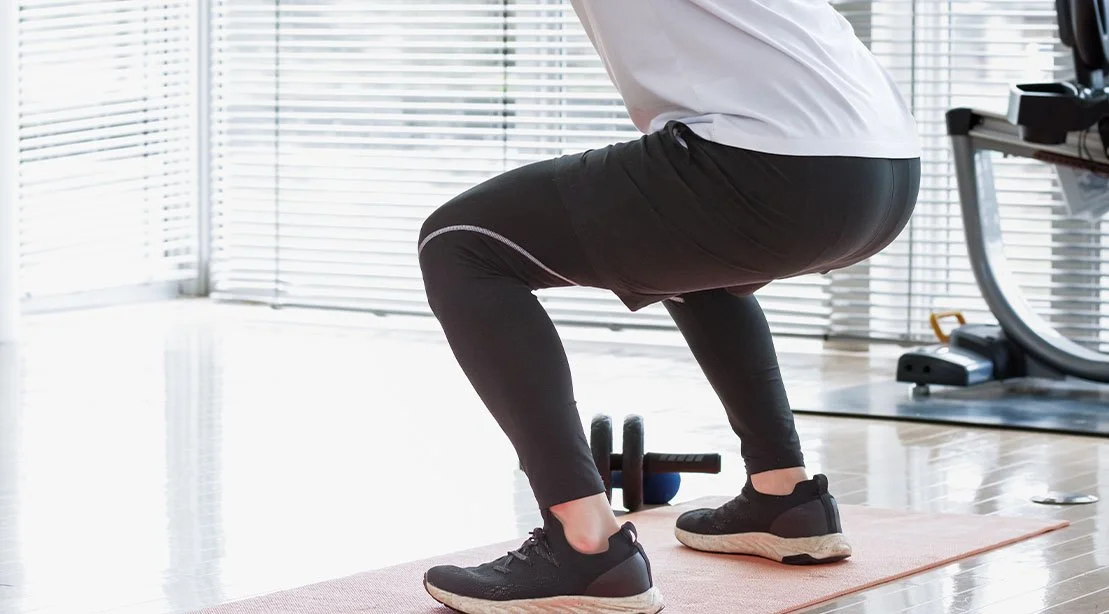
That’s one reason there isn’t a single squat stance that works for everyone. Your anatomy, mobility, strength, and limb length all play a part. Some people are comfortable squatting with a narrow stance and toes forward; others do better with a wider stance and toes turned out. Adjust your stance, foot position, and range of motion until you find a position that feels workable and lets you load the glutes.
Why strong glutes matter
Your glutes are among your body’s most powerful muscles. Their value isn’t limited to how your clothes fit.
Strength and power
The glutes help produce force for squatting, sprinting, and daily tasks. Stronger muscles can produce more force, particularly when strength work is paired with power training.
Stability
Walking, running, climbing stairs, and single-leg RDLs all ask the smaller glute muscles to help control lower-body position. Poor control can show up as wobbling during single-leg movements or a knee that caves inward during squats and deadlifts.
Joint health
The hips, knees, and lower back work together, so trouble in one area can make another pick up the slack. Weak medius and minimus muscles can contribute to knee valgus, which places unwanted stress on knee ligaments. Limited hip mobility or weak hip extension can also shift work to the lower back. Glute strength and hip mobility help support better movement across these joints.
Athletic performance
The glute max drives hip extension during a sprint. When you land, cut, or change direction, all three glute muscles help control the pelvis and hip as your body absorbs and redirects force. They also contribute to rotation in movements such as swinging a bat, throwing a punch, or swinging a golf club, linking force from the lower body to the upper body.
Train the glutes at different lengths and in different directions
A solid glute program combines heavy hip extension with exercises that train other functions. The useful question isn’t which single exercise wins; it’s whether your routine covers enough of the work.
Heavy hip extension
Squats, Romanian deadlifts, and barbell hip thrusts let the glutes work alongside the quads, hamstrings, and adductors. They’re a strong base for building strength and muscle, though the glutes aren’t isolated in these lifts.
Loading the glutes while they’re lengthened
Deep squats, front-foot-elevated split squats, and deficit reverse lunges load the glutes with the hips flexed. A controlled lowering phase helps you manage that stretch.
Loading the glutes while they’re shortened
Hip thrusts, glute bridges, and cable kickbacks emphasize hip extension near its end range, when the glutes are more shortened. These exercises tend to use a smaller range of motion than lengthened-position movements. Both approaches can contribute to development.
Hip abduction and rotation
Hip-abduction machines, lateral band walks, and side-lying hip raises train the medius, minimus, and upper fibers of the glute max. They can help build hip stability.
For rotation, try seated band internal rotations, cable external rotations, or seated 90/90 rotations. These move the thigh within the hip joint while asking you to keep the pelvis and lower back still.
Single-leg work
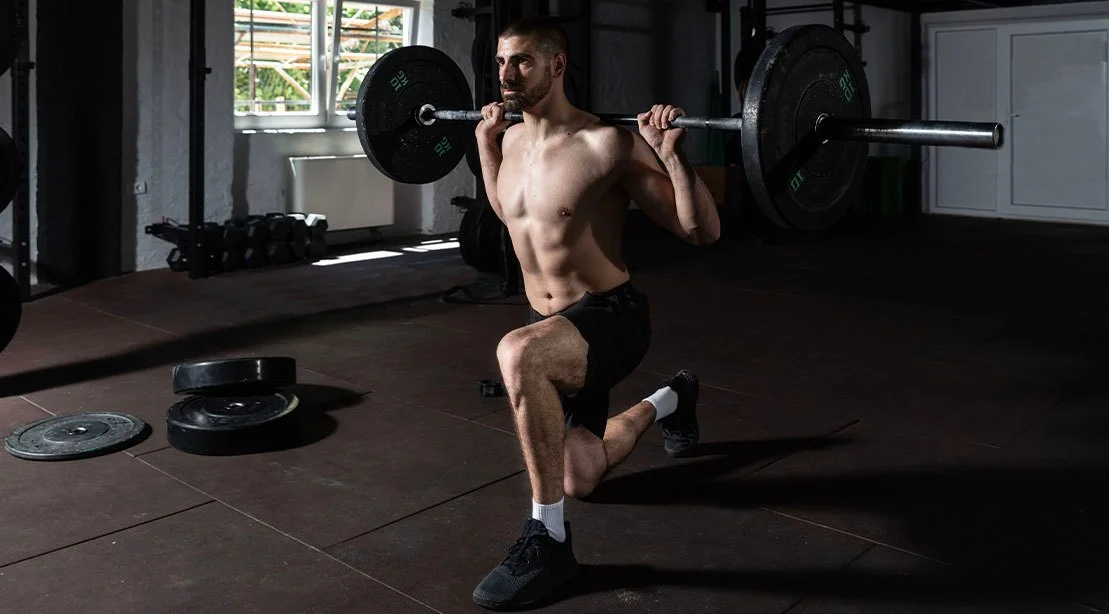
Bulgarian split squats, single-leg RDLs, and step-ups train one leg at a time. They challenge the glutes to produce force while controlling the pelvis, and they can improve balance while exposing differences between sides.
Build a balanced program
You don’t need 15 exercises. You do need a mix that trains the glutes’ different roles without turning every leg session into a marathon.
Start with bilateral and unilateral compound lifts, which let you train hard with other lower-body muscles contributing. But don’t assume that lifting more total weight automatically means your glutes are doing more. Squat depth, torso angle, hip position, and technique all affect how much work they perform.
Then include exercises that load the glutes at both longer and shorter muscle lengths. RDLs, full-range squats, and front-foot-elevated split squats emphasize the lengthened position; hip thrusts, bridges, and kickbacks emphasize hip extension closer to lockout. Use a controllable range of motion and add load when your technique allows. The argument over squats and thrusts won’t build muscle. Consistent training will.
Compound lifts involve the medius and minimus, but direct abduction work gives those smaller muscles more attention. For athletic carryover, add explosive movements such as broad jumps, sled pushes, hill sprints, or lateral bounds. These train the glutes at speed and challenge the fast-twitch fibers used for powerful movement.
Hip mobility also sets the range in which you can work. Half-kneeling hip-flexor stretches with a posterior pelvic tilt, adductor rockbacks, 90/90 rotations, and prying squats can help prepare your hips for training.
Choose reps for the job
Balance heavy lifting, muscle-building sets, stability work, and recovery. These rep ranges are useful starting points:
Strength: 3–5 reps
Use challenging loads for bilateral or unilateral compound lifts. Keep your technique and range of motion, rest two to three minutes or longer between sets, and add weight without letting form slip.
Muscle growth: 6–15 reps
Use compound lower-body exercises that cover both lengthened and shortened positions. Control the lowering phase, use a full range of motion, and work close to technical failure. Muscle can grow across a wider range of reps, but this range balances load, effort, and fatigue.
Power: 3–6 reps
Do power exercises early in the session, when you’re fresh. Focus on speed and good movement quality, resting two minutes or longer when needed to keep each effort explosive.
Medius and minimus development: 15–20 reps
For hip-abduction machines, cable abductions, and side-lying variations, use controlled reps without momentum and gradually increase the load.
Single-leg stability: 6–12 reps per side
Single-leg RDLs, step-ups, and Bulgarian split squats build strength while challenging balance. Increase the difficulty as your strength and control improve.
琢也 栂/Adobe Stock
Set weekly volume and frequency
Count your glute-focused work across the week, and treat these set totals as guidelines rather than fixed rules.
Focus
Beginner
Intermediate
Advanced
Strength
2
4
5
Muscle/Single-leg stability
4
6
7
Hip Abduction
2
2
2
Power
2
2
4
Total Weekly Sets
10
14
18
Some lifts train more than one quality. A Bulgarian split squat can build strength, muscle, and stability, but don’t count the same set in every category. For this table, assign it to its main programming purpose: muscle and stability.
Two to three weekly sessions are a reasonable starting point for most lifters. Beginners can divide their work across two sessions; intermediate lifters can use two or three. Experienced lifters who prioritize glute development may find that three sessions help maintain training quality.
Common mistakes that limit glute training
Relying only on hip thrusts and bridges
Both are useful shortened-position exercises, but they leave out lengthened-position loading, abduction, and stability work if they’re all you do. Pair them with RDLs, squats, split squats, and direct abduction exercises.
Skipping lengthened-position work
A hard squeeze at lockout isn’t the only route to muscle growth. RDLs, deep squats, and front-foot-elevated split squats challenge the glutes at longer lengths. Include at least one movement that loads them with greater hip flexion.
Finishing the rep with your lower back
Some lifters arch their lower back to get an extra squeeze or range of motion in a hip thrust, deadlift, or RDL. That shifts movement away from the hips. Keep your ribs stacked over your hips, extend at the hip, and stop at lockout.
Leaving the medius and minimus out
Compound exercises train the smaller glutes, but may not give them enough direct work. Add band, cable, or machine abductions to target their role in pelvic stability and hip movement.
Four claims that need a closer look
“Squats are all you need.”
Squats are effective for training the glutes in a lengthened position, but they don’t cover every glute function. Shortened-position work and direct hip abduction offer different stimuli.
“Hip thrusts beat squats.”
Feeling an exercise more intensely doesn’t prove it will build more muscle. Greater activation during one lift doesn’t necessarily mean greater long-term growth. Research comparing squats and hip thrusts found that both can build the glutes effectively despite their different mechanics. For some lifters, preference helps decide which to use.
“You can isolate the upper or lower glutes.”
The glute max has fibers with different orientations and roles in extension, abduction, adduction, and rotation. Some exercises and hip positions can shift emphasis toward particular regions, but you can’t switch one area off while training another. It’s a similar myth to the one discussed in this piece on upper- and lower-ab training.
“Soreness proves it was a great workout.”
Being sore enough to take the stairs slowly can mean you encountered a new stimulus or did a lot of eccentric work. It doesn’t reliably tell you how much muscle you’ve gained.
Srdjan/Adobe STock
Two glute-focused workouts
Adjust the weights, sets, reps, and exercise variations to match your experience and recovery. You can run these as standalone sessions or fit them into a program you already follow.
Rest two to three minutes after each superset, and 90 seconds between exercises. When you reach the top of a rep range with clean technique, raise the load slightly.
The full-body session contains nine glute-focused resistance sets; the lower-body session contains 11. Account for those totals when adding either workout to your current routine or scheduling both in the same week.
The point of the program
The glutes help power movement in and out of the gym. Building them takes more than thrusts and band exercises: train the glute max through its different functions, give the medius and minimus direct attention, and include both lengthened- and shortened-position work. Add unilateral training, gradual load increases, and enough recovery, and you’ll have a program built for more than a post-workout burn.


Discussion
Sign in to join the discussion.