Broccoli sprouts may reduce H. pylori activity, while garlic’s possible long-term benefits come from a large trial with mixed results.
Broccoli sprouts have shown an ability to reduce H. pylori activity in people, but they haven’t matched antibiotic treatment for clearing the infection. Garlic has a different evidence profile: a long-running trial found a later reduction in cancer deaths among participants who took garlic supplements, with the apparent benefit limited to people who didn’t drink alcohol.
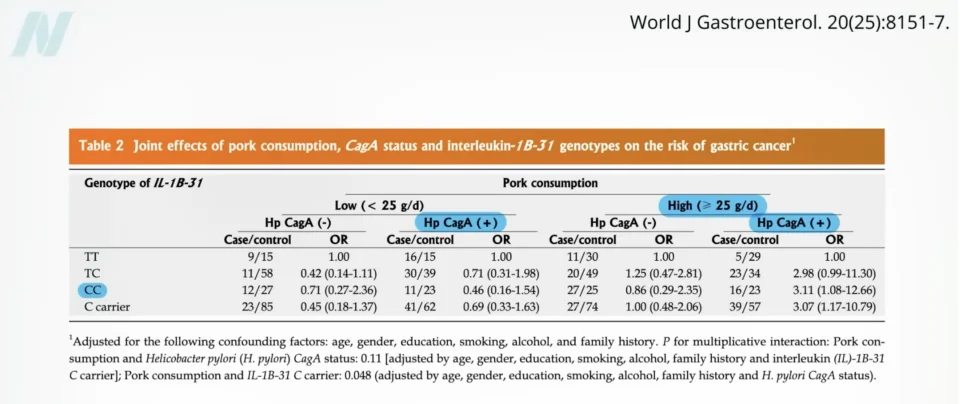
These findings matter because diet may shape the stomach cancer risk associated with H. pylori. In one study from China, people with a high-risk genetic profile and a particularly harmful strain of the bacteria appeared to face increased risk when they also ate about an ounce or more of pork daily. An average pork chop weighs around six ounces. The result suggests that diet can affect how infection and inherited risk combine, though it doesn’t establish that pork alone caused cancer.
Processed meats such as bacon, ham, hot dogs, lunch meat and sausage have been associated with higher stomach cancer risk. One proposed explanation involves compounds formed when nitrite preservatives react with proteins. Salting and pickling fish can also produce CMBA, a DNA-mutating chemical formed through a reaction involving salt, nitrites and methionine, an amino acid found in animal proteins. But the reported association extends to fresh, unprocessed meat, too.
H. pylori is a major cause of stomach inflammation and is linked to many stomach cancers. The interaction between infection-related gastritis and diet may help explain why some infected people face higher risk than others. That raises a practical question: can food reduce the bacterial burden?
Broccoli sprouts show promise, with limits
Doctors commonly treat H. pylori with a combination of three antibiotics. The regimen can be difficult for patients to complete because it involves multiple drugs and can cause adverse effects. Researchers have therefore studied whether foods containing sulforaphane, a compound found in cruciferous vegetables, can affect the infection.
Broccoli sprouts became a particular focus after reports that people with H. pylori-related peptic ulcers felt unexpectedly better after eating sprouts that had grown for three days. Lab tests later found that broccoli sprout extracts could kill antibiotic-resistant strains of the bacteria in a petri dish.
In a small human study, some participants who ate about a third of a cup of broccoli sprouts daily for a week cleared their infection. A randomized trial compared broccoli sprouts with alfalfa sprouts. Participants who ate a quantity equivalent to two or three servings of broccoli a day had lower markers of H. pylori colonization and inflammation in the stomach lining.
The distinction between reducing infection markers and clearing the bacteria is important. One study reported eradication in 56% of people who ate broccoli sprouts, compared with about 90% following standard triple-antibiotic therapy. The sprouts may offer a food-based way to affect the infection, but the results don’t show that they’re as effective as antibiotics.
Broader population research points in a similar direction for cruciferous vegetables and cancer risk. A review of 22 studies found that higher consumption was associated with a lower risk of stomach cancer. That association doesn’t prove that the vegetables caused the lower risk, and broccoli itself hasn’t been directly tested for stomach cancer prevention.
Garlic’s evidence arrives over decades
Garlic and onions belong to the allium family. Observational studies, including research on Japanese migrants dating back to the 1960s, have suggested that people who eat more allium vegetables may have lower stomach cancer risk.
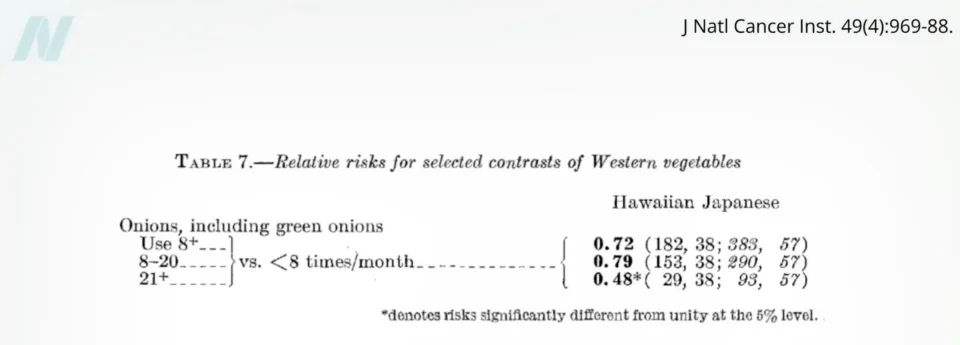
Dozens of studies have since reported an association between eating more allium vegetables and reduced stomach cancer risk. But publication bias may affect the overall picture: studies that found no effect may have gone unpublished. And observational research can’t establish cause and effect. People with years of stomach inflammation may choose bland foods to avoid discomfort, so lower garlic and onion intake could follow the illness rather than contribute to it.
Garlic’s antibacterial activity has been described since Louis Pasteur’s early observations of garlic and onion juices. In lab studies, a single clove’s worth of garlic can reach concentrations in the stomach that suppress H. pylori growth, including some antibiotic-resistant strains. Whether that effect translates into lower cancer risk required a longer test.
A randomized, double-blind trial enrolled thousands of people at high risk of stomach cancer from 13 villages in China. Participants received different combinations of antibiotics, garlic supplements and antioxidant supplements. A short course of antibiotics was associated with fewer precancerous stomach changes seven years later and fewer stomach cancers after 15 years.
The garlic results took longer to emerge. Researchers saw no benefit at seven years and only a reduction that wasn’t statistically significant at 15 years. In a 22-year follow-up, however, people who had taken garlic supplements had a significantly lower risk of dying from cancer. The apparent protective effect was found among participants who didn’t drink alcohol.
My read is that broccoli sprouts have the clearer short-term evidence for reducing H. pylori activity, while garlic’s possible cancer benefit rests on a long follow-up with a specific subgroup finding. Neither body of evidence makes food a substitute for established treatment, but both show why the effects of diet are worth studying alongside infection and cancer risk.
Doctor’s Note
If you missed the previous blog, see Pickled Paradox: Kimchi’s Link to Stomach Cancer.
For more on cruciferous and allium family vegetables and cancer, see:



Discussion
Sign in to join the discussion.