Yoga may help neck pain, diabetes control and stress incontinence, while many mental health benefits appear similar to other exercise.
Yoga’s health value depends on the condition being treated and what it’s compared with. Research points to possible benefits for chronic neck pain, blood sugar control in type 2 diabetes and stress urinary incontinence. For depression and anxiety, yoga generally hasn’t shown an advantage over other forms of physical activity. The evidence also has gaps: some studies used weak exercise comparisons, and a small bone health study lost most of its participants before reporting results.
That distinction matters because people who practice yoga may differ from those who don’t. They may be healthier to begin with, or people managing pain and other conditions may turn to yoga for relief. Observational findings alone can’t establish which direction the relationship runs. Randomized trials offer a clearer test, though their results still depend on how well they’re designed and what comparison groups they use.
Mental health results depend on the comparison
For depression, the reviewed research didn’t find a clear benefit from yoga compared with doing nothing. Yoga appeared to ease anxiety in some studies, but that finding didn’t extend to people with diagnosed anxiety disorders. And when yoga was compared with other exercise, its apparent advantage disappeared. The physical activity itself may explain much of the improvement.
Research involving older adults offered a narrower positive result: yoga appeared more helpful than other exercise for depressive symptoms. It didn’t show the same edge for anxiety or people’s broader sense of mental health. Taken together, these findings don’t support treating yoga as a distinct therapy for mood or anxiety disorders. They do leave room for it as a form of activity that some people may find useful.
Neck pain and diabetes show more promise
Chronic nonspecific neck pain stands out as one of the stronger areas for yoga. A review of 10 randomized controlled trials found improvements compared with control groups, including comparisons with other exercise. The authors concluded that yoga may reduce pain intensity and pain-related disability, while improving range of motion, quality of life and mood. That gives yoga a more specific case than the broader claim that it helps with pain in general.
For people with type 2 diabetes, yoga groups showed reductions in both short-term and longer-term measures of blood sugar compared with exercise control groups. The result is encouraging, but the comparison wasn’t equally strong across the studies. Nearly half didn’t define or follow a well-planned exercise program for the control group, and only three of eight used exercise of comparable intensity to yoga. Six of the eight studies took place in India, another factor to consider when judging how widely the findings apply.
Yoga has also been tested for irritable bowel syndrome. In randomized trials, it performed better than drug treatment and about as well as moderate-intensity walking. That points to a potential role for yoga among people with IBS, while the comparison with walking suggests the benefit may not be unique to yoga.
Strength, balance and the limits of the bone evidence
Against other forms of exercise, yoga came out ahead for lower-limb strength and lower-body flexibility. For balance, mobility and walking speed, results were similar. The pattern suggests yoga can support some aspects of physical function, with the comparative gains varying by measure.
A study of yoga and bone density is harder to interpret. Researchers created a 12-minute routine of 12 poses intended to stimulate bone growth in the spine and both hips. The reported benefit appeared in the spine, but not the hip. Of 741 people recruited, only a few dozen returned bone scans, roughly 5% of the original group. With such a large drop-off, the results may overrepresent participants who had favorable outcomes. The study doesn’t provide convincing evidence that the routine improves bone strength.
Findings in women’s health are mixed
For insomnia, yoga did better than no intervention, but not when compared with controls who were physically active. Among cancer patients, most of whom had breast cancer, walking was more effective than yoga at improving sleep. In breast cancer survivors, six months of yoga produced results similar to six months of other exercise for systemic inflammation, cancer-related fatigue and quality of life. Yoga also didn’t appear to improve breast cancer-related lymphedema, a buildup of fluid for which effective treatment is lacking.
Urinary incontinence results varied by type. Urgency incontinence involves urine loss following a sudden, strong need to urinate; stress incontinence is leakage triggered by an activity such as sneezing. After three months, yoga didn’t significantly improve incontinence overall or urgency incontinence. Stress incontinence did improve: cases fell by an average of 61% in the yoga group, compared with 35% among controls. That difference suggests a possible targeted benefit, rather than a broad effect across all urinary symptoms.
More on yoga research for bowel conditions, menopause and osteoporosis is available in Yoga Put to the Test for IBS, Inflammatory Bowel, Menopause, and Osteoporosis.
Injuries are usually mild, but technique matters
A systematic review drawing on nine observational studies included more than 9,000 yoga practitioners and more than 9,000 people who didn’t practice yoga, across the United States, Europe, Asia and Australia. A considerable share of yoga practitioners reported injuries or other adverse events, though most were mild and temporary. Overall risk was comparable to that among non-practitioners.
The estimated rate was 1.45 yoga-related injuries per 1,000 hours of practice. For comparison, the figures cited were about 2.5 per 1,000 hours for running, 3.7 for soccer and five for tennis; skiing carried more than five times the risk of yoga. These comparisons put yoga on the lower-impact end of the activities assessed, but they don’t make injury impossible.

Headstands, shoulder stands, lotus and half-lotus, deep forward and backward bends, and handstands were identified as higher-risk poses. The spine accounted for the largest share of injuries. Beginners have particular reason to approach these movements cautiously and build up with guidance.
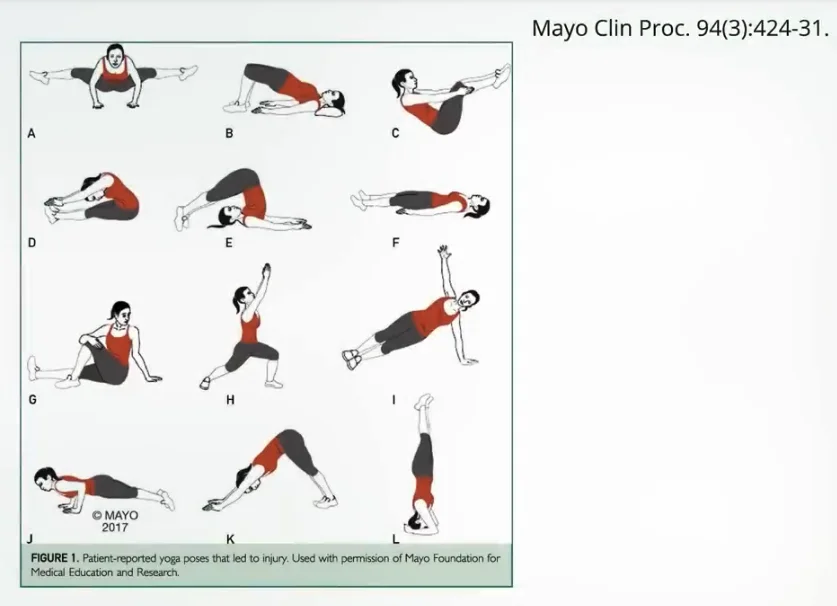
People with existing health conditions may need to adapt poses with help from a qualified instructor and their physician. For example, people with glaucoma should avoid inverted positions, while those with weakened bones should steer clear of forceful practice. Beginners should also avoid extreme poses and forceful breathing until they have appropriate instruction.
The evidence supports a measured view: yoga may be a useful option for certain physical complaints, but it hasn’t proved superior to other exercise across the board. The practical takeaway is to match the practice to the goal, judge benefits against realistic alternatives, and treat safe instruction as part of the intervention.



Discussion
Sign in to join the discussion.