After missing Kona’s bike cutoff by three minutes, Bob Plant is adjusting his training while staying focused on recovery, strength and movement.
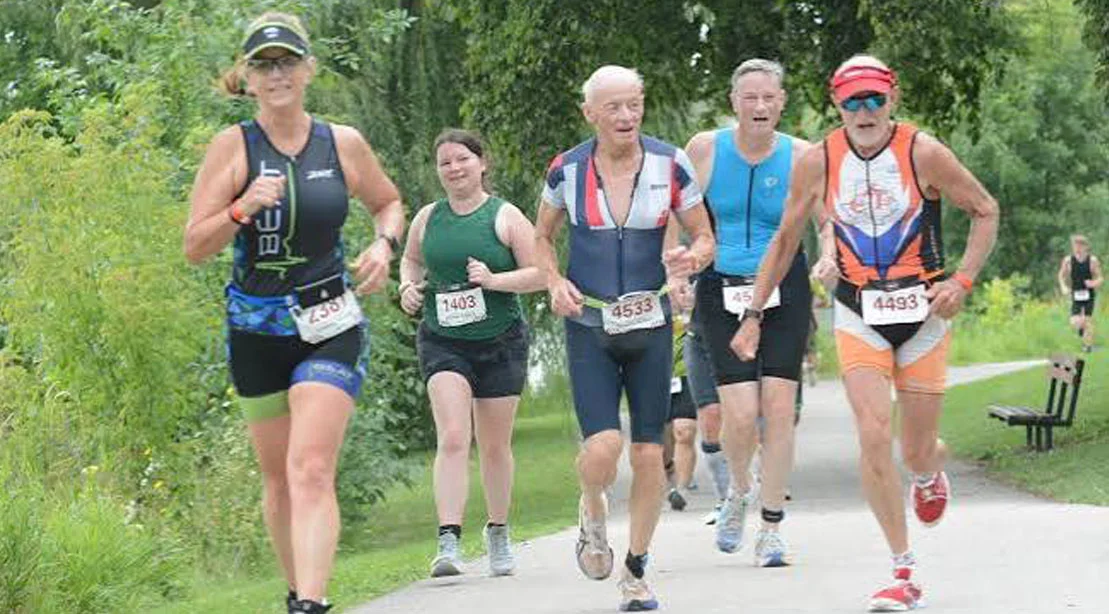
Bob Plant’s 10th Ironman World Championship in Kona ended three minutes short of the bike cutoff. At 83, after more than four decades in endurance sport, he’d never missed one before. The result stung, but it hasn’t changed his plan: learn from the race, turn the page and keep going while it remains fun.
Plant developed severe cramps in his quadriceps and hamstrings during the bike leg. He believes low sodium was the main cause; repeated chain problems added stops and cost him time. By the time he reached the second transition, the cutoff had passed. His race was over.
For an athlete with seven Kona age-group podium finishes and 20 USA Triathlon national titles, a DNF could invite plenty of second-guessing. Plant’s response was more practical. “I just turn the page,” he told Muscle & Fitness. “I’ve learned something, and I’m ready to get going again.”
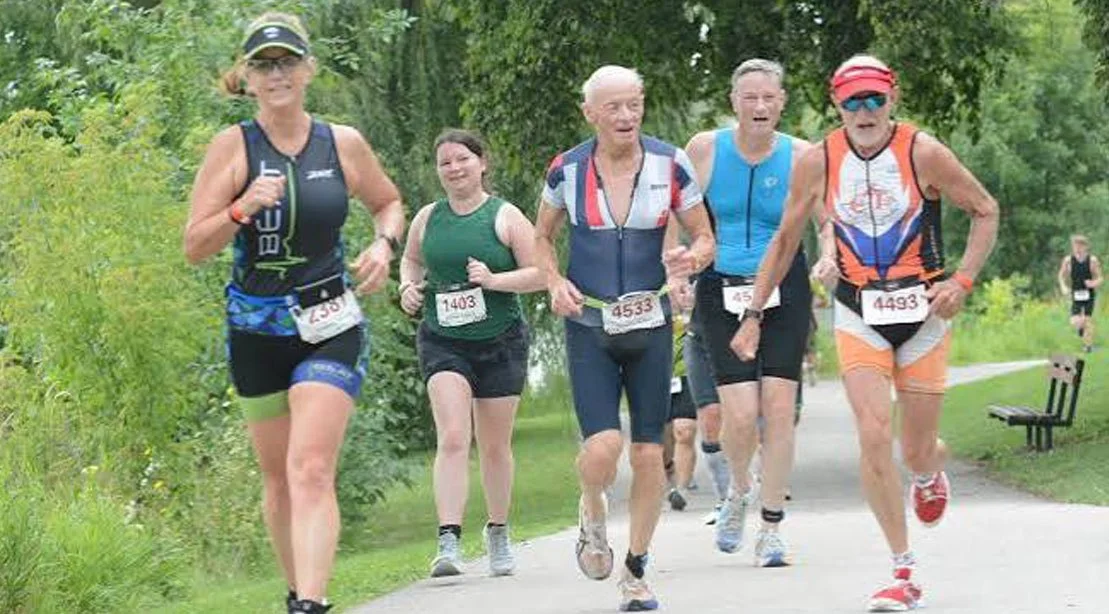
Training for the years ahead
Plant calls himself a “minimalist trainer.” His current schedule usually gives each triathlon discipline—swimming, cycling and running—two sessions a week. That’s a modest workload for an Ironman competitor, but his aim has shifted from proving how much training he can absorb to staying active for as long as possible.
“I’m in it for longevity,” he said. A full rest day each week is a fixed part of that approach. He takes it whether he feels he needs it or not, because skipping it tends to catch up with him a couple of days later.
Plant says age hasn’t erased his ability to do demanding physical work. The difference, he says, is the recovery it requires. “You might be able to do similar physical things that you did 10 years ago, but you’re going to need more than one day to recover. You’re probably going to need two or three days to recover.”
That calculation has changed what goes into his workouts. He no longer does speed work, judging the injury risk and extra stress too high for the likely benefit. He favors endurance work within limits he’s learned to recognize over decades of training.
Recovery, in his view, is part of the training itself. “That’s when you get strong—is when you rest,” he said. Rest gives the body time to repair and adapt to hard sessions. The goal is to respond to its signals early, before fatigue or pain demands attention.
Kona offered a fresh reminder that experience can’t control every variable. Plant had raced there many times and prepared much as he had for earlier trips, yet cramps and mechanical trouble disrupted the day. He treats the missed cutoff as information to carry into his next effort, not a verdict on whether he should continue.
Rebuilding the strength he lost
Plant has one clear gap he wants to address: strength training. Before the pandemic, he went to the gym as often as three times a week, sometimes lifting after a run. When gym access stopped, his regular lifting routine faded and never fully returned.
He estimates he has lost about seven pounds of muscle, partly from aging and partly from spending less time in the gym. The more noticeable change for him is reduced leg power compared with five years ago. He still does core exercises and stretches at home, but says that work hasn’t replaced consistent resistance training. He plans to lift again during the winter.
The point now isn’t to chase personal records. Plant wants to preserve the strength that supports the activities he enjoys. “If you don’t have strong legs, that’s the key to life, isn’t it?” he said.
A full-time job and a reason to keep moving
Plant still works full-time as a dentist, a job he has held for 55 years. Four days a week, he may be at the office from around 7 a.m. until after 5 p.m., then head home to train. The schedule limits his available workout time, and he sees a benefit in that constraint: it helps keep his training volume in check.
Exercise also helps him meet the demands of work. Patients expect his attention regardless of how he feels, he said. “You just can’t say, ‘Oh, I’m going to do an average job today.’”
Plant knows how easy it is to postpone a workout after a long day. He also knows what can happen when a useful part of a routine disappears: the decline in his own muscle and leg power has made the cost of leaving strength training behind tangible.
His advice to others doesn’t begin with an Ironman. Walking, running a 5K or lifting weights can all be a starting point; the key is finding an activity that feels worth continuing. “Whether you’re walking or you’re doing some activity, just get out there and get your body moving,” he said.
When people tell Plant they’ve started exercising or completed a race, those milestones matter to him. He hopes his example helps them see what might be possible without asking them to copy his 140.6-mile events. “If I can do it at my age, surely you can do something,” he said. “I just encourage them to somehow look at the possibilities.”
He also credits training with building confidence beyond sport. Repeatedly facing discomfort and setbacks has helped him trust that he can handle difficult situations elsewhere in life. “It gives you confidence,” he said. “You can handle an Ironman or whatever, you can handle other things in your life that may have seemed big before, but now they’re not.”
A workout built around steady effort
The following 35–40-minute session combines lower-body strength, core stability and aerobic work. It reflects Plant’s emphasis on controlled effort and enough recovery to make training sustainable.
Equipment: Dumbbells or kettlebells, a bench or box, and a cardio machine or open space.
Warmup: 5 minutes
Move continuously at an easy pace:
- March or easy bike: 1 minute
- Bodyweight squat: 10 reps
- Reverse lunge: 6 per side
- Hip hinge: 10 reps
- Arm circles: 10 in each direction
- Calf raise: 15 reps
Repeat once. The warmup should leave you feeling ready to move, not tired.
Strength and stability: 15 minutes
Complete three rounds, resting 60 seconds between rounds:
- Goblet squat: 10 reps
- Step-up: 8 reps per leg
- Dumbbell Romanian deadlift: 10 reps
- One-arm dumbbell row: 10 reps per side
- Standing calf raise: 15 reps
- Plank: 30–45 seconds
Sustainable endurance: 10–15 minutes
Choose a bike, rower, treadmill, elliptical or brisk outdoor walk. Start with two easy minutes, continue for six to ten minutes at a steady conversational effort, then finish with two easy minutes.
Core and mobility: 5 minutes
Complete two rounds:
- Dead bug: 8 reps per side
- Bird dog: 8 reps per side
- Hip-flexor stretch: 30 seconds per side
- Hamstring stretch: 30 seconds per side
Plant would have preferred to finish in Kona, and he believes he could have continued if he had made it through transition. The clock didn’t allow that possibility. He has accepted the result, taken lessons from the cramps and chain trouble, and kept his focus on what comes next. “I’ll continue as long as I can,” he said. “As long as it’s fun.”



Discussion
Sign in to join the discussion.