Understanding The Secret To Constant Muscle Growth
While moving more weight leads to more gains, here's why doing it properly matters most.
Read articleTwo small studies in untrained adults found muscle growth with fixed loads, but progression helped keep training challenging as participants adapted.
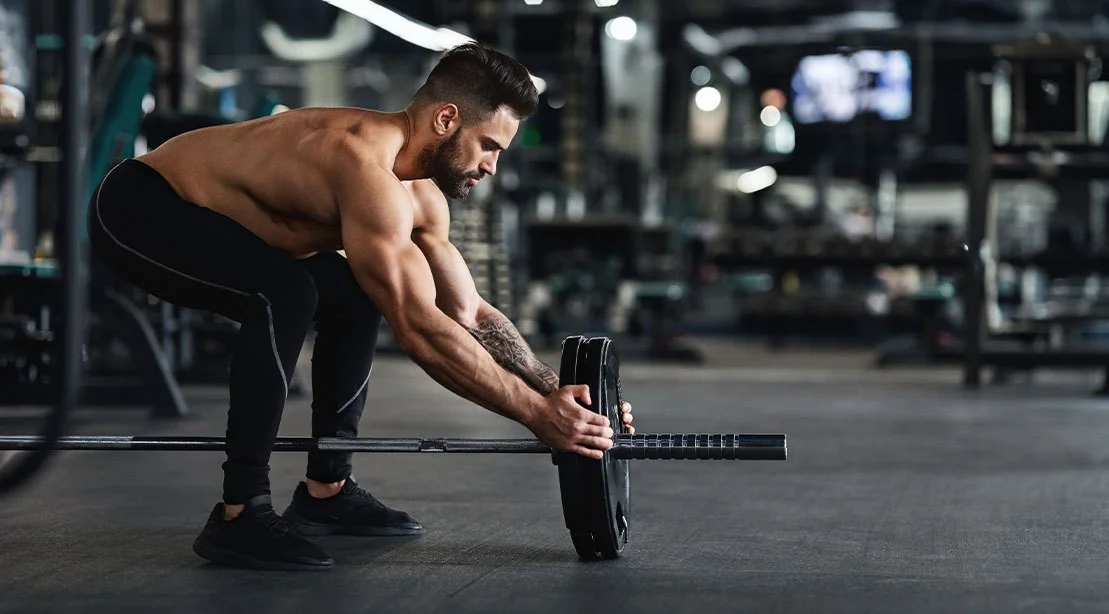
The useful lesson from two new training studies isn’t that every workout needs heavier weights. It’s that a familiar load can stop demanding much as the body adapts, and training needs a way to keep the challenge meaningful.
Both studies examined progressive overload: increasing the demands of training over time. The idea has a long history, from the legend of Milo of Croton carrying a growing calf to Joe Weider’s system. These findings don’t validate the legend or prescribe one method for every lifter. They offer a closer look at what happens when beginners add load versus hold it steady.

While moving more weight leads to more gains, here's why doing it properly matters most.
Read articleThe first study, published October 14 in the Journal of Strength and Conditioning Research, enrolled 41 young women who had not trained before. For eight weeks, they performed one arm curl session three times a week. Researchers increased the load for one group when participants reached the top of an eight-to-12-repetition range. Another group kept both weight and repetitions constant, while a comparison group did no training. Both exercise groups built muscle, but elbow flexor thickness increased more with progressive loading.
That difference matters, but so does the result in the fixed-load group: those participants gained muscle too. Beginners can respond to a relatively modest stimulus, and this controlled arm exercise doesn’t represent a full training program. The findings don’t support a rule that every lifter should add five pounds to each exercise every week.
A second paper, published October 15 in the International Journal of Sports Medicine, followed 31 untrained adults for 12 weeks. Each participant trained one leg with progressively heavier leg extensions and the other at a fixed load, twice a week. Both legs gained muscle. Differences between conditions weren’t significant at individual measurement points across the full study, but during the final three weeks, growth was greater in the progressively loaded legs. The fixed-load legs also finished each set further from failure, suggesting that the same weight had become easier.
Here’s the practical point: progression is a way to keep a workout challenging as fitness improves. Adding weight is one option. Adding repetitions, using a fuller range of motion, or improving control can also raise the demands of a set. The right choice depends on the exercise and the lifter’s goals. A training log helps distinguish actual progress from the version of a set that memory supplies later.
A separate study in The Journal of Physiology, published at the end of 2025, found similar muscle growth with heavier and lighter loads when participants took sets to voluntary fatigue. That result addresses how load affects growth when effort is comparable. The October studies instead compared training that progressed with training that deliberately held its load steady. Load, effort and progression overlap, but they answer different questions.
These small studies of beginners doing curls and leg extensions can’t settle how an experienced bodybuilder should structure years of training. Nor do they make every set to failure a good idea. Recovery, joint health and the demands of daily life still shape what a productive program looks like.
For lifters, the takeaway is simpler: track whether the work is advancing. That might mean more weight, more repetitions or better execution at the same load. If training stays identical for months, it may stop providing a strong reason to adapt. The goal isn’t to chase heavier numbers every session; it’s to notice when yesterday’s hard set has become today’s easy one.


Discussion
Sign in to join the discussion.