Allulose trims body fat and blunts blood sugar spikes in some studies, but the human evidence is thin and mixed. Experts say it's too early to recommend it.
Allulose has a reputation problem, and the reason is simple: the early research looks better than the human data supports. It's a rare sugar that occurs in trace amounts in nature, now made industrially as a low-calorie sweetener, and it's often positioned as a near-equivalent to erythritol. Its marketing leans on metabolic claims, and some of those claims rest on a stack of animal and cell studies. So the real question is what survives once you move from petri dishes and worms to people eating actual meals.
My read is that allulose has a few genuinely interesting signals, but nothing yet that justifies calling it a health food.
Starting with the lab bench
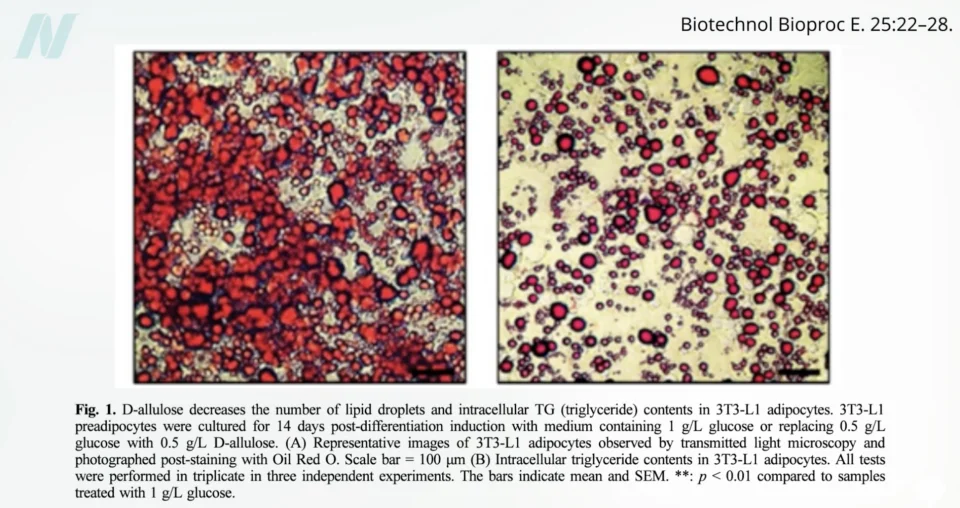
The most visually striking work comes from cell culture. In a petri dish, allulose inhibited fat cell precursors from maturing into fat cells and reduced the amount of fat accumulating inside those cells. Researchers in one study concluded that allulose might be a promising sugar substitute for an anti-obesity diet. The qualifier matters, though. They concluded it "might" be promising, and they were explicit that the claim needed testing in people.
Animal work pushed the story further. A hamster study found that allulose decreased LDL cholesterol in animals fed a high-fat diet. Mice fed a lard-heavy diet showed a substantial effect on obesity, and a separate study in obese mice reported anti-diabetic effects. Those results are the reason allulose keeps appearing in discussions about metabolic health. They're also the reason I'm skeptical of extrapolating too far. Rodent diets are tightly controlled, and rodent metabolism doesn't map neatly onto ours.
Fat loss: one meal, then one trial
The first human signal came from a single meal. In one study, participants took about a teaspoon of allulose half an hour before eating, and the allulose group began burning more fat compared with a no-sugar control. The researchers argued that allulose enhances fat burning after a meal and could be a novel sweetener for maintaining healthy body weight. The numbers, though, are modest. The extra fat burned over the four-hour window came to roughly 15 calories. Total energy expenditure didn't rise. The body appeared to swap carbohydrate burning for fat burning, and nothing in that design shows whether the switch persisted through the rest of the day.
Tracking weight over a meal doesn't tell you much, so the next step was longer-term data. A study comparing high-fructose corn syrup with a syrup containing about 5% allulose reported significant reductions in body fat, body weight, and waist circumference for the allulose version. That comparison is weak, though. The syrup was a proprietary mixture, and high-fructose corn syrup is a low bar for any comparison.
The study I'd been looking for is the one that evaluated allulose's effect on fat mass in humans directly. More than 100 people were randomized to a placebo (sucralose), a teaspoon of allulose twice a day, or about one and three-quarter teaspoons twice a day. Physical activity and calorie intake didn't differ between groups, yet body fat dropped significantly in the allulose arms. Researchers used CT scans to see where the fat was going.
Here's the thing: the effect was small. Body fat fell by only about two pounds over 12 weeks. In the higher-dose group, the abdominal reduction was almost entirely subcutaneous fat, the superficial layer under the skin, rather than visceral fat wrapped around the organs. Visceral fat is the tissue most closely tied to cardiometabolic risk, so that distinction matters. Still, a fat loss effect without any change in calorie intake is the kind of result that deserves a replication attempt, and the mouse data had pointed in the same direction.
The cholesterol story didn't carry over. The hamster finding did not materialize in people. There was no significant change in LDL cholesterol in either allulose group.
Blood sugar depends heavily on what you eat with it
Blood sugar is where allulose has its most-studied effect, and it's also where context does most of the work. When people drank allulose alone, at doses up to about two teaspoons, it had no predictable effect on blood glucose or insulin. When the same dose was consumed alongside a large load of rapidly digesting carbohydrate, blood sugar and insulin responses were suppressed. The reported reduction was about 30% over a two-hour period.
One proposed mechanism is that allulose impairs sugar absorption across the intestinal lining, possibly because the two compounds compete for the same transporter. That's a plausible hypothesis, not an established mechanism. And the study that produced the striking 30% figure used a beverage loaded with refined carbs, not a normal meal. Nobody sensible chugs maltodextrin at lunch.
So a more realistic test came next. In a randomized, double-blind, placebo-controlled crossover experiment, people with borderline diabetes drank a cup of tea with a meal containing about one and a quarter teaspoons of allulose. That produced a significant drop in blood sugar, though a smaller one, around 15%. A second experiment gave participants a little over a teaspoon of allulose three times a day with meals for 12 weeks. No adverse effects appeared, but neither did any weight loss, which cuts against the earlier body fat result.
The broader picture is inconsistent. One study found no effect on blood sugar in healthy participants, while a similar study in people with diabetes did show one. A systematic review and meta-analysis of controlled feeding trials described the acute blood sugar benefit as "borderline significance." Whether that effect adds up to meaningful improvements in blood sugar control over months is still unknown. My takeaway is that adding allulose to a diet heavy in refined carbohydrate probably won't do the heavy lifting. The diet itself has to change.
Worms, cells, and the longevity question
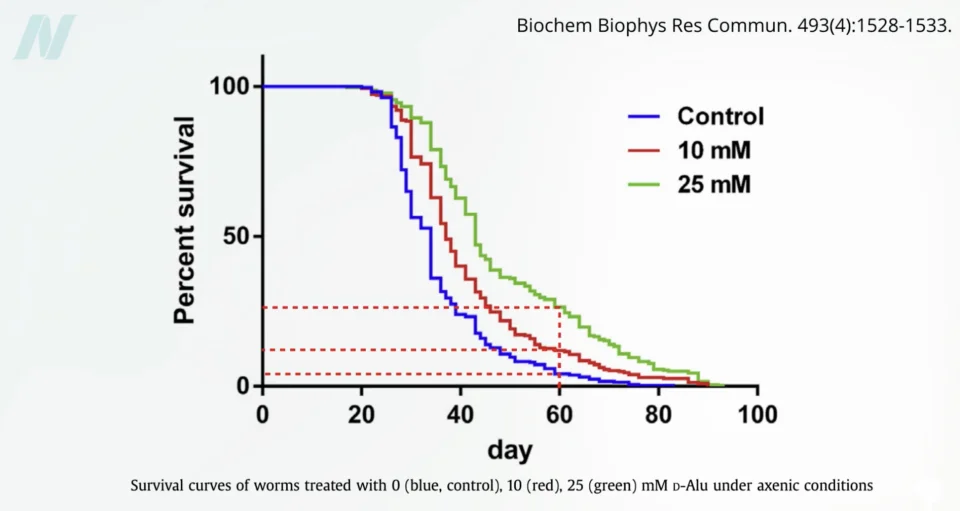
Allulose has also been studied for its effects on aging, and this is where the research gets strangest. Researchers found that allulose extended the lifespan of C. elegans, a tiny roundworm, through a dietary restriction mechanism, even though the worms ate the same amount of food as controls. Two months in, only a few percent of the control worms were still alive. About twice as many survived in the low-allulose group, and around 25% survived in the higher-allulose group.
One explanation offered is that allulose boosted the expression and activity of antioxidant enzymes, which would help neutralize free radicals. That's a reasonable hypothesis, but it's a hypothesis.
Why take worms seriously at all? C. elegans is a standard model in aging research, largely for practical reasons: it's cheap, fast, and easy to manipulate. It also shares many of the longevity genes and pathways that researchers care about. Still, a worm lifespan result is a long way from a human outcome, so the more useful evidence came from human cells.
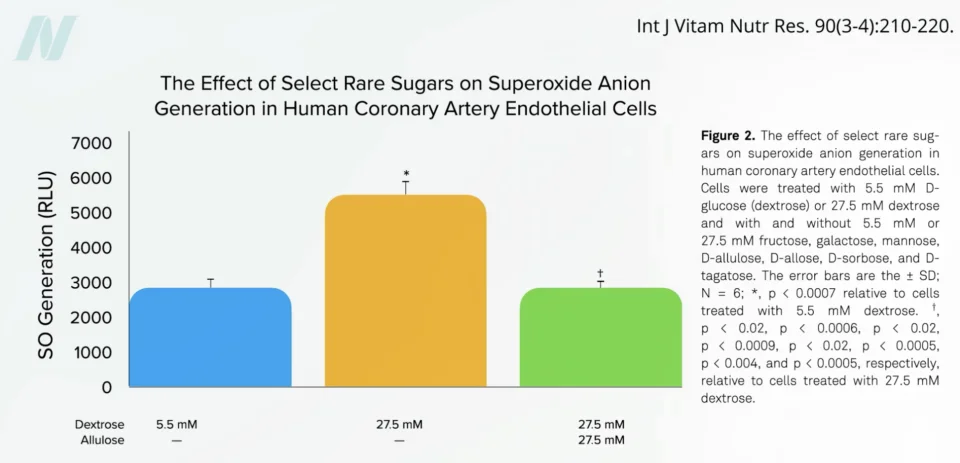
In a study using human coronary artery endothelial cells, the cells lining the inside of arteries, adding sugar sharply increased free radical levels. Adding the same amount of sugar with allulose produced free radical levels that looked as though no sugar had been added at all. Allulose also inhibited expression of an inflammatory marker involved in the buildup of atherosclerotic plaque. Those are interesting results for a vascular biologist. They tell us about cell behavior under controlled conditions, not about what happens in an artery after a sweetened latte. Clinical relevance remains unestablished.
So is allulose a healthy alternative?
Taken together, allulose has a favorable profile in several areas. It appears to carry no known toxicological or metabolic disadvantages in the studies reviewed, and it has shown a range of potentially beneficial effects across cell, animal, and some human work. That combination explains why researchers consider it the most promising of the rare sugars. But "most promising" is a relative claim. Several of the strongest-sounding findings come from petri dishes, rodents, or worms. The human trials that exist are small, mixed, and often short. The fat loss effect was modest and partly confined to subcutaneous fat. The blood sugar benefit depends on pairing allulose with refined carbohydrate, and its consistency across populations is unclear.
That's why the honest verdict is that the evidence isn't yet strong enough to recommend rare sugars for regular human consumption. It may be a reasonable swap for some people in some situations, but it isn't a metabolic fix.
If you're looking for the sweetener with the strongest track record, it's not a lab product at all. Whole foods are the healthiest option: fresh, frozen, or dried fruit, including dates, which bring sweetness along with fiber and nutrients. Allulose may eventually earn a place in the sweetener lineup, but the next useful step is longer, larger human trials that measure the outcomes people actually care about, like cardiovascular health and long-term weight, rather than the intermediate markers that have dominated the research so far.



Discussion
Sign in to join the discussion.