After four months testing the LYMA Laser with her mom, one reviewer weighs whether this pricey at-home device delivers results beyond the buzz.

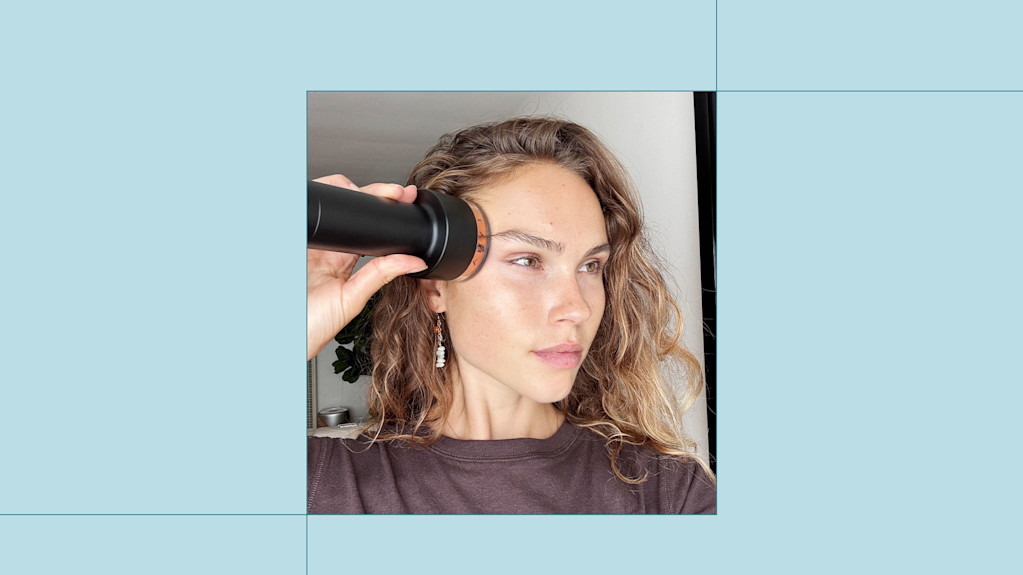
Image by Ava Durgin x mbg creative
Some beauty gadgets live quietly in the medicine cabinet. Others end up on a celebrity's bathroom counter, in a dermatologist's treatment room, and in every third post in your feed. The LYMA Laser belongs to the second group. Gwyneth Paltrow, Martha Stewart, and Sabrina Carpenter are reportedly fans, and the little black device even showed up on *Your Friends & Neighbors*. At that point it's less a tool than a signal. That's what makes it hard to judge. When a device becomes a status object, the hype arrives first and the evidence trails behind. And the price doesn't help. The newer [LYMA Laser Pro](https://us.lyma.life/) is larger and more powerful than the original, and it costs roughly twice as much. So the question I kept asking was simple: does the patented technology earn that money, or are you mostly paying for the black box and the buzz?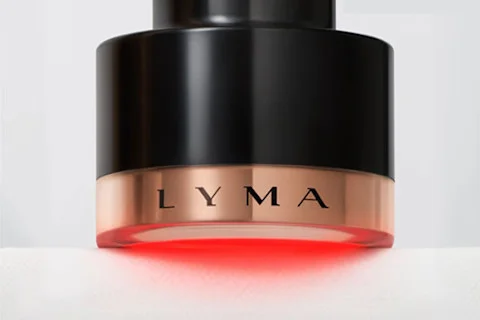 **LYMA Laser Pro**: $4,995 (was $5,995). Save $1,000 at [us.lyma.life](https://us.lyma.life/).
I'll admit I came in curious. Being in my twenties, I knew any benefit would probably show up later, not in the first week. Still, I was eager to see what all the fuss was about. I ended up with two devices: one for me and one for my mom, who is 54 and has been a skin care devotee since her early twenties. She jumped at the chance to test them, and her skepticism turned out to be the most useful part of the whole process.
FYI: LYMA's Black Friday deals are already live, with up to 25% off sitewide.
## A mother-daughter skin experiment We started from different places. My mom has been preaching sunscreen for decades, long before I understood why it mattered, and she's still the person you'll find outside in long sleeves and a giant sun hat. Her routine is built on years of good habits, regular facials, and what has probably been thousands of dollars in products. Even so, she had a short list of things she wanted to fix: [fine lines](https://www.mindbodygreen.com/articles/how-dry-skin-can-accentuate-fine-lines-and-what-to-do-know-more-about), [dark spots](https://www.mindbodygreen.com/articles/how-l-facialist-treats-dark-spots-and-melasma-use-a-pigment-inhibitor-and-exfoliate), and the crepey texture that starts creeping onto the neck, chest, and hands. That's a treatment problem. My problem is different. I'm not trying to reverse sun damage or deep [wrinkles](https://www.mindbodygreen.com/articles/3-common-myths-about-wrinkle-treatment-facts-you-should-know-1-you-cant-truly-ease-wrinkles-without-botox). I want to know what I can do now to keep my skin healthy as I age. I also deal with redness across my lower cheeks and the occasional breakout, so I wanted to see whether either would change. In other words, one of us was testing prevention and the other was testing repair. After roughly four months, we both had plenty to say.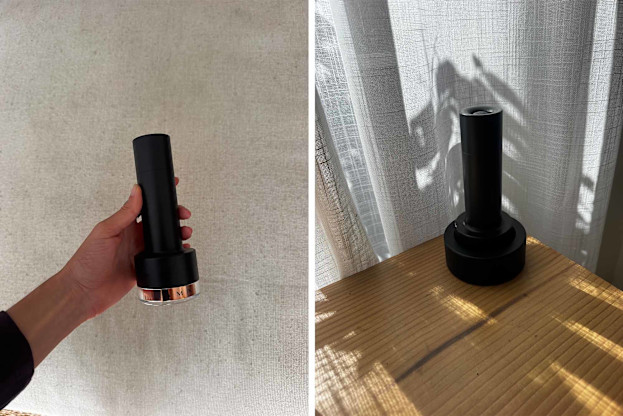 *Image by Ava Durgin / LYMA Laser*
## So, what exactly is the LYMA Laser?
Calling it an at-home laser made me nervous. My idea of lasers was a dermatologist's appointment that leaves you red, peeling, and avoiding sunlight for a week.
That's not what this is. The LYMA Laser Pro uses low-level laser therapy (LLLT), a form of photobiomodulation. Instead of heating the skin, it uses light to influence cellular activity. That's why people call it a "cold laser."
The original LYMA Laser uses 808-nanometer near-infrared light alongside 620-nanometer red light, and it received FDA clearance for full-face wrinkle reduction. The newer Pro is also FDA-cleared for over-the-counter wrinkle reduction. But clearance for wrinkles is not the same as proof of every health or longevity claim tied to photobiomodulation. That distinction matters, and the marketing doesn't always make it clearly.
Here's why the approach appealed to me. Many professional resurfacing lasers work by creating controlled damage, which triggers the body's repair response, including collagen production. Those treatments work, but they often bring redness, peeling, sensitivity, and downtime. The LYMA Laser Pro takes the opposite bet: it tries to support the cellular processes behind repair and renewal without injuring the skin first.
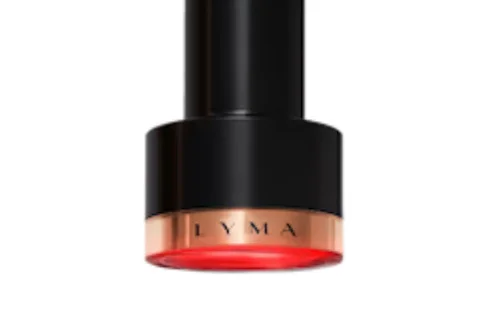 ## Why LYMA is really about cellular health
When I spoke with LYMA founder Lucy Goff, she kept returning to one idea: cellular energy. The more efficiently our cells produce ATP, the better equipped they are to handle repair, renewal, collagen production, and inflammation. That's a clean, testable premise on paper. Whether a device can meaningfully move that needle on a face is a separate question, and it's the one I spent four months trying to answer.
Understanding how the device works made it easier for me to take seriously. That mattered more than I expected.
Mitochondrial health comes up constantly in longevity circles, and for good reason. We want our muscles to perform, our brains to stay sharp, and our metabolism to hold up as we age. Skin belongs in that conversation too, and that's why I didn't dismiss the idea outright.
I'm still careful about how far I push it. Supporting mitochondrial activity in skin doesn't reverse aging, and anyone promising that is overselling. Still, it changes how I think about skincare. Healthy-looking skin reflects healthy, functioning cells. No serum sitting on top can fully stand in for that.
What I learned about collagen and skin aging
Collagen comes up in every conversation about aging. Production drops over time, and the results show up as thinner skin, more fine lines and wrinkles, and less firmness. What surprised me while reporting this piece is that quantity isn't the whole story. There are different types of collagen, and how those fibers are organized and how well they're built matter just as much.
Goff explained that LYMA is designed to support collagen production and remodeling in a way that more closely resembles younger skin, rather than setting off a wound-healing response. That's a meaningful distinction. Wound healing is a blunt, reactive process. Remodeling is closer to maintenance.
LYMA has also looked at changes in cellular pathways and gene expression linked to its technology, including SIRT1, a protein involved in cellular metabolism and stress responses.
These findings are interesting, but they stop short of proving LYMA makes your skin biologically younger. A shift in one pathway doesn't automatically translate into long-term benefits. We're still working out how photobiomodulation changes these cells, and how those changes connect to the skin we see in the mirror a decade from now.
My mom's experience with the laser
My mom had started noticing more fine lines, pigmentation, and texture changes, especially around her eyes, on her neck and chest, and on the backs of her hands. She isn't opposed to Botox or filler. She just wasn't ready to go that route. An at-home option with no needles and no downtime was exactly what she wanted.
She focused most of her sessions on her forehead, eyes, neck, chest, and the tops of her hands. The routine was easy to fit in. Three or four nights a week, she'd shower, do her skincare, then sit on the couch with the laser for 20 to 30 minutes while winding down.
Honestly, that looked a lot like my own routine. The LYMA Laser Pro asks for time and consistency. The recommended protocol calls for about 30 minutes of daily use during the first three months, then roughly three to four sessions a week for maintenance.
Thirty minutes a day is a real commitment, and there's no way around that. But once I stopped treating it as a separate task and started using it while reading or watching something, it became much easier to keep up.
My mom's results after four months
After four months, my mom saw improvement in several of the areas she'd been targeting.
The fine lines around her eyes looked softer, and her skin looked a little fuller. Several dark spots had started to fade. The skin on her neck and chest looked less crepey and firmer, which was the result she cared about most.
The changes didn't arrive overnight. Neither of us woke up after a week looking like we had different skin, and that's the expectation to set before you start. Unlike an ablative laser, an injectable, a peel, or even a really good facial, the LYMA Laser Pro won't leave you thinking, Whoa. You'll look in the mirror one day and notice the difference, especially if you're tracking progress with before-and-after photos.
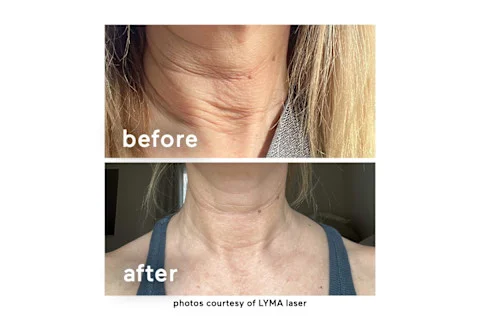
Image by mbg Creative / courtesy of LYMA laser
Why I wanted to try LYMA in my 20s
If you're a woman in your 20s, there's a good chance "baby Botox" has come up in conversation. It has in mine.
I've never been against Botox, and I could see myself getting it someday. I'm just not sure I want to start now simply because "preventative Botox" has become another thing we're told to worry about in our 20s.
I think about longevity the same way I think about everything else. Nobody waits until they've lost muscle to start strength training, or until their cardiovascular fitness has slipped to start exercising. So with my skin, I'd rather support what keeps it healthy than wait until I have something I want to fix.
That's what made the LYMA Laser Pro appealing to me at this stage.
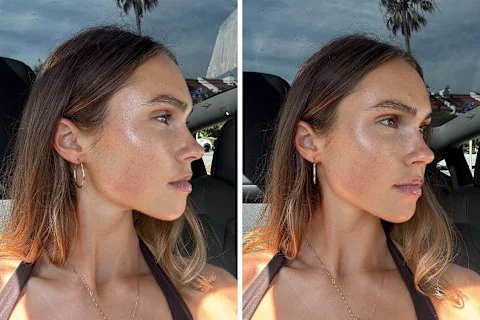
Image by Ava Durgin / LYMA Laser
My redness changed the most
I've always had redness across my lower cheeks. It isn't severe, but it's reactive. Heat, exercise, travel, certain foods, and even a glass of wine can leave my cheeks noticeably flushed.
A few weeks into using the LYMA Laser Pro, my skin started to look calmer. The redness was less obvious, and my skin felt smoother. Over time, I noticed it in the situations that usually set off flushing. My cheeks weren't nearly as red after a workout, and I could have a glass of wine without it showing up on my face right away.
Our beauty director saw something similar. Redness and inflammation improved well before the slower changes in fine lines showed up.
To be clear, the LYMA Laser Pro isn't FDA-cleared as a rosacea treatment, and it doesn't replace a dermatologist. I'm only describing what changed for me. After four months, my skin was noticeably less red and less reactive.
My blemishes didn't stick around as long
Acne isn't a major concern for me, but I still get the occasional pimple, usually when I'm traveling or at certain points in my cycle.
Normally, once one starts to form, I'm stuck with it for a few days. It gets red and raised, then inflamed, before it finally calms down. While I was using the LYMA Laser Pro, that process seemed to move much faster.
When I felt a blemish coming on, I'd use the laser over the area, and by the next day it often looked noticeably calmer. It didn't get as raised or inflamed, and it generally cleared up sooner.

Image by Ava Durgin / LYMA Laser
Consistency did most of the work. Nobody's skin changed in week one. A month became two, then three, and at some point my mom and I both noticed our skin simply looked better. Hers looked firmer. Mine looked calmer. We described the same thing: the texture and overall quality had improved, though it was hard to point to a single moment when that happened. Genetics was the obvious objection, and I had it too. So I lent the laser to my sister-in-law and mother-in-law for about a month each. Knowing they had a limited window, they were more disciplined than we were, using it almost daily for around 30 minutes. Their results looked a lot like ours. Their skin appeared fuller and firmer, fine lines looked softer, and texture improved. A month is too short to say anything meaningful about long-term changes to collagen or skin structure. Still, four people at different life stages, each using the device for slightly different reasons, reporting the same improvements is hard to dismiss as noise. It doesn't prove the device works. It does make the pattern harder to wave away.Is it worth the money?
The LYMA Laser Pro is not a casual purchase. It currently sells for $4,995, down from $5,995, and that's real money. But the price only makes sense against what you already spend. My mom regularly pays for facials and high-end skin care, and she has seriously considered Botox, fillers, and other cosmetic treatments. Add up several years of those bills and a device you can use at home, consistently, starts to look like a different kind of expense. The original LYMA device is expected to last around 10 years, which changes the math again. If you already prioritize skin care, that's a long time to spread the cost across.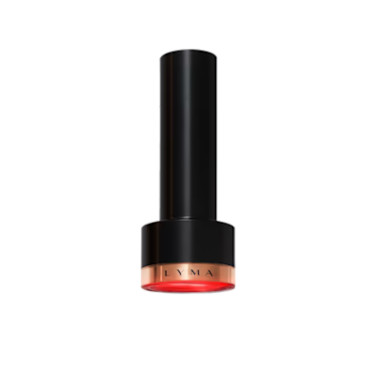 After four months, I'd keep using it. My redness is noticeably better. My skin feels smoother and less reactive, and blemishes don't hang around as long as they used to. My mom saw gains in fine lines, dark spots, and the texture around her eyes, neck, and chest.
What I like most is the philosophy behind it. Most skin care waits for a problem and then tries to erase it. Supporting the health and function of your skin along the way is a different goal, and a more appealing one.



Discussion
Sign in to join the discussion.