Masters physique champion AJ Ellison says protein-first meals, muscle preservation, and modest calorie deficits are the keys to losing fat after 50.
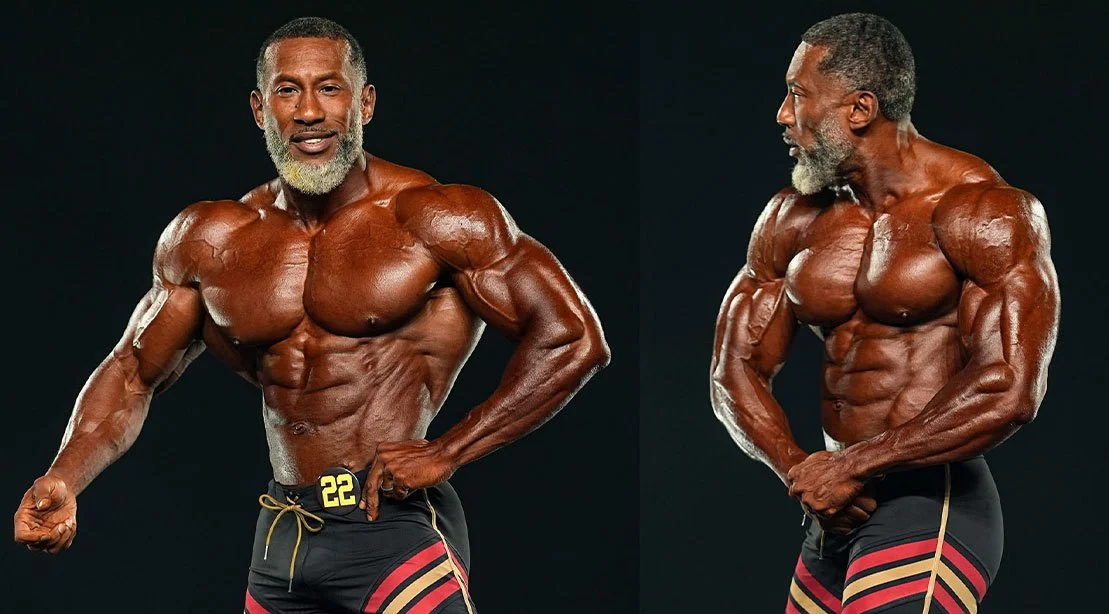
Most men over 50 accept that the midsection creeps up and the abs go on permanent leave. Adam J. Ellison, a 50-year-old IFBB Pro and Masters Men's Physique competitor, is arguing otherwise, and his results give him standing to. He topped the 50+ Men's Physique category at the 2026 IFBB Masters World Championships and placed second in the 40+ division, competing against men up to a decade younger. His fat-loss advice, shared in an Instagram guide for people juggling work and family, is refreshingly unglamorous. Much of the advice aimed at men in this age bracket sells a shortcut, a supplement, or a fasting schedule. Ellison's pitch runs the other way. Don't expect it to be exciting. Expect it to be repeatable.
Why Midlife Makes It Harder
The biology is real. Fat mass tends to rise and lean muscle tends to decline with age, and science suggests slowing metabolic rates could play a significant role in why fat is harder to lose later in life. That's a reason to change the approach, not abandon the goal. In my read, the mistake most people make is treating the slowdown as a verdict rather than a variable. If your body responds differently at 50 than it did at 30, the sensible move is to adjust the inputs, not to conclude the project is hopeless. (and this is the part most people overlook) the same forces that make fat loss slower also make muscle loss more costly, so doing nothing carries a bigger penalty than it used to.
Fix the Kitchen First
Ellison's starting point isn't cardio. "Fat loss doesn't start in the gym, it starts in your kitchen," he wrote. "You can't out-train a poor diet." His framework is simple: 50 to 70 grams of protein at every meal, with each plate built around protein first and filled out with whole foods. It's easy to audit. Either the protein is there or it isn't. That's the appeal of a rule like this. Vague goals such as "eat cleaner" are hard to check, and they tend to drift once the week gets busy. A protein target gives you something concrete you can see on the plate at lunch. Checkable. Hard to fudge at 9 p.m.
Protect the Muscle You Already Have
This is Ellison's most counterintuitive point. "Most men try to burn more calories. That's backwards," he said. "Protect your muscle first." Muscle tissue doesn't burn much on its own, but carrying more of it raises the body's overall energy demand, which lifts daily calorie needs. The logic is less about any single workout and more about the total. A body that holds onto its lean tissue keeps a higher baseline demand, which gives a modest deficit more room to work without tipping into the crash-diet territory he warns against. That's a quieter argument than "sweat harder," and I think it's the stronger one.
For building that muscle, he recommends lifting three to four times a week. For hypertrophy specifically, his instruction is to "Progress your lifts whenever possible." Simple, and it puts the emphasis on measurable performance rather than how hard a session felt. That's a small shift with large consequences. Adding a rep or a bit of load over time is something you can log. "Felt tough" is not. Anyone who has trained for a few years knows how easy it is to repeat the same weights for months and call it consistency. If you're training without a log, you'll struggle to tell progress from habit.
Cardio Supports, Strength Leads
Ellison uses cardio, but he doesn't build his approach around it. "Cardio is a tool. It isn't the foundation," he wrote. "Strength training should always come first." For everyday activity, he suggests 8,000 to 10,000 steps. That's low-stress movement that adds up without grinding down recovery. The step target does a lot of quiet work here. Walking doesn't carry the fatigue that hard intervals do, so it can happen daily without eating into the sessions that actually build muscle. Plenty of men in this age group swap heavy lifting for punishing cardio because it feels like effort, and that's a trap. It burns energy, but it also tends to leave you too tired to lift well. "Use cardio to support recovery, not to punish yourself," he added.
Small Deficits, Patient Tracking
On calories, his message is restraint. "Small calorie deficits beat aggressive diets," he argued, adding that "Crash dieting teaches your body to conserve energy." His target is losing 0.5 to 1% of body fat per week. And he's blunt about the timeline: "Track your progress for at least three weeks before changing anything." That's the part most diet plans skip. They promise dramatic changes, then move the goalposts every few days when the scale wobbles. Water, sodium, and a bad night's sleep can all shift the number, so three weeks gives you a trend rather than noise. Tracking only works if you hold still long enough to read it.
Here's the thing: that last line is the one worth underlining. In my read, most people who stall on fat loss after 50 aren't short on effort. They change three variables every week, never measure anything, and conclude that their metabolism has quit. Ellison's plan is slow, measurable, and built around protecting muscle, the tissue that makes the next decade of training possible. That said, it won't deliver overnight results, and that's exactly why it's the more useful read for anyone who's been told the midlife slowdown is inevitable. It's a plan a 50-year-old can actually sustain.
What This Means If You're Over 50
If you're working in this space, whether as a coach, a trainer, or someone writing about fitness for a general audience, Ellison's approach is a useful corrective. It doesn't promise a six-pack by summer. It asks people to track a few things, eat enough protein, train with purpose, and stay patient long enough for results to show. That's a harder sell than a shortcut, and it's also harder to fake.
The bigger point is about framing. Aging makes some outcomes slower, but the public conversation often treats slower as impossible. Ellison's results don't prove that every man can match his physique, and nothing in the source suggests they do. What they do show is that a 50-year-old can compete seriously against men up to a decade younger, which at least complicates the idea that midlife is a one-way slide. Ellison is also a competitor with an incentive to promote his method, and that's worth keeping in mind. Still, the advice itself is mostly unexciting, and unexciting advice that holds up under scrutiny is rarer than it should be.


Discussion
Sign in to join the discussion.