These tested home gym picks make training more practical with adjustable resistance, space-saving designs, recovery tools, and performance tracking.
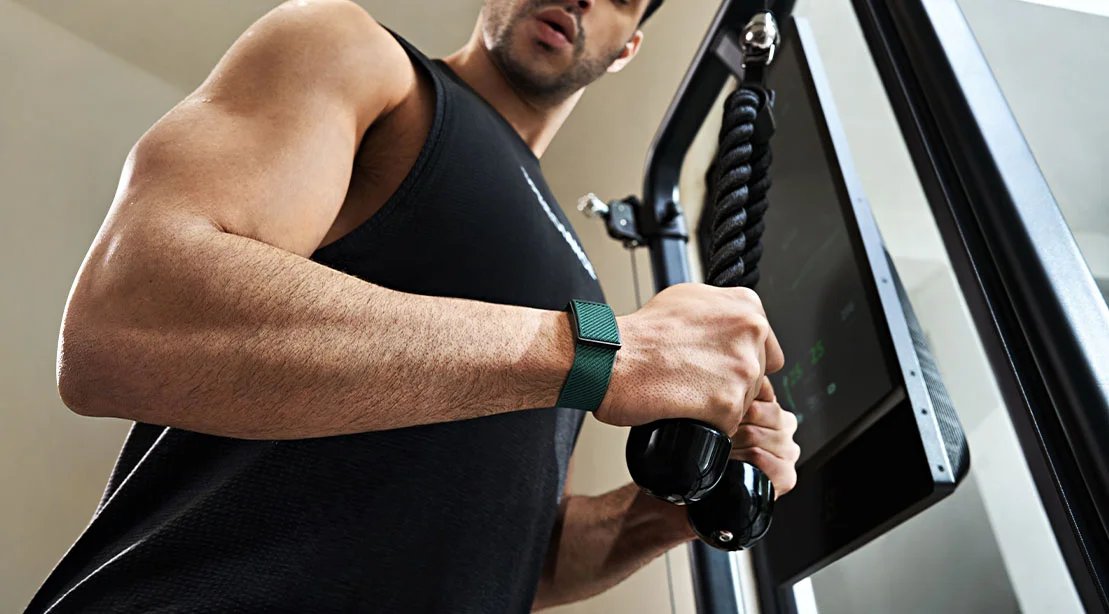
Smart home gym equipment earns its keep when it changes what you can do, how well you can train, or how much room your setup takes up. A screen full of features won’t matter if the workout feels the same and the gear ends up gathering dust. The more interesting products solve practical problems: limited space, awkward resistance jumps, or the difficulty of tracking progress at home.
“High-tech” covers more than connected machines here. Some of the strongest ideas are mechanical: an adjustable dumbbell that changes weight quickly, for example, or a bench designed to make setup easier. We tested every pick alongside other home gym and fitness products. These stood out because their design or technology made a noticeable difference to training, space, or day-to-day use.
How to Choose Home Gym Gear That Earns Its Space
Start with the workout, then consider the room it has to live in. That order helps separate useful features from extras that look good on a product page.
Judge the technology in the middle of a workout
Does the gear give you more control over resistance? Does its feedback help you make a training decision? Those are the kinds of benefits you should be able to feel or use during a session. A long feature list is a weak selling point if most of it goes untouched after the first few workouts.
Make sure the equipment fits your space and routine
Home gym equipment has to justify the floor space it occupies. A large machine may be a good trade if it replaces several pieces of gear. Compact equipment still needs a reason to stay out: it should be easy to store or useful enough that you reach for it often. If you’re constantly shifting a product out of the way, its clever design may not matter for long.
High-Tech Home Gym and Fitness Gear: The Picks
Workout equipment
- Speediance Gym Monster 3
- Speediance Gym Nano
- REP x PÉPIN FAST Series Adjustable Dumbbells
- ZeroWheel
- REP Strive Air Bike with VPR
- FED Fitness WB7 Adjustable Utility Weight Bench
- REP 3-in-1 Soft Plyo Box
- LifePro PacerMini
- Fight Camp
Recovery tools
Tracking and performance tech
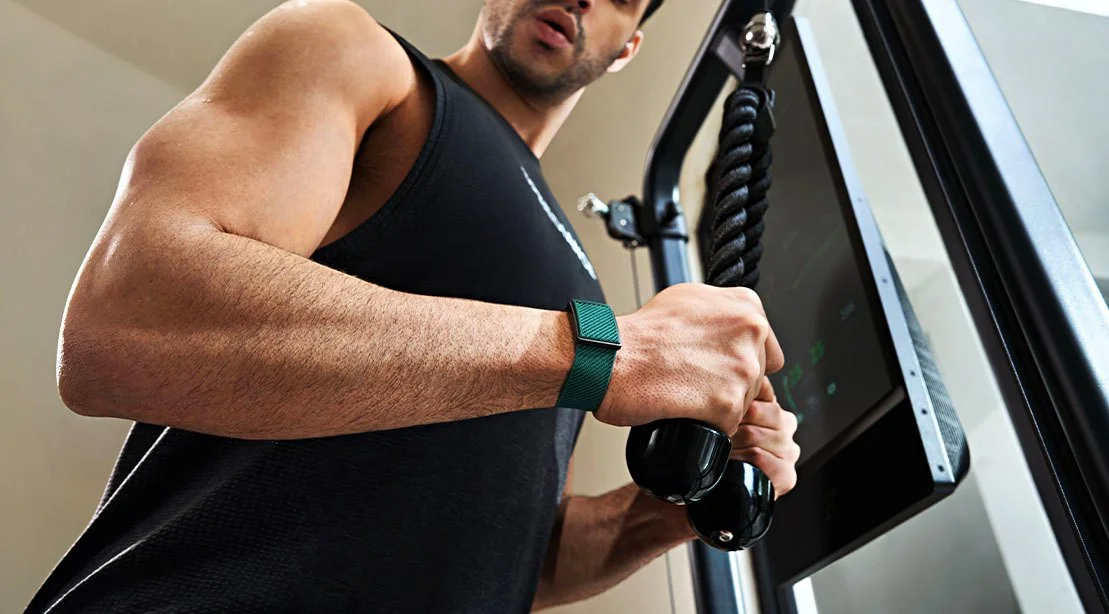
Best Smart Home Gym: Speediance Gym Monster 3
Specifications
- Digital resistance: Up to 220 pounds
- Adjustment: 1-pound increments
- Touchscreen: 23.8 inches, 2560 x 1440
- Weight: 181 pounds
- Cable positions: 19 vertical and 1 bottom position
- Footprint: 9 square feet unfolded; 2.7 square feet folded
The Gym Monster 3 can anchor a home strength setup. Its adjustable cables and digital resistance handled compound lifts and accessory work in our testing, without the need to build a wall of weight stacks around it. Fine-grained, 1-pound changes are useful when a bigger jump would change the character of a set.
Some of its best ideas are about control during a lift. Smart Spotter tracks movement speed and can lower resistance when a rep begins to stall. A Bluetooth ring lets you switch the load on or off without reaching for the touchscreen, and programmable cable engagement lets you choose when resistance starts. Those features matter most when you’re training alone and want more control over the movement.
Pros
- Up to 220 pounds of digital resistance
- Load changes in 1-pound increments
- Smart Spotter and Bluetooth ring controls
- Folds to a compact footprint
Cons
- At 181 pounds, it’s cumbersome to move
- The 220-pound ceiling may be limiting for stronger lifters on some lower-body exercises
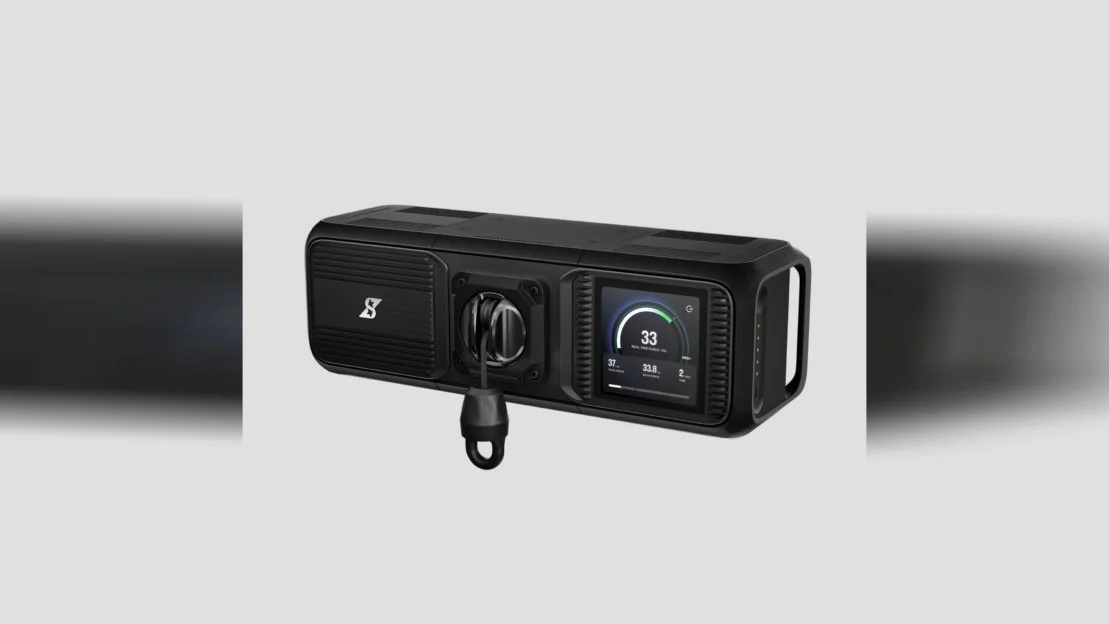
Best Portable Smart Trainer: Speediance Gym Nano
Specifications
- Digital resistance: Up to 220 pounds
- Adjustment: 1-pound increments
- Weight: 18.1 pounds
- Cable range: 16.7 feet
- Maximum cable speed: 21 feet per second
- Display: 4 inches, 720 x 720
- Training modes: Standard, Chain, Eccentric, Fixed Speed, and Sled
Gym Nano weighs 18.1 pounds, but its capabilities reach well beyond a simple travel trainer. In testing, the 16.7-foot cable range made room for athletic movements as well as conventional cable exercises, and resistance goes up to 220 pounds. Sled Mode adds another way to use that load for more dynamic sessions.
Its tracking also gives the small unit a broader role. Nano can run baseline assessments, record set data, and build a history for comparing workouts. Power, movement speed, and rate of force development can give athletes and coaches more useful context than a resistance number alone.
Pros
- Up to 220 pounds of smart resistance
- 16.7-foot cable range
- Performance assessments and training history
- Portable, 18.1-pound design
Cons
- The mounting setup shapes where and how you can use it
- Bilateral cable exercises require two Gym Nano units
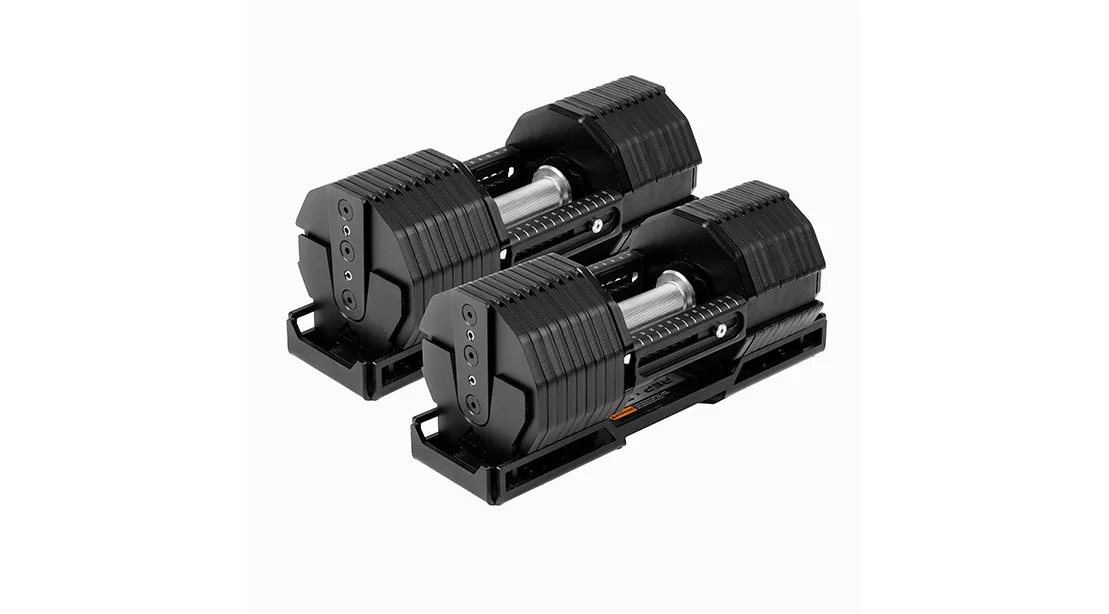
Best Adjustable Dumbbells: REP x PÉPIN FAST Series
Check the FAST Series dumbbells
Specifications
- Weight range: 10 to 125 pounds per dumbbell
- Available pairs: 85, 105, or 125 pounds
- Standard adjustments: 10-pound increments
- Micro adjustments: 2.5 or 5 pounds
- Maximum length: 18.3 inches
- Handle: 34mm nickel-plated handle with volcano-style knurling
- Construction: All-metal dumbbells and cradles
Fast changes are the point of the FAST Series. Magnetic pop-pins move along side rails for 10-pound jumps, and you can reposition them while the dumbbell is out of its cradle—a practical detail for drop sets. Included 2.5-pound microplates offer a smaller increase when ten pounds is too much.
The range is notable, too. Each dumbbell can reach 125 pounds while staying 18.3 inches long at its heaviest setting, which gives stronger lifters substantial loading without an unwieldy dumbbell. The 85- and 105-pound versions can be expanded later, and the cradles expand with them. That leaves room to grow without replacing the whole set.
Pros
- Up to 125 pounds per dumbbell
- Quick magnetic pop-pin changes
- Expandable weight capacity
- Compact 18.3-inch maximum length
- All-metal construction, extensively drop-tested
Cons
- The 10-pound starting weight may be too heavy for some lighter exercises
- To make 2.5-pound changes, you have to add microplates by hand
Most Innovative Core Trainer: ZeroWheel
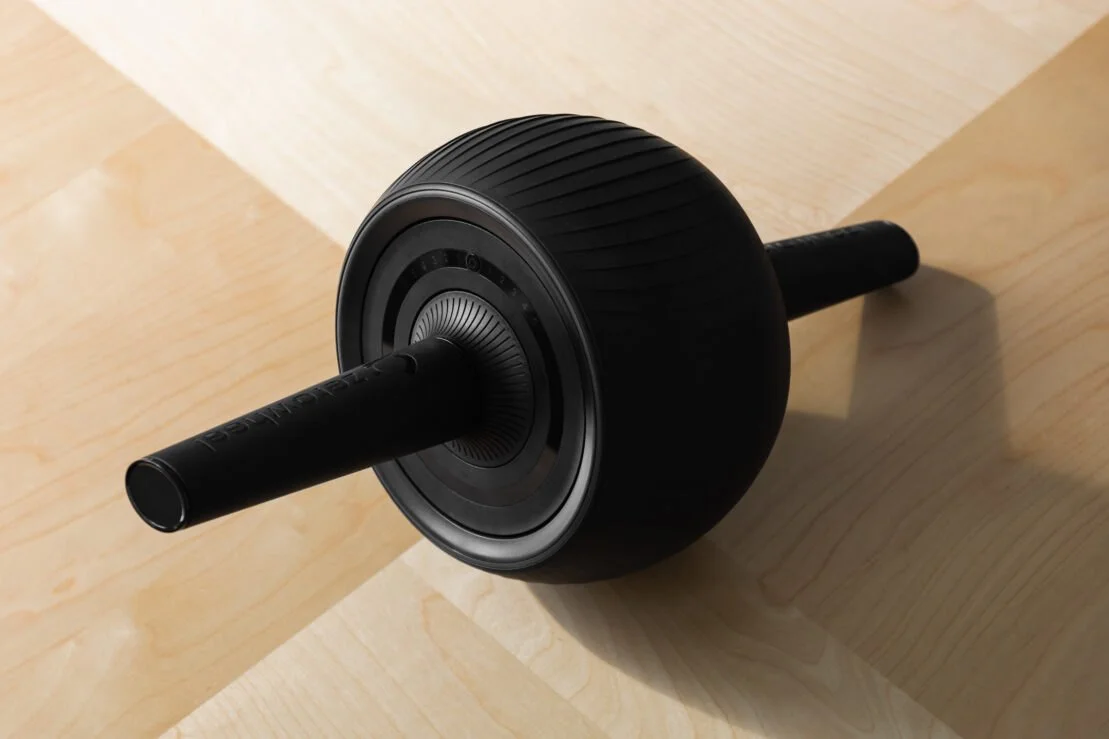
Specifications
- Size: 18 x 8.4 x 8.4 inches
- Weight: 12.2 pounds
- Battery life: About four hours of continuous use
- Motor torque: 10.5 N·m
- Training system: Adjustable motorized assistance and resistance
Progressing ab rollouts can be a challenge: the step from a shortened movement to a full rollout may feel too large. ZeroWheel gives you more ways to bridge that gap. Motorized assistance can reduce the load while you learn the movement; later, adjustable resistance adds difficulty when standard rollouts no longer do enough. Its motor modes also support exercises beyond the familiar rollout, so the device has more range than its shape suggests.
The ZeroWheel Fitness app helps turn that range into a session. It includes an exercise library, workouts and programs built for the device, tutorial videos for unfamiliar movements, and live performance tracking. You can follow a prepared workout instead of planning one yourself, which makes it easier to get started.
Pros
- Adjustable assistance and resistance
- Free app with guided workouts and programs
- A clear way to progress the movement
- Compact and portable
Cons
- More specialized than most strength equipment
- Expensive for a core-focused device
Best Cardio Equipment: REP Strive Air Bike with VPR
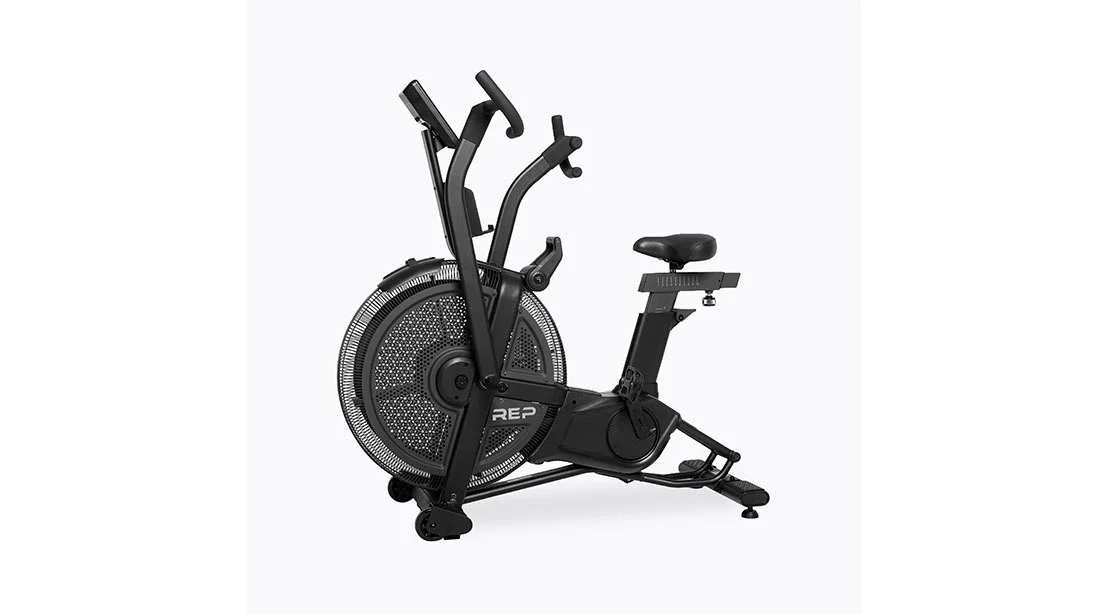
Specifications
- Resistance: 8 VPR levels
- Drive system: Dual-stage belt drive
- Weight: 146 pounds
- Maximum user weight: 350 pounds
- Dimensions: 57.41 x 27.23 x 53.24 inches
- Connectivity: Bluetooth/FTMS and ANT+
Most air bikes make resistance rise with your cadence. The Strive changes that relationship with REP’s Variable Pitch Resistance system, which adjusts the fan-blade angle so you can make the ride feel harder without simply pedaling faster. In testing, that meant more control when switching between sustained conditioning and sharp intervals.
REP has also addressed a couple of everyday air-bike irritations. A magnetic fan cover controls how much air blows back toward you, while a ratcheting seat adjustment makes it quicker to change position than a conventional pull pin. Those details won’t change the workout, but they can make frequent rides less fiddly.
Pros
- 8 adjustable VPR levels
- Resistance can change independently of cadence
- Adjustable magnetic fan cover
- Bluetooth/FTMS and ANT+ connectivity
Cons
- Heavy at 146 pounds
- Takes up more room than many basic air bikes
Best Adjustable Bench: FED Fitness WB7 Adjustable Utility Weight Bench
Best Adjustable Bench: FED Fitness WB7
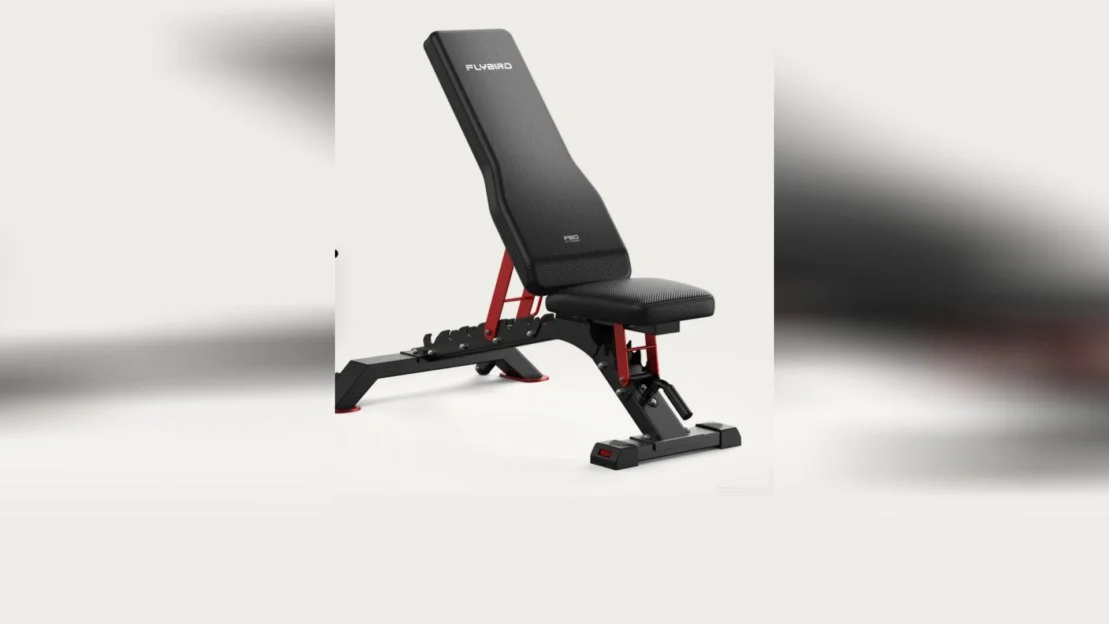
The WB7’s appeal is its balance: it offers the adjustments and capacity you’d expect from a heavy-duty bench, but weighs just 49.8 pounds. That matters in a home gym where equipment often has to move between workouts. Its broad base felt steady under load during testing, and built-in wheels make it easier to clear the floor afterward.
Setup flexibility is another strong point. Six backrest positions and three seat positions make it easier to find a comfortable angle for flat and incline presses. The dual-slot adjustment system speeds up those changes, while 2.5-inch high-density foam kept the bench comfortable through both types of work.
Specifications: 49.8 pounds; 1,300-pound maximum listed capacity; six backrest positions; three seat positions; 17.7-inch seat height; 2.5-inch high-density foam.
Pros: Broad adjustment range, comfortable padding, relatively light for a heavy-duty bench, stable wide base.
Cons: The frame doesn’t fold, and there’s no decline setting.
Best Space-Saving Training Tool: REP 3-in-1 Soft Plyo Box
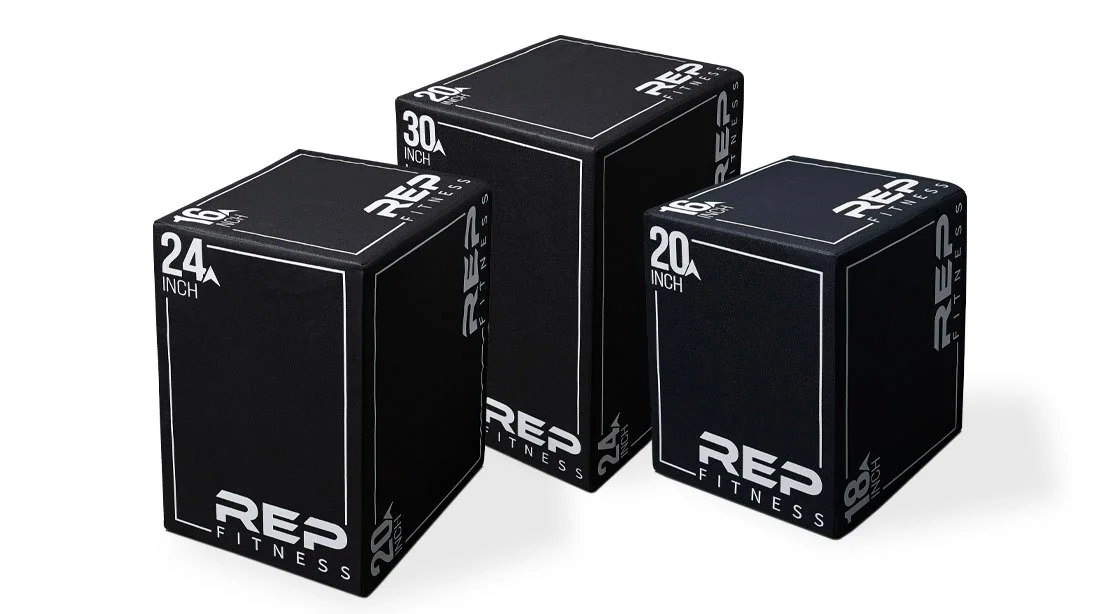
One box that offers three jump heights can save more than floor space: it also means fewer pieces of gear to store and move around. The REP box changes height when you turn it onto another side. In testing, it also worked for step-ups and other movements that call for a raised platform, so it can earn a place in a regular workout rotation.
A wood core gives the box its firm base, while a textured vinyl exterior adds grip. The cover can be removed for cleaning or replacement. Size matters here: the small version is manageable at 27 pounds, while the large one weighs 58 pounds and takes up more storage room than a flat platform.
Specifications: Small: 20 × 18 × 16 inches, 27 pounds; medium: 24 × 20 × 16 inches, 34 pounds; large: 30 × 24 × 20 inches, 58 pounds. All sizes have a 400-pound capacity and a wood core with foam and vinyl exterior.
Pros: Three heights in one box, grippy surface, useful beyond plyometrics, removable and replaceable cover.
Cons: The large model is heavy, and the box takes more storage volume than a flat platform.
Shop the REP 3-in-1 Soft Plyo Box
Best Walking Pad: LifePro PacerMini
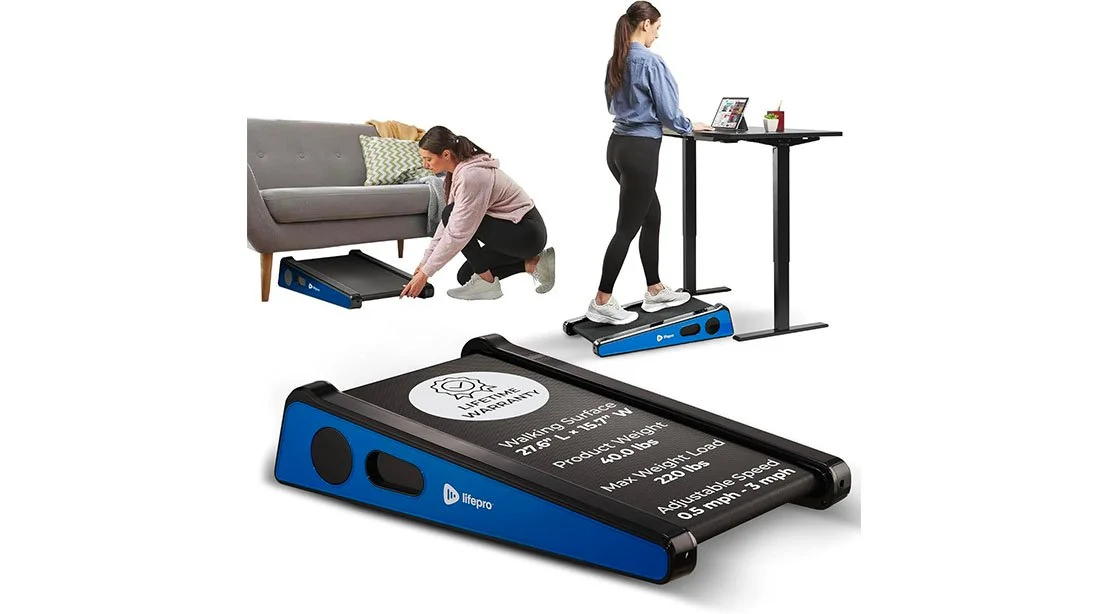
The PacerMini is built for walking while a desk or a small room does double duty. At 6.9 inches tall, it can tuck away when the floor is needed for something else; transport wheels make repositioning easier. During testing, speed changes in 0.1-mph increments made it easier to settle into a comfortable pace, and the wireless remote was handy when the unit sat beneath a desk.
There’s a firm limit to what it can do: its 3.0-mph maximum is for walking, not jogging. The 27.6-by-15.7-inch belt may also feel short or narrow for taller users. Two incline positions offer some variation, but this remains a compact walking machine.
Specifications: Speed range of 0.5–3.0 mph with 0.1-mph adjustments; overall dimensions of 32 × 20.8 × 6.9 inches; walking surface of 27.6 × 15.7 inches; weight of 41.4 pounds; 220-pound maximum user weight; two incline positions.
Pros: Compact profile, wireless remote, fine speed increments, built-in wheels.
Cons: Top speed rules out jogging, and taller users may find the walking surface cramped.
Best Conditioning Workout: FightCamp
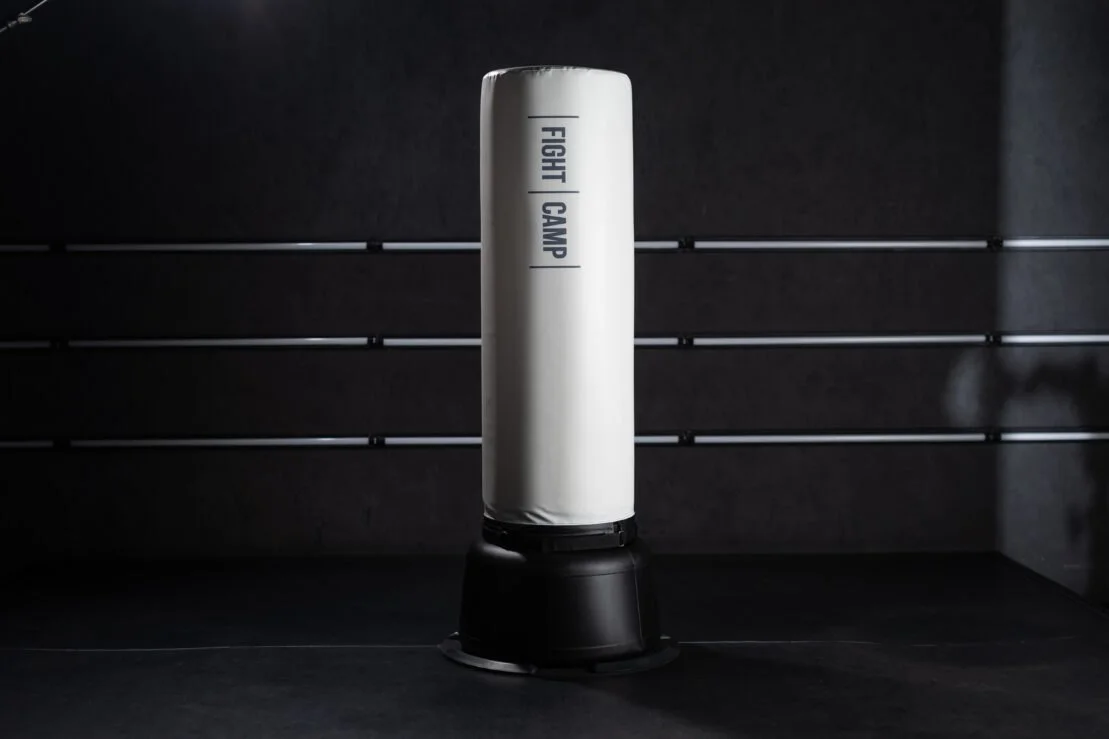
FightCamp gives home conditioning a more engaging structure than a treadmill session, especially if boxing or Muay Thai is already your thing. The company has operated since 2018, and its platform includes more than 3,000 on-demand workouts led by experienced trainers. The freestanding bag suits both boxing and Muay Thai, while trackers measure punch and kick type, speed, and output in real time.
The newer Gen 3 trackers work without a console. Home packages include four: two worn in hand wraps, plus two optional trackers for kickboxing. They connect by Bluetooth to the FightCamp app on a phone, tablet, or TV. Technique Workouts add live punch scoring and an accuracy percentage at the end of a session.
FightCamp WORK extends tracking to training on any bag, with mitts, or during shadowboxing. Its Drills feature lets you choose a featured drill or build one, set a target for each round, and compare personal bests over time. That’s useful flexibility, though the membership costs $44.99 a month, and filling the bag’s base with water or sand may be awkward.
Specifications: Four trackers in home packages, worn on wrists and ankles; Bluetooth app support for phone, tablet, or TV; real-time strike tracking and technique scoring. The bag measures 67 × 24 inches and weighs 30 pounds empty, or up to 300 pounds when filled with water or sand.
Pros: More than 3,000 on-demand workouts, detailed strike tracking, punch accuracy scoring, console-free trackers, and WORK tracking for bags, mitts, and shadowboxing.
Cons: The Home membership is $44.99 per month, and filling the base can be difficult.
Recovery Tools
Best Compression Boots: FIT KING FT-130A
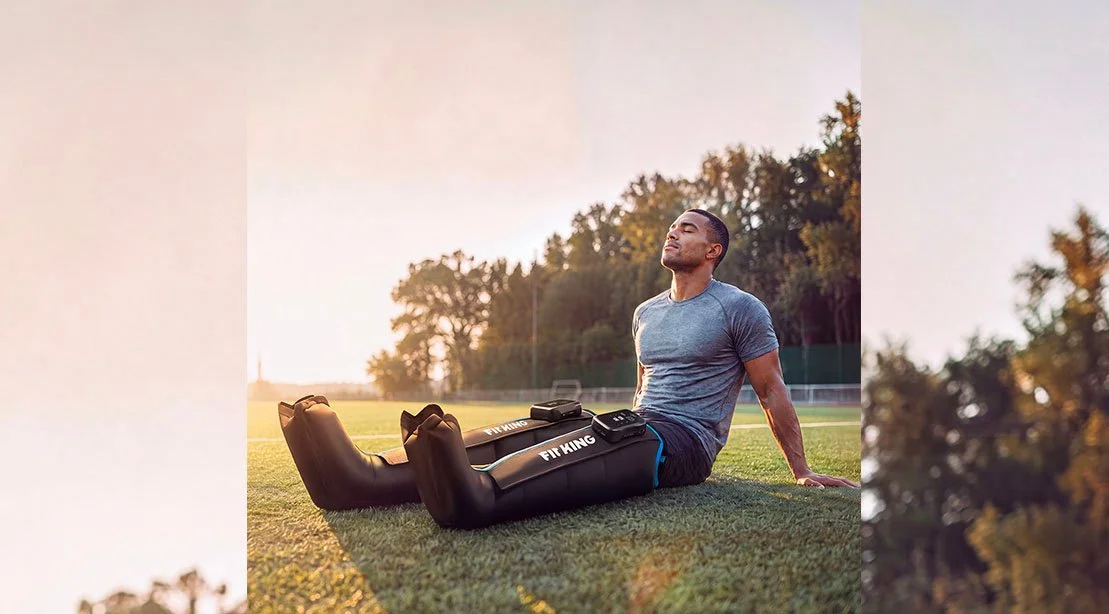
The FT-130A’s cordless design solves a mundane but real annoyance: there’s no separate pump and hose setup spread around the floor. Each boot has its own controller, and pressure sensing adjusts compression to the shape of your legs. You can choose from 11 levels across a 50–150 mmHg range, and run the boots together or separately if you only want to treat one leg.
Specifications: Five compression chambers; 50–150 mmHg pressure range with 11 levels; three massage modes; sessions of 15–60 minutes; 2,600mAh battery per boot; about three hours of runtime with both boots in use.
Pros: Cordless all-in-one setup, automatic pressure sensing, broad pressure range, independent or synced operation.
Cons: No heat function; bulkier than handheld recovery tools.
Best Portable Massage Gun: Hyperice Hypervolt Go 3
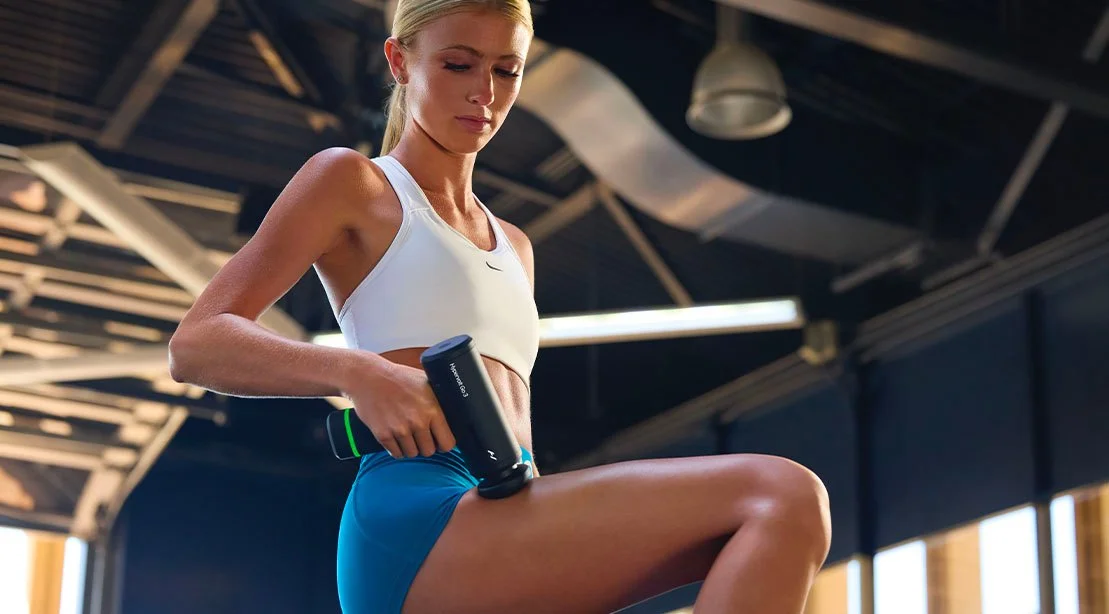
At 1.6 pounds, the Hypervolt Go 3 is easy to carry between home, gym, and travel. It charges over USB-C, comes with a carrying case, and is TSA-friendly for carry-on luggage. Five speed settings span 1,500 to 2,500 RPM; the included flat and wedge heads cover basic use, and the battery lasts up to four hours. At 55 dB, it’s also designed to keep operating noise down.
Portability comes with a short accessory list: you get only two heads, and there’s no pressure sensor. Still, the low weight and straightforward charging make it easy to keep in regular use.
Specifications: 1.6 pounds; five speeds; 1,500–2,500 RPM; up to four hours of battery life; flat and wedge attachments; USB-C charging; 55 dB noise level.
Pros: Lightweight, carry-on friendly, USB-C charging, long battery life.
Cons: Two attachment heads and no pressure sensor.
Shop the Hyperice Hypervolt Go 3
Tracking & Performance Tech
Best Performance Tracker: Garmin fēnix 9 Pro
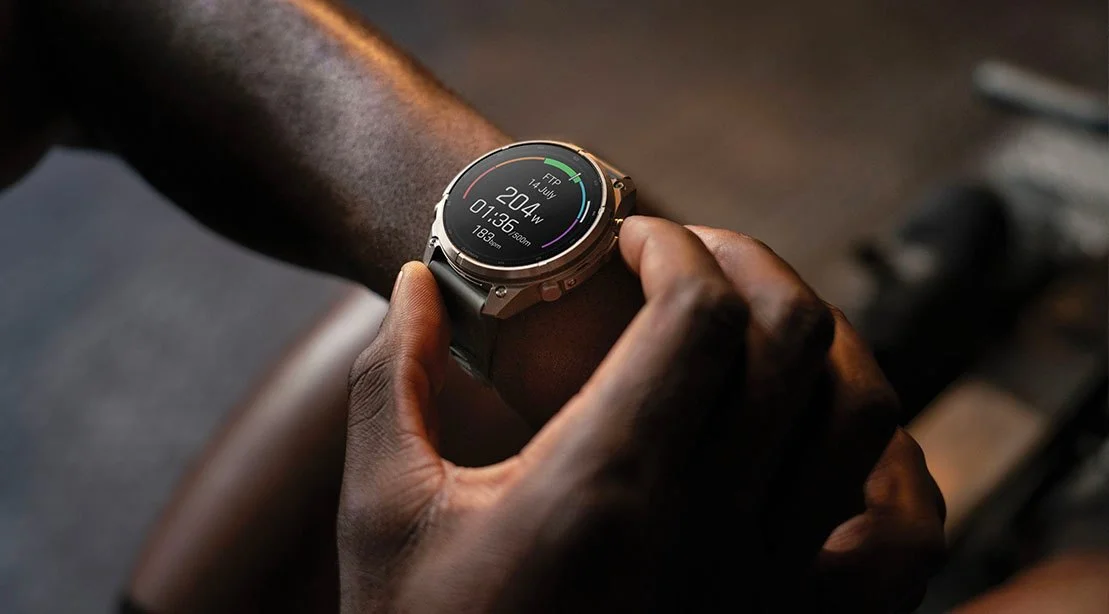
The fēnix 9 Pro makes the strongest case for people who mix gym training with outdoor pursuits. Strength work, conditioning, and time outside can all contribute to one view of training load and recovery. Garmin’s Training Readiness and Training Status help interpret that activity, while Stamina Zones and Stamina Curve add detail during longer efforts. The breadth is useful; how much it tells you will depend on whether you’ll actually use that information to adjust your training.
Specifications: 47mm case; AMOLED display rated up to 3,000 nits; up to 18 days of battery life in smartwatch mode; 10 ATM water rating; multi-band GPS and built-in mapping. Training features include Training Readiness, Training Status, and Stamina Zones. inReach connectivity is available on select configurations.
Garmin’s watch extends its value well beyond workout tracking. Multi-band GPS and built-in maps help with navigation, and the integrated LED flashlight is a practical addition for early mornings or nights outdoors. Some versions include inReach connectivity for satellite communication, though the fragment doesn’t specify which models offer it.
Its strengths are a deep set of training and recovery metrics, stamina tools, navigation features, and the flashlight. The trade-offs are physical and practical: a 47mm case may overwhelm smaller wrists, and the number of features takes time to learn.
Best Multisport Headphones: H2O Audio TRI 2 PRO Multi-Sport with PLAYLIST+
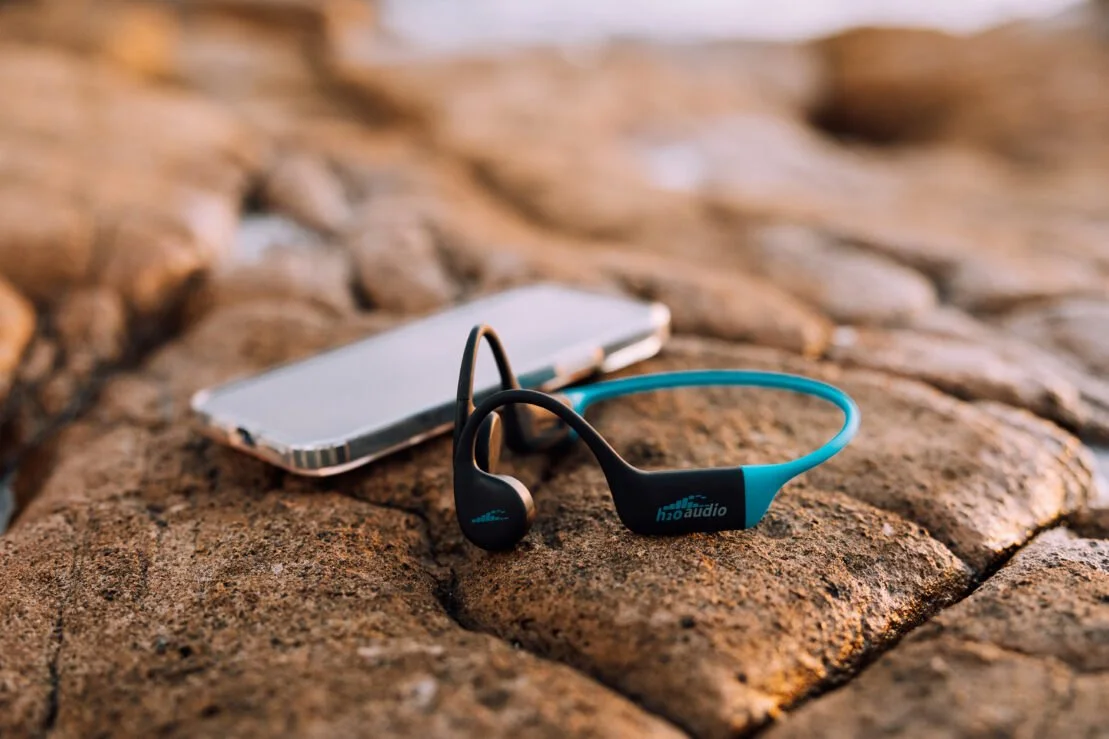
The TRI 2 PRO’s most useful trick is PLAYLIST+. It records audio from a Bluetooth connection onto the headphones’ 4GB of storage, so you can take streaming audio offline. That matters most in the pool: Bluetooth doesn’t transmit underwater, so you’ll need to record or load your music before you start swimming.
The open-ear bone-conduction design also suits outdoor training, where keeping your ears uncovered can be useful. The headphones carry an IPX8 rating and are specified for submersion to 12 feet. H2O Audio’s PRO app handles music and folders, software updates, and PLAYLIST+ content.
Specs: Bone-conduction audio; IPX8 waterproof rating; maximum submersion of 12 feet; 4GB storage; Bluetooth 5.3; up to 9 hours of battery life in Bluetooth mode or 6 hours in memory mode; PLAYLIST+ and a built-in MP3 player for offline playback; H2O Audio PRO app.
For swimmers, the offline playback features solve a real limitation. The catch is that they require preparation: you can’t count on Bluetooth once you’re underwater, and PLAYLIST+ content has to be recorded or loaded in advance.
Pros
- PLAYLIST+ records streaming audio for offline playback
- IPX8 rating for submersion to 12 feet
- Open-ear bone-conduction design
- Built-in 4GB MP3 player
- Up to 9 hours of Bluetooth playback
Cons
- Bluetooth doesn’t work underwater
- PLAYLIST+ audio must be recorded or loaded before you go offline
How We Evaluated the Gear
Every product in this roundup was tested hands-on and compared with equipment used in home gyms, training facilities, recovery routines, and everyday fitness. The focus was on whether a product’s design or technology made a noticeable difference during use.
That evaluation came from a strength-and-conditioning perspective: does the gear expand training options, make consistent use easier, or solve a problem that actually comes up in a home gym? That’s a more useful test than a long feature list. Products that met it earned their place here.
M&F Editors contributed to this article.


Discussion
Sign in to join the discussion.