After winning the 2026 Mr. Olympia, Nick Walker shared how an outward toe angle, deep stretch and controlled reps fit into his leg training.
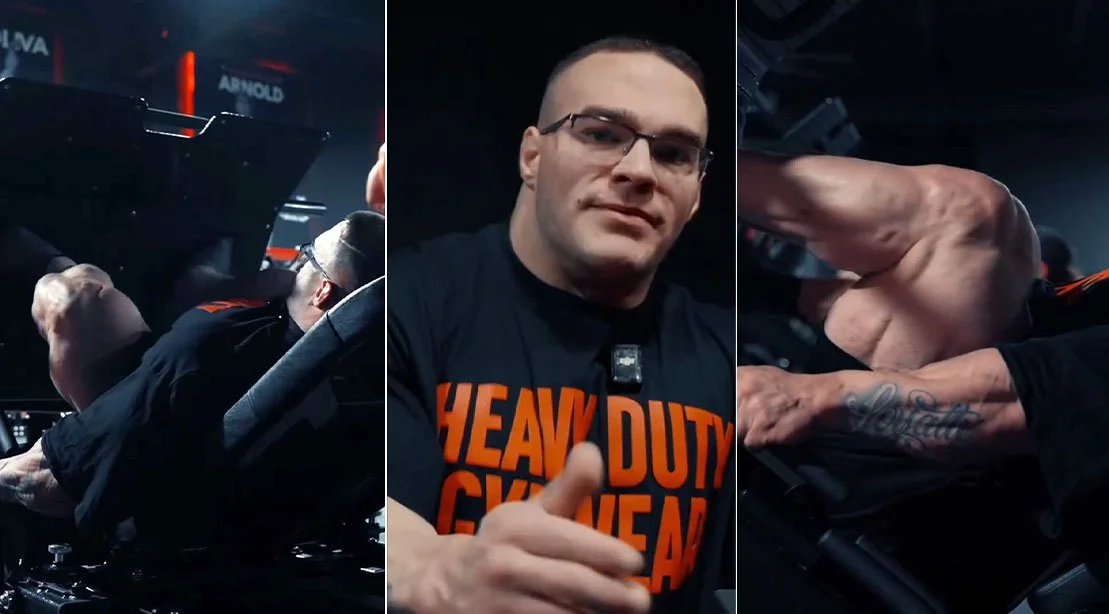
A leg press built around Walker’s goals
Nick Walker’s leg press setup reflects a bodybuilding priority: he wants more outer quad sweep, even if the movement also recruits other muscles. After winning his first Sandow at the 2026 Mr. Olympia, Walker described the exercise as a major contributor to his recent leg growth. That’s his account of what’s worked for his physique, not a universal prescription.
“This is my bread and butter,” Walker said in a recent Instagram post. He explained that he presses with his feet set wide and toes turned outward, a position he says lets him reach more knee flexion and contract the outer sweep of his legs. Walker added that the stance draws criticism, but it works for his body and training goals.
That distinction matters in bodybuilding, where an exercise is often judged by whether it helps develop a particular visual feature. A stance can change how a lifter experiences a movement, but one athlete’s preferred position doesn’t establish that it’ll produce the same result for others. Walker’s claim is narrower: this setup feels effective for him, and he’s willing to accept the debate around it.
His foot position may look broader than it is. In the video, Walker presses without shoes and points his toes outward, roughly toward the 10 and 2 positions on a clock. His feet flare, though they remain about hip-width apart. The difference between a wide-looking angle and a genuinely wide stance is easy to miss when watching a short clip.
Depth and tempo shape the rep
Walker takes the lowering phase deep, then pauses briefly at the bottom before driving the platform upward. He says the stretch, explosive press and slow negatives have helped his legs grow. That combination puts emphasis on controlling the bottom position as well as moving the weight.
Tempo changes the character of a repetition. A deliberate descent and pause make the lifter spend more time controlling the loaded position; the forceful press then completes the rep. The description doesn’t establish how much each element contributes to Walker’s growth, but it makes clear that he sees execution as part of the method, not a detail separate from it.
His approach differs from common advice that a narrower stance better targets the outer thigh. Walker’s experience suggests that stance selection can be individual: the position he finds effective may not suit every lifter, but it gives him the contraction he’s after. This is more significant than it looks: coaching cues can become rigid rules, even when lifters differ in mobility, proportions and comfort.
Walker accepts the added muscle involvement
The setup also brings his hamstrings and adductors into the movement. Walker acknowledges both contributions and considers them acceptable, since his main aim is loading the outer sweep. His point is practical: a leg press rep can involve more than one muscle group without undermining the target he’s pursuing.
That’s a useful corrective to the idea that a movement must isolate one muscle to serve a specific training goal. Compound exercises typically ask several muscles to contribute, and changing stance doesn’t erase that overlap. Walker is describing a trade-off he accepts, not claiming that the other muscles stop working.
What other lifters can take from the setup
For lifters experimenting with the variation, Walker’s account centers on three details: toes turned outward, a deep controlled descent and a brief pause in the stretch. He says the result has helped him add leg size; the useful test is whether the setup lets you train your intended range and target effectively. If you're working in this space, pay attention to how the position feels across the whole rep, rather than copying the foot angle in isolation.
Here's the thing: a short social video can show a technique, but it can’t establish why an athlete’s legs grew or whether another person will respond the same way. (And this is the part most people overlook.) The stance is only one part of the account; Walker also emphasizes depth, tempo and his willingness to use a position that draws criticism. Individual preference, under a load.
That said, his explanation is concrete enough to be useful as a starting point. Treat the details as a setup to assess against your own movement and goals, not as proof that one foot position is best for everyone. The broader lesson is simple: consistency and control matter to the method Walker describes, while the exact stance remains personal.
To follow Nick Walker on Instagram, click here.


Discussion
Sign in to join the discussion.