Stephan James dropped from just over 200 pounds to about 180 to play Carl Weathers in I Play Rocky, betting on definition over raw bulk.
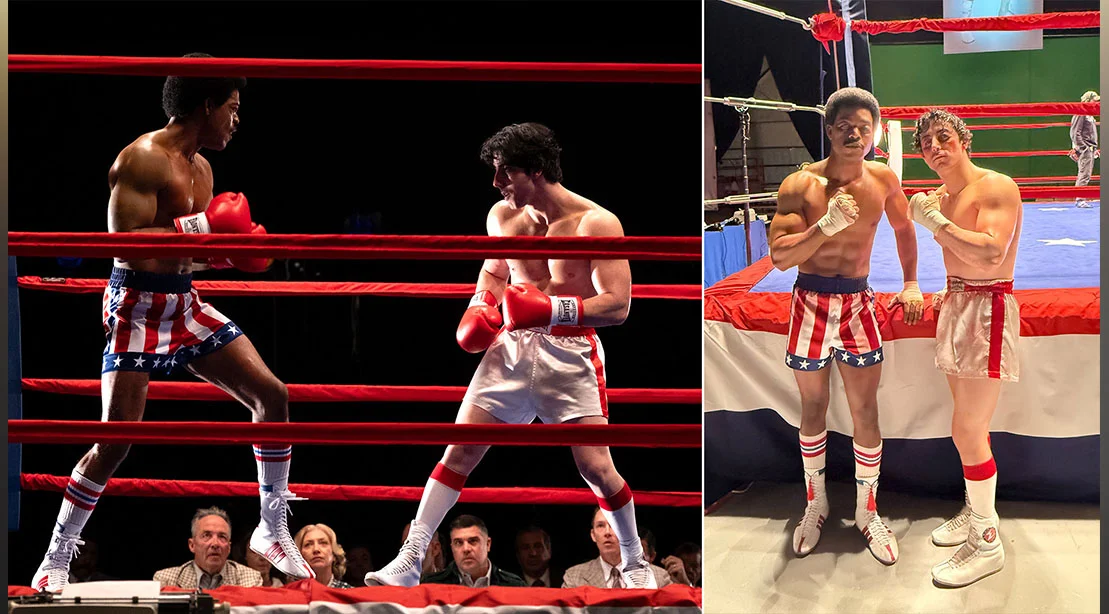
Playing a former NFL linebacker who topped out around 220 pounds usually means eating your way toward the part. That's the default playbook, and it exists for a reason: size reads on camera, and a bigger frame signals power before anyone throws a punch. Stephan James went the other direction for I Play Rocky, and his reasoning holds up better than the usual bulk-up playbook.
James arrived at the role just over 200 pounds and planned to pack on muscle. His trainer pushed back with a sharper idea: "You know what, Steph? If you just try to cut your bodyfat percentage down, then you may give yourself a better chance, giving the perspective of somebody who is even bigger than you may actually be."
That's a counterintuitive note to hear when you're expecting to get bigger. The trainer's point was about perception, not arithmetic. A heavier body isn't automatically a more convincing one, especially when the audience reads silhouettes in a fraction of a second and the editing cuts between close shots and wide ones. Mass alone won't fix that.

Why Leaner Reads as Bigger
Bodybuilders have known this for decades. As body fat drops, skin pulls tighter over the muscle, and the angles and separations that read as definition come forward. Shrink the waistline and the upper body looks wider, so shoulders, chest, and arms seem to grow even as the number on the scale falls. That's the illusion James was chasing, and it's a smart one for a role where the camera does most of the work.
Here's the thing: this isn't really a bodybuilder's trick. It's a lighting and framing trick too. A lean torso with visible structure catches light differently than a softer one, and a tight waist makes the shoulders look broader by comparison. (And this is the part most people overlook.) The audience never sees a body fat percentage. They see a shape, and the shape is what the trainer was trying to get right.
I'd argue this is more significant than it looks, because it changes the question. Most physical roles start with "how much mass do we need?" The better question is "what does the eye register?" If you're working in this space, whether as a performer, a trainer, or a costume designer, that distinction will save you from chasing the wrong target. Weight is easy to measure. Visual impression takes more work to get right.
Two Months and a Lot of Footwork
James had about two months to get ready, and he admits he wasn't a cardio guy at the start. Boxing changed that fast. Mornings went to cardio and weight training, afternoons to learning the craft: footwork, technique, punches, then choreography. "There was so much that I didn't know and understand," he says of stepping between the ropes. "Cardio is the number one thing that you get from boxing."
That sequence matters. Boxing is hard to fake, because the body either moves like it trained for years or it doesn't. Footwork comes first because everything else depends on it. Punches come next, and choreography comes last, when the movements are already automatic enough to be performed for a camera rather than just survived. Repetition. Repetition until the movement looks unplanned.
He cut to around 180 pounds while training through his fight scenes on a calorie deficit. The payoff, in his words, was that it "really helped just emphasize and accentuate" the muscle he already had. Here's the thing: the weight loss didn't shrink the character. It sharpened the silhouette, which is exactly what a fighter's body on screen needs to do. That said, cutting weight while doing hard physical work is a balancing act. Too aggressive a deficit eats into energy, recovery, and the stamina that shows up on camera. James seems to have landed on the right side of that line, though the sources don't say how he tracked it.
A Pioneer Worth Playing
Carl Weathers died in 2024, and he's remembered as Sylvester Stallone's favorite onscreen opponent. James, who runs The Black Academy with his brother Shamier Anderson to champion Black talent, sees Weathers as a trailblazer. "Guys like Carl helped pave the way," he says. "For so many other actors, like myself, to be able to be a leading man, to be seen as layered, characters with heart, thoughts, emotions, charisma and charm."
I think that's the most honest line in the whole piece. Playing an opponent is a supporting job, even when the performance is memorable. Playing the person behind the role, in a film that asks audiences to care about him, is a different kind of ask. The gap between those two positions is where a lot of careers stall, and James is pointing right at it. Weathers's generation had to build that bridge while working through it, and the actors who followed walked across it with fewer obstacles.
Anthony Ippolito has the younger Stallone's voice and body language locked down, which is its own kind of achievement. Playing a real person asks for a different skill set from building an original character, and mimicry is only part of it. Stephan James, though, carries more than a passing resemblance to Weathers, and that's a physical argument the role couldn't have made with extra pounds alone. I Play Rocky opens in U.S. theaters on Nov. 20.
What This Means Going Forward
The film hasn't opened yet, so the verdict on the performance is still ahead. What's worth watching now is the approach itself. Physical transformation is a recurring tool in biopics and sports dramas, and the usual instinct is to add size. James's case suggests the more deliberate choice is sometimes the one that cuts weight, provided the work underneath is serious enough to support it.
I'm skeptical that every actor should copy this. Cutting body fat while learning a demanding sport in roughly two months is a punishing regimen, and it doesn't suit every body, schedule, or role. Some parts genuinely require added mass, and pretending otherwise would be its own kind of mistake. The lesson here is narrower: know what the camera needs to see before you decide what the character should weigh.
What this means for you, if you're preparing for a physical role, is simple enough to state and harder to execute. Ask what the audience will actually perceive, not what the number on the scale says. Then build the skill first and the look second. You'll get further that way, and the result will hold up when the lights come on.


Discussion
Sign in to join the discussion.