Forward lunges put more work on the quads, while reverse lunges emphasize the glutes and hamstrings. Form helps manage knee stress in both.
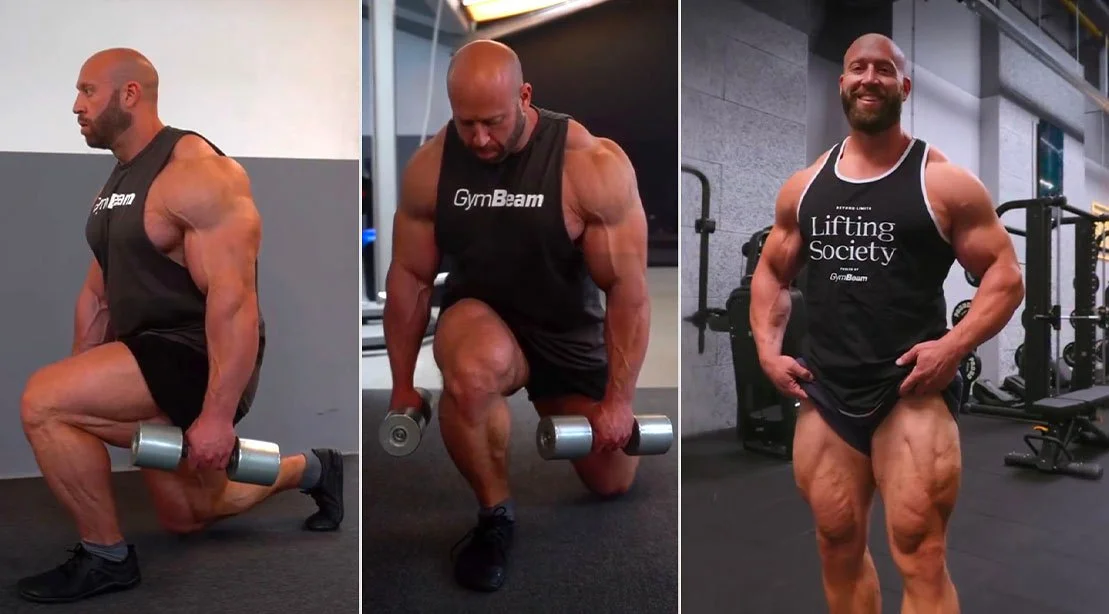
Two lunge directions, different demands
The direction you step changes which muscles do more of the work. Forward lunges place greater emphasis on the quadriceps, while reverse lunges shift more effort to the glutes and hamstrings. Both train the lower body, but they don’t distribute the effort in exactly the same way.
IFBB Pro and endurance athlete Petar Klancir outlined the distinction in an Instagram video. He identifies the quads, hamstrings, calves and core as involved in both movements, with the mechanics changing the balance between them. That’s a useful distinction for choosing an exercise, though it doesn’t mean either lunge isolates one muscle group.
For leg training, the two variations offer different ways to load the lower body. The practical question is less which one is universally better and more which pattern fits the emphasis you want, your control, and the rest of your workout.
Forward lunges load the quads
Stepping forward asks the quadriceps to control the landing and help lower the body. They then contribute to raising your center of mass as you push back to the starting position. Klancir says the forward variation also involves a high degree of flexion, which adds to the demand on the quads.
That makes the forward lunge a reasonable choice when you want a movement with more knee and quad involvement. The muscles still work together, and the actual demand depends on how you perform the rep. A controlled step gives you a chance to manage the descent and return rather than letting momentum dictate the movement.
Keep the stride controlled. Reaching too far forward can increase stress on the knee; at the bottom of the movement, the knee should sit only slightly ahead of the chin. Treat that cue as a positioning guide, not a reason to force a specific depth if you can’t maintain control.
Reverse lunges emphasize the hips
With a backward step, the front foot stays planted as the body lowers. Klancir describes this version as more focused on the glutes and hamstrings because it emphasizes a hip hinge.
That stable front foot can make reverse lunges easier to balance, with less demand on the core. The movement also tends to place less stress on the knee, as the glutes and hamstrings take on more of the load. Keep the front foot steady and the knee aligned over the ankle throughout the rep.
The difference is a shift in emphasis, not a division of labor. Your quads still contribute during a reverse lunge, just as the hips remain involved in a forward one. And this is the part most people overlook: a variation that feels easier to balance can still require attention to foot placement and knee tracking.
Choose by emphasis, then progress
Both variations can fit into a leg workout. Start by focusing on controlled steps and sound positioning; once the movement feels comfortable, dumbbells can add load. The choice comes down to the emphasis you want: forward for more quad work, reverse for more contribution from the glutes and hamstrings.
If you’re working on a leg routine, you can use that distinction to make a deliberate choice instead of treating the two exercises as interchangeable. You might favor one based on the muscles you want to emphasize, or include both when variety suits the session. Either way, adding weight only makes sense when you can keep the step and the return under control.
What the distinction means for training
This is more significant than it looks: small changes in step direction can alter how a familiar exercise feels and where the effort is concentrated. That gives you options without requiring a completely different movement pattern. The tradeoff is that no single cue guarantees the same experience for every person, since balance, stride length and control all affect execution.
Here’s the thing: the useful takeaway isn’t that one lunge wins. It’s that choosing a direction can help shape the focus of a session, while sound positioning remains the baseline for both. Keep the movement controlled. Then build from there.

Discussion
Sign in to join the discussion.