Fasting may alter immune activity, but cancer cachexia and clinical trial results complicate the case for feeding—or withholding—nutrition.

Cancer care often treats weight loss as a problem to reverse with more calories. Yet evidence on nutrition support raises a harder question: when illness suppresses appetite, does feeding improve outcomes, or can it sometimes add complications without helping patients? Research on fasting and immune function offers a reason to investigate that question, but it does not establish fasting as a cancer treatment.
When more nutrition doesn’t improve outcomes
Hospital malnutrition has been recognized for decades. A 1974 editorial called it “physician-induced malnutrition” and “the skeleton in the hospital closet.” The problem persists: studies have reported that as many as half of hospitalized patients are underfed. Malnutrition is associated with greater risks of illness and death, but association alone can’t show whether inadequate food causes worse outcomes or whether severe illness causes both poor appetite and poor outcomes.
Randomized trials provide a more direct test. Across 22 trials involving thousands of malnourished patients, nutritional support could increase body weight, yet generally had little effect on clinical outcomes. In some cases, it made outcomes worse. That finding challenges the assumption that restoring calories must help simply because a patient is ill or losing weight.
The distinction matters for cancer care, where clinicians often try to prevent weight loss. Appetite loss may reflect the disease, its treatment, or the body’s response to illness. It might also, in some circumstances, be part of a short-term defense response. That possibility doesn’t make prolonged undernutrition safe; it does mean that the consequences of feeding can’t be inferred from weight change alone.
What fasting studies suggest about immune activity
Reduced appetite is a common feature of infection. In animal research, short-term food restriction has sometimes improved immune defenses. One mouse study reported that after 48 hours without food, roughly 95% of animals survived an infection when they remained starved, while roughly 95% died after being refed.
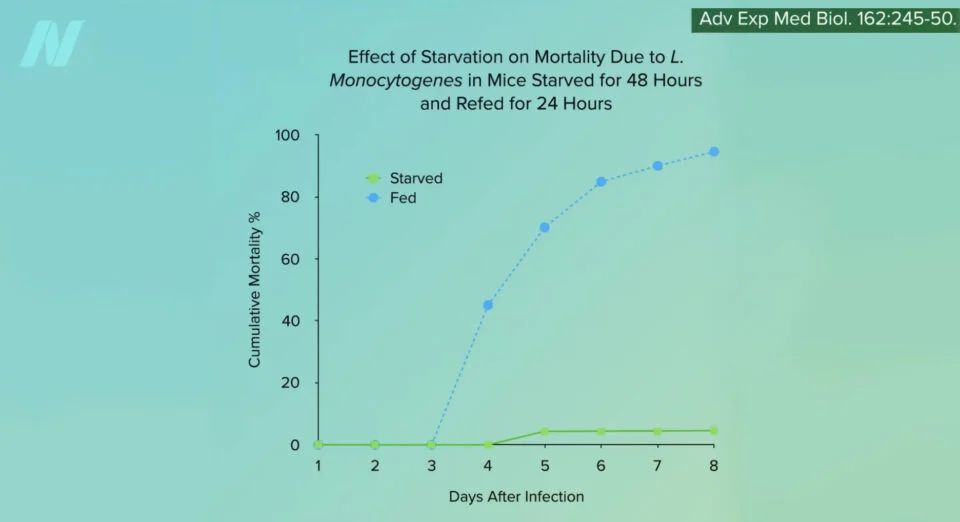
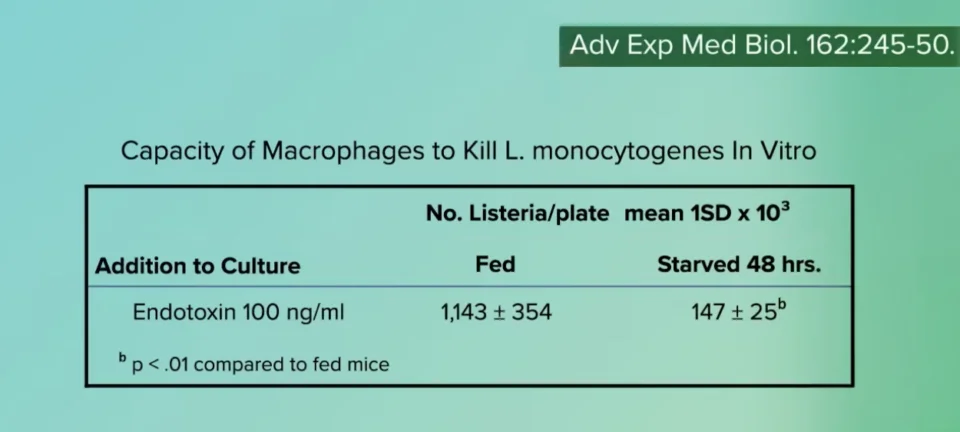
That dramatic result came from mice, so it can’t show what fasting would do for a person with an infection, let alone a person with cancer. The researchers also found that blood from the fasted mice was nearly eight times better at killing invading bacteria in a laboratory test. Their white blood cells showed a marked increase in pathogen-killing activity.
Human research has examined immune activity as well. In one study, participants followed an 80-calorie-a-day diet for two weeks. Their white blood cells showed greater bacteria-killing activity and antibody production. Natural killer cell activity rose by an average of 24%.
Natural killer cells are part of the immune system’s response to both infection and cancer. In this study, researchers measured their activity by exposing them to K562 cells, human leukemia tumor cells. The result indicates a change in a laboratory measure of cell-killing activity; it doesn’t show that fasting prevented or treated cancer in the participants.
That gap between a biological signal and a clinical benefit is central to the question. Fasting has been proposed as a way to increase the immune system’s surveillance of cancer, sometimes described as “stimulating the appetite of the immune system for cancer.” But a change in immune-cell activity is not evidence that fasting improves survival, slows tumors, or makes treatment more effective.
Cachexia changes the nutrition question
One reason fasting has been viewed cautiously in cancer care is cachexia, a wasting syndrome that contributes to many cancer deaths. Cachexia differs from ordinary starvation: feeding alone usually can’t reverse it. Tumors can demand substantial energy and protein, while cancer-related inflammation shifts the body toward breaking down its own tissues. Patients may lose weight even when clinicians provide large amounts of nutrition.
One reported case illustrates the limits of calorie replacement. A cancer patient was eating only a few hundred calories a day and continued to lose weight despite receiving about 100 grams of protein daily and up to 4,000 calories through intravenous feeding.
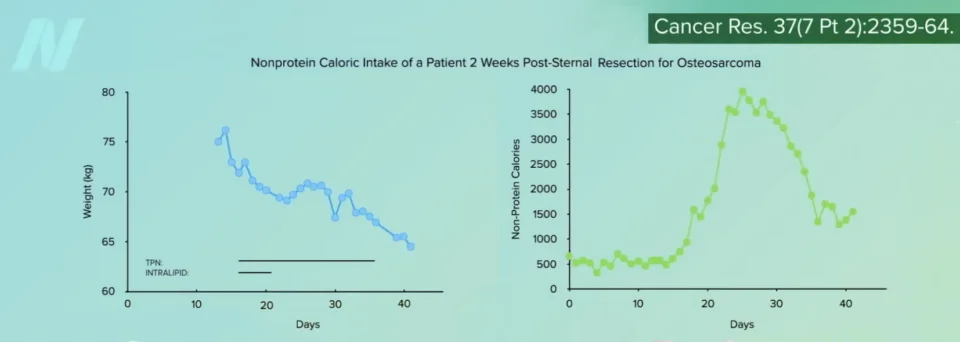
Trials of nutritional interventions have generally struggled to reverse cachexia. Treating the cancer itself is considered the best route to addressing its underlying cause. There’s also a concern that when a tumor grows rapidly and consumes nutrients, additional feeding may supply the tumor as well as the patient. That concern is a proposed explanation for some findings, not proof that calories routinely accelerate cancer.
Nutrition support has costs as well as limits
Total parenteral nutrition, or TPN, became available in the 1960s, allowing nutrition to be infused directly into a vein. It was adopted widely and became a multibillion-dollar industry. But randomized trials in malnourished cancer patients did not show a survival benefit from routinely providing it. Some found more complications and infections, as well as a lower tumor response to chemotherapy; researchers proposed that extra nutrients might stimulate tumor growth.
Oral supplements have also failed to show a survival advantage in trials, including studies that gave nutritional drinks to malnourished cancer patients. These results don’t mean patients’ nutritional needs are irrelevant. They show that supplying more calories, by itself, hasn’t reliably translated into better clinical outcomes for this group.
Here’s the tension: cachexia is dangerous, and cancer patients can be malnourished, yet attempts to correct weight loss through feeding alone often fail. At the same time, the immune effects seen in fasting studies are intriguing but remain far from proof that fasting is safe or beneficial during cancer treatment. The practical question is not settled by a mouse survival experiment or a rise in natural killer cell activity.
Fasting in cancer care needs direct clinical testing, with outcomes that matter to patients and careful attention to weight loss, treatment response, complications, and survival. Until such evidence is available, neither appetite loss nor added nutrition should be treated as a reliable guide to what will help a particular patient.


Discussion
Sign in to join the discussion.