The cable wide-stance anti-rotation chop trains controlled upper-body rotation while the hips stay square. Learn the setup, key form cues and programming.
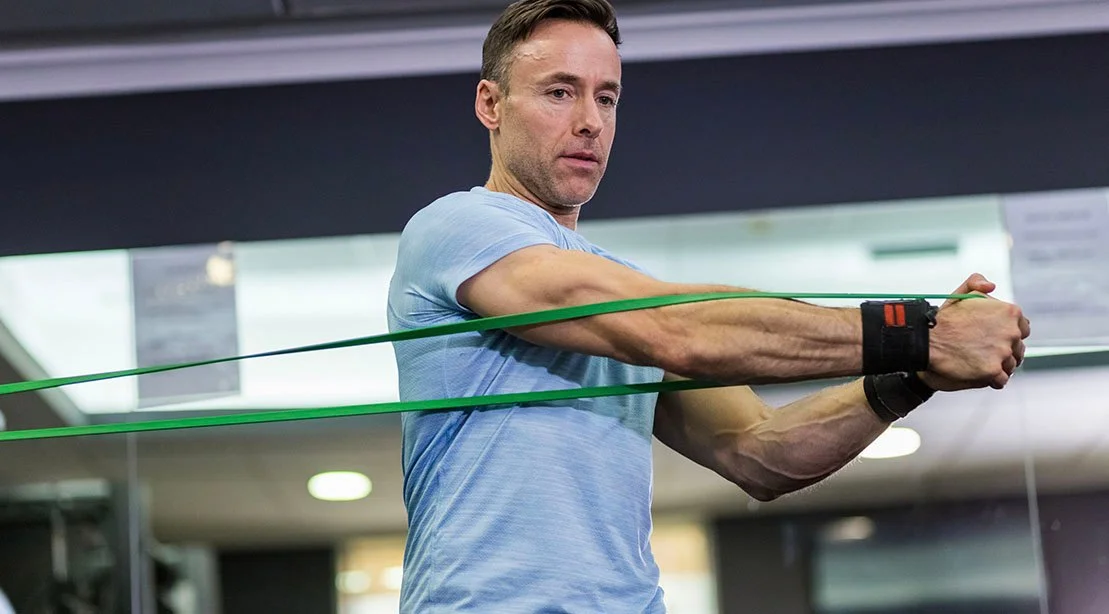
The cable wide-stance anti-rotation chop is useful because it asks the trunk to control movement while the arms travel across the body. The cable creates a rotational pull; the challenge is to let the upper back turn while keeping the pelvis and lower torso facing forward. That distinction makes this exercise a focused way to train core stability during movement.
It also makes the exercise easy to do poorly. If the hips follow the hands, the torso leans, or the lower back twists excessively, the movement loses its purpose. Start with a manageable load and treat each repetition as a test of control, not a chance to move the heaviest weight on the stack.
What the exercise trains
Stand side-on to a cable machine and pull the handle diagonally across your body while maintaining a wide, grounded stance. Unlike a conventional cable chop, the hips and lower torso stay quiet as the shoulders and upper back rotate. The abdominal muscles resist the cable’s attempt to turn the body toward the machine.
The internal and external obliques do much of that resisting. The transverse abdominis helps maintain trunk tension, while the rectus abdominis supports the torso and helps limit excessive arching through the lower back. The glutes and hip stabilizers help keep the pelvis steady, the knees aligned and the feet planted.
The shoulders, lats and upper back help guide the handle and maintain an upright posture. The hands and adductors also work to manage the cable and stabilize the stance. The exercise is therefore more than an arm pull: it asks the trunk, hips and upper body to perform distinct jobs at the same time.
Set up and perform each rep
- Set the pulley just below shoulder height. Choose a light or moderate resistance that lets you control the movement.
- Stand sideways to the machine, far enough away to feel steady tension through the rope attachment.
- Place your feet wider than shoulder-width, with your hips, knees and toes pointing forward.
- Grip the rope with your hands spread apart. Keep your shoulders relaxed, arms straight and ribs stacked over your pelvis.
- Brace your abdomen, then move your arms diagonally across your body. Let your shoulders and upper back rotate while keeping your hips and lower torso facing forward.
- Return slowly along the same path. Keep your feet grounded and maintain control against the cable’s pull.
The intended motion comes from the upper back and shoulders, while the pelvis resists turning. Your rib cage should stay down rather than flaring as you pull. Think of the hands following a smooth diagonal path, not yanking the weight from one side to the other.
Form cues and warning signs
A solid repetition has square hips, planted feet and a smooth return. You should feel the abdominal muscles working to resist rotation, with the glutes helping anchor the lower body. The upper spine can move, but the lower back shouldn’t take over the rotation.
Watch for the hips turning with the arms, a weight shift toward or away from the machine, shoulders creeping toward the ears, or a rushed return. These are signs that the load may be too heavy or that the range of motion is exceeding what you can control. Reduce the resistance, shorten the pull or both.
Keep your belt buckle pointing forward throughout the repetition. If you find yourself leaning away from the cable, reset your stance and distribute your weight evenly between both feet. If your lower back twists or arches, rebrace with your ribs over your hips and use a smaller range. The cable should challenge your position without pulling you out of it.
Common mistakes and practical fixes
Letting the hips follow the handle
When the pelvis turns with the arms, the exercise becomes closer to a standard cable chop. Keep your feet planted and your belt buckle facing forward. If you can’t maintain that position, lower the weight until you can separate the upper-body movement from the hips.
Leaning away from the machine
Leaning changes your position against the cable and can make the pull easier to manage by shifting your body. Keep your rib cage stacked over your pelvis and your weight balanced across both feet. Reduce resistance if you can’t stay upright.
Rotating through the lower back
The aim is controlled movement through the upper back, with the pelvis stable. Brace your abdomen before you move and keep your ribs over your hips. Shorten the range if your lower back starts twisting or arching to finish the pull.
Letting the cable pull you back
The return is part of the exercise: your trunk must continue resisting rotation as the handle moves toward the machine. Guide it back slowly along the same path. If you lose control, use less weight.
Why add it to a core routine?
Many core movements focus on producing motion, while others ask the trunk to resist motion. This chop combines both demands: the arms travel across the body, and the abdominal and hip muscles work to prevent the lower body from rotating along with them. That makes it a dynamic stability drill rather than a static hold.
The exercise also trains coordination between the trunk and hips. The upper back moves while the pelvis stays oriented forward, requiring the muscles responsible for movement and stabilization to work together. That separation is the central skill of the variation, and it’s more valuable than adding load before you can control it.
Because the cable applies resistance throughout the pull and return, the trunk has to keep adjusting as the handle moves. This differs from holding a fixed position, such as a side plank. The exercise can complement other core work by challenging stability while the upper body is in motion.
Programming and progression
Use the chop as an accessory exercise in an extended warm-up, after your main strength work or in a short core circuit. A practical starting point is two to four sets of eight to 12 repetitions per side, resting about a minute between sets. Keep the resistance low enough to preserve the hip position and control the return.
One circuit option pairs eight chops per side with six dead bugs per side and a 40-yard suitcase carry per side. Adjust the repetitions to your experience and strength, and keep the movement quality consistent on both sides. If fatigue makes your hips turn or your stance shift, end the set rather than forcing extra repetitions.
Progress doesn’t have to mean adding weight. First, make the diagonal path smooth and repeatable across the full range you can control. Once that’s reliable, you can try a narrower stance to raise the balance demand. Increase resistance only when you can keep the pelvis steady and return the handle without being pulled off position.
The best use of the cable wide-stance anti-rotation chop is deliberate: modest resistance, stable hips and a controlled return. When those pieces stay in place, the exercise trains the core to allow movement where you want it while resisting rotation where you don’t.


Discussion
Sign in to join the discussion.