Creatine Is Apparently Good for Everyone Now. The ...
New meta-analyses show this tried and true supp can benefit both men and women—but you still have to...
Read articleA 12-week study of adults aged 45 to 65 found creatine users gained lean tissue, including participants who skipped supervised workouts.
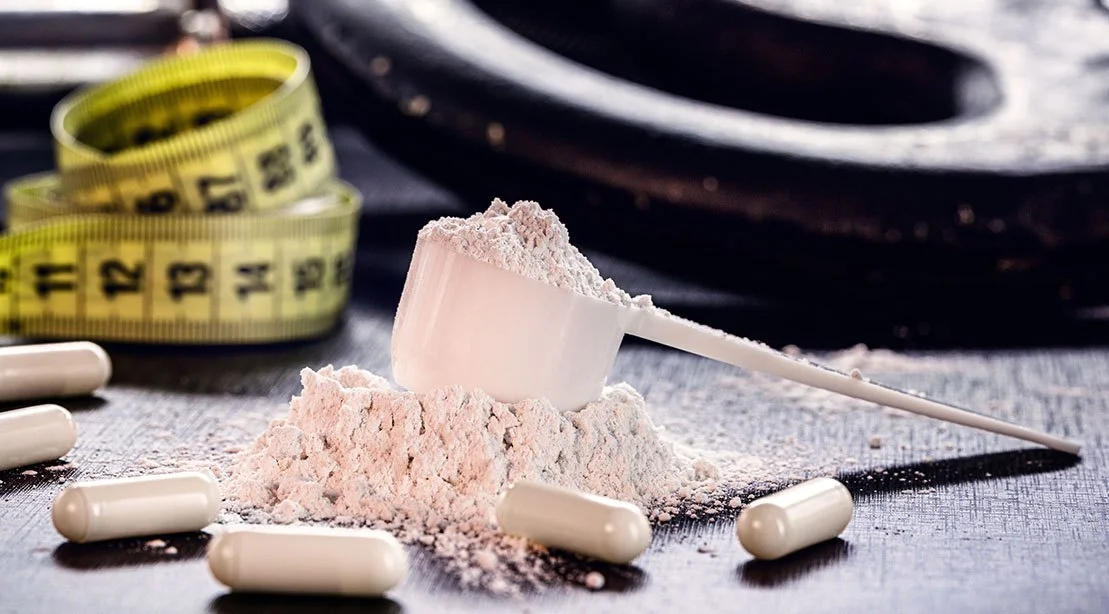
A 12-week Texas A&M University study suggests creatine may help adults aged 45 to 65 maintain or increase lean tissue, even when they aren’t following a structured exercise program. That finding speaks to a practical problem: people may know that training helps preserve muscle but struggle to exercise consistently. The results offer a possible role for supplementation in that gap, though they don’t show that creatine can replace physical activity.
The distinction matters. Participants who exercised gained more lean tissue than those who took creatine without joining the supervised program, so the study’s strongest result still points toward pairing the supplement with training. Creatine may offer support on its own, but the reported gains don’t make exercise irrelevant.
Published in the Journal of the International Society of Sports Nutrition, the study compared creatine monohydrate with a maltodextrin placebo over 12 weeks. Participants were assigned either to a supervised exercise program or to a group without organized sessions. Questionnaires indicated that people in the exercise program accumulated more moderate-to-vigorous activity, giving the researchers a way to compare supplementation with and without a planned training component.
The design helps frame the central question: does creatine appear to affect lean tissue when formal exercise isn’t part of the plan, and does training add to that effect? But the findings described here don’t provide enough detail to judge every part of the study’s methods or how well the results would apply to people with different routines, health backgrounds, or diets. A 12-week result is also a short-term snapshot.
New meta-analyses show this tried and true supp can benefit both men and women—but you still have to...
Read articleParticipants who took two 5-gram doses of creatine daily without joining the supervised program gained about 2.4 pounds of lean tissue over 12 weeks. Participants assigned to placebo lost nearly half a pound during the same period. The study report also described gains in strength and muscular endurance among creatine users who didn’t train in the program.
Those results are notable because the non-exercise group wasn’t simply being compared with people who trained harder. The comparison suggests a potential effect associated with creatine under the study conditions. Still, lean tissue is a measured outcome, and the report’s summary doesn’t establish precisely how much of the change came from muscle tissue or how long the gains might last after the study ended.
“Creatine Monohydrate supplementation without exercise training and diet intervention increased lean tissue mass, strength, and muscular endurance while promoting favorable changes in selected blood lipids, HbA1c, and selected markers of cognitive function and memory,” the report said.
The range of outcomes makes the finding broader than a simple muscle-gain claim, but the wording is measured: the report refers to “selected” markers. That doesn’t show that creatine improved every measure of health or cognition, nor does the available summary establish what those changes mean in day-to-day life.
Creatine users in the supervised exercise group gained an average of 2.8 pounds of lean mass. That group also followed a modest calorie deficit, yet participants gained nearly three pounds of lean tissue while losing fat. Exercise participants taking placebo showed little change in lean tissue.
The comparison suggests that training and creatine may work together in ways that matter for body composition. The creatine group gained more lean mass than the group taking placebo, while the calorie deficit makes the reported combination of lean-tissue gain and fat loss particularly relevant to people trying to change body composition. It doesn’t show that every person following a similar plan will see the same outcome.
Both creatine groups had a greater reduction in body-fat percentage than the study’s exercise or diet comparisons alone, according to the article. Taken together, the findings suggest creatine may help preserve muscle during fat loss, while pairing it with training produced the largest lean-mass gain. That’s a useful distinction for readers: the study presents a possible benefit without organized training, but its better result came with exercise.
Muscle loss associated with aging, known as sarcopenia, can begin around age 35. The source article says average lean mass may decline by 1 to 2 percent per year, and people who don’t do regular resistance training could lose 4 to 6 pounds of muscle per decade. Those figures help explain why results in adults aged 45 to 65 may attract interest beyond sports performance: preserving strength and muscle can affect how people manage everyday physical demands.
For that reason, the no-exercise result is more significant than it looks. It raises the possibility that creatine could support muscle-related measures for people who aren’t currently following a formal program. And yet, the exercise group’s larger gain keeps the practical message grounded: a supplement may be an option to consider, while training remains associated with the strongest result in this study.
The study authors concluded that creatine, with or without exercise and dietary intervention, “may help middle-aged and older adults maintain muscle mass and strength while favorably affecting selected markers of health and cognitive function.” The word “may” is doing real work here. The findings offer a reason for further attention, but a single 12-week study doesn’t settle how lasting or broadly applicable the effects are.
If you’re working to maintain muscle in this age range, the study points to two practical ideas: creatine was associated with gains even without organized exercise, and participants who combined creatine with supervised training gained the most lean tissue. That said, the reported results don’t answer every question about who benefits, how the outcomes change over longer periods, or what happens outside the study’s conditions. A promising signal, with limits.


Discussion
Sign in to join the discussion.