Mayo Clinic's minibeam radiotherapy shows promise in treating tough-to-manage cancers, enhancing outcomes while minimizing side effects.
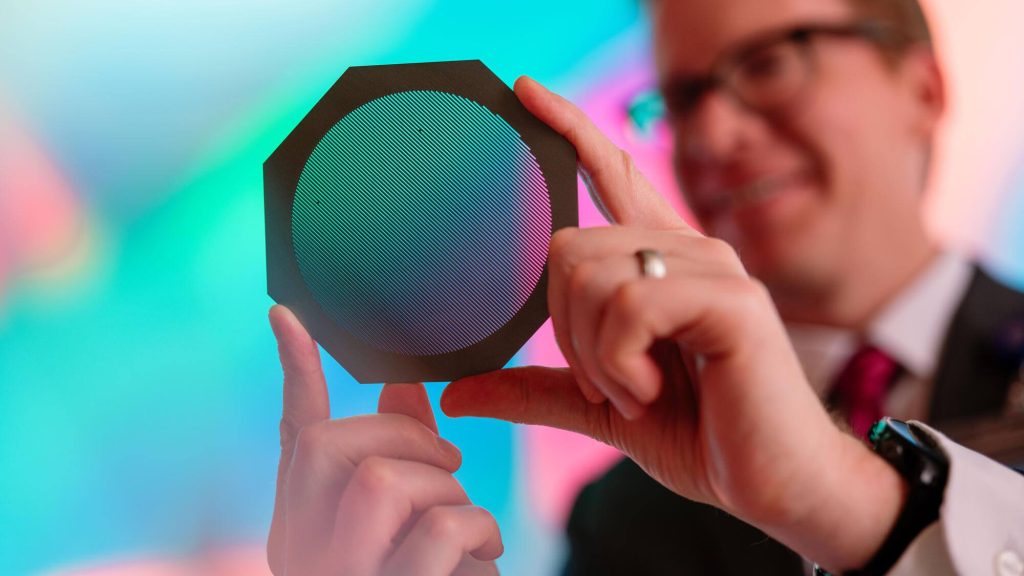
Recent research from Mayo Clinic has unveiled promising results with minibeam radiotherapy, a novel approach to addressing treatment-resistant cancers located in or near the skin. This technique administers intense radiation through narrowly spaced, minuscule beams, significantly reducing exposure to healthy tissue in between.
In their study published in the International Journal of Radiation Oncology, Biology, Physics, Mayo researchers reported that 86% of patients experienced symptom relief. Among the 40 tumors analyzed, 22.5% vanished, 25% reduced in size, and 45% remained unchanged.
Dr. Michael Grams, a radiation oncology medical physicist at the Mayo Clinic Comprehensive Cancer Center, highlighted the significance of these findings, stating, "What's encouraging is that patients were able to tolerate these higher radiation doses, even with cancers that had resisted previous treatments." Additionally, he noted potential interactions with the immune system that could enhance treatment efficacy for difficult cancers.
Transforming Radiation Delivery Methods
The essence of traditional radiation therapy is to administer sufficient radiation to eradicate cancer cells while safeguarding adjacent healthy tissue. As technology advances, precision targeting of tumors is becoming increasingly feasible.
Dr. Scott Lester, a co-author of the study, explained the obstacles presented by tumors that infiltrate sensitive areas of the body, "We want to eliminate the cancer while also promoting healing to achieve the best functional outcomes for our patients."
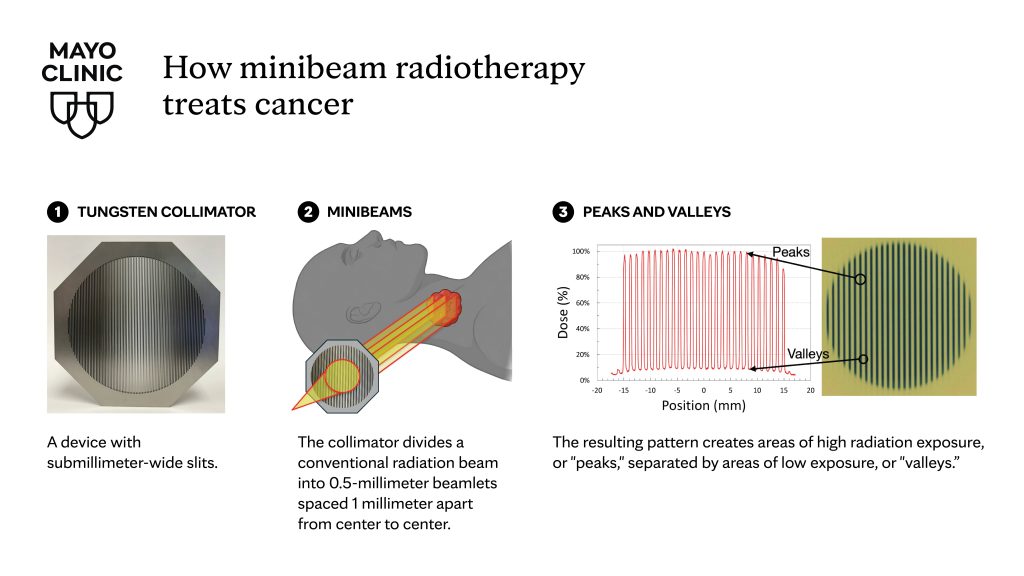
The pioneering research into minibeam radiotherapy, initiated five years ago, utilized preclinical data to refine a device known as a tungsten collimator. This apparatus segments a conventional radiation beam into 0.5-millimeter-wide beamlets spaced one millimeter apart, creating a precise pattern of high and low radiation exposure.
This targeted delivery is believed to enhance the healing ability of healthy tissue, contrasting with conventional techniques. "The treatment can be completed in just two to three sessions instead of the typical 10 to 30, which holds significant importance for patients," Dr. Grams added.
Pioneering Trials of Minibeam Radiotherapy
This clinical trial represented the first application of minibeam radiotherapy in patients, treating 36 individuals with 46 tumors. Those participating had advanced skin cancers including melanoma, squamous cell carcinoma, and soft tissue sarcomas. Notably, 90% had undergone at least two prior treatments, and all evaluated tumors had shown resistance to standard therapies.
Of the 46 tumors, 85% received minibeam radiotherapy as standalone treatment, while 15% combined it with conventional methods. A median follow-up of approximately 15 months revealed promising results: 22.5% of the tumors completely regressed, 25% shrank, and 45% remained stable, with a local control rate of 89% overall after 12 months.
Alongside these impressive results, patients also reported significant improvements in their quality of life, including reductions in pain and the ability to resume everyday activities. Dr. Kimi Chauhan, a radiation oncology resident at Mayo Clinic, noted, "The study suggested a compelling benefit to quality of life for patients... restoring daily physical functions."
Despite higher doses of radiation, patients experienced fewer side effects, suggesting that minibeam therapy might support tissue healing while targeting cancer more effectively. "This treatment appears especially relevant for complex cases with limited conventional options," Dr. Lester explained.
Exploring the Immune Response
An intriguing aspect of the research involved unexpected interactions with the immune system. Remarkably, 11% of patients demonstrated a response in cancer situated outside the treated area, an event known as the abscopal response. This phenomenon occurs when localized radiation influences tumors elsewhere in the body.
Dr. Robert Mutter, who oversees research in the Department of Radiation Oncology, remarked on this potential paradigm shift, stating, "Our results suggest that you don't necessarily need to treat the entire tumor with an ablative dose. We may be able to exploit the distinct ways that tumors die after minibeam radiotherapy to personalize treatment and invigorate the immune response against cancer."
Future Directions for Minibeam Radiotherapy
Mayo Clinic's research team is intensifying efforts to understand the underlying mechanisms of the immune response and identify patients who may benefit most from this therapy. They are currently conducting a phase 1 clinical trial aimed at testing escalating doses of minibeam radiotherapy.
Plans are in motion to explore the combination of minibeam therapy with immunotherapy for early-stage breast cancer and its application during surgery for unresectable pancreatic tumors.
Dr. Grams concluded by emphasizing the role of minibeam radiotherapy as a potential treatment option for challenging cancer cases, stating, "The focus now is to determine where it can have the greatest impact for our patients."
For more about this study, including details on methodology and funding, visit the full research article.


Discussion
Sign in to join the discussion.