Hi-Tech Pharmaceuticals’ Testosterone 21 pairs four ingredients with a two-tablet, twice-daily serving and the company’s Cyclosome delivery system.
What Testosterone 21 is selling
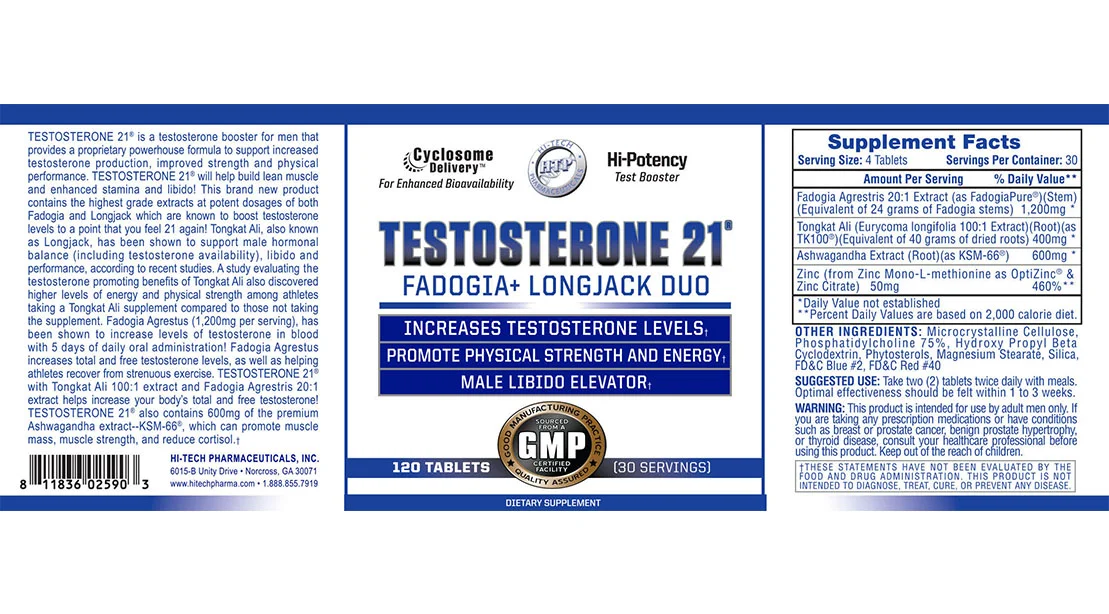
Testosterone 21 brings four familiar ingredients in men’s health supplements into a single tablet regimen: Fadogia agrestis, Tongkat Ali, KSM-66 ashwagandha extract and zinc. Hi-Tech Pharmaceuticals says its Cyclosome delivery system is designed to aid absorption. The product is aimed at men interested in testosterone support and physical performance, but that positioning reflects the company’s marketing, not proof of a guaranteed result. A supplement’s intended use and its demonstrated effects are separate questions.
Four ingredients, different roles
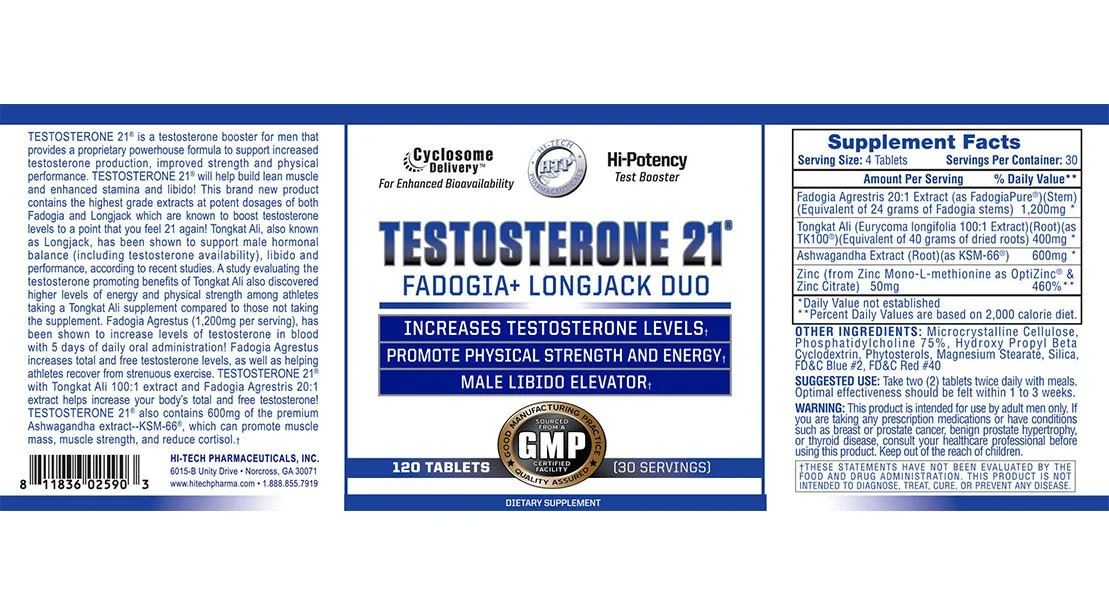
Fadogia agrestis is a shrub native to parts of Nigeria. Its stem has been used in traditional folk medicine, including as an aphrodisiac associated with sexual desire and erectile dysfunction. Traditional use can help explain why an ingredient appears in a supplement, but it doesn’t by itself establish that a modern product produces the same effects. The source article places Fadogia alongside Tongkat Ali, also known as Eurycoma longifolia or Malaysian ginseng, in products marketed for physical performance and muscle growth.
Tongkat Ali’s presence gives the formula another ingredient familiar to consumers shopping for performance-oriented supplements. Here, though, the source provides no ingredient amounts or finished-product results that would let readers assess how much each component contributes. That leaves the product’s broad positioning easier to understand than its expected effect.
Ashwagandha has a longstanding role in Ayurvedic medicine as an adaptogenic herb, traditionally used to help the body manage physical and mental stress. Testosterone 21 contains KSM-66, an ashwagandha extract that the company describes as extensively studied. The source also associates ashwagandha with cortisol, attention and testosterone support, but it doesn’t identify studies or explain how those associations apply to this particular formula. The distinction matters: research on an ingredient doesn’t automatically establish the performance of a product containing it.
Zinc plays a role in testosterone synthesis, particularly when a person is deficient. It also contributes to normal prostate function, protein synthesis, wound healing and immune cell activity. Those functions help explain its place in men’s health products. They don’t show that adding zinc will produce a noticeable change for every user, especially when the source doesn’t state the amount in each serving.
Serving schedule and delivery claims
The suggested serving is four tablets per day: two tablets twice daily with meals. Hi-Tech says a bottle lasts 30 days at that serving. That schedule is a practical part of the pitch, but it also means the product asks users to keep up a regular routine rather than take a single daily capsule. If you’re comparing supplements, serving size and ingredient amounts are useful details to check together; the source doesn’t provide those amounts here.
The company says users may notice benefits within three weeks, but the source provides no supporting study or details about how that timing was measured. That’s a specific expectation, and it deserves context. Without information about the people studied, the outcome measured or whether the finished product was tested, readers can’t tell what the claim means for them.
Cyclosome is the company’s name for its oral delivery system. Hi-Tech describes it as encapsulating hydrophobic compounds in water-soluble cyclodextrin complexes within liposomes, with delivery through the intestinal lymphatic system. The company says this approach can limit breakdown in the stomach and liver and speed absorption. Those are product claims; the source doesn’t include comparative data on absorption or outcomes. Here’s the thing: a technical description can explain how a company says a system works, but it doesn’t show how much that system changes the result for a user.
How to read the evidence
The source leaves several questions open: it doesn’t list ingredient amounts, provide clinical results for the finished product or give details about who should avoid it. That limits how much a reader can conclude from the article. Familiar ingredients and a named delivery system may make the formula sound well specified, yet the missing information makes it difficult to assess the strength of the overall case. This is more significant than it looks.
For consumers, the difference between a product claim and evidence about the finished formula is central. Studies or traditional use involving individual ingredients may not answer whether this combination, at its specific serving, produces a meaningful effect. And this is the part most people overlook: absorption claims don’t tell you on their own whether a product improves testosterone or performance.
Where it fits in a health routine
The product is presented as an addition to nutrition, training and recovery, alongside nutrients such as vitamin D and omega-3s. That reflects the company’s pitch, rather than evidence in the source that Testosterone 21 improves health or performance. Supplements can sit within a broader routine, but they don’t replace the basics named in that positioning. A supporting role, at most.
Anyone considering a dietary supplement should discuss it with a qualified healthcare provider, particularly if they take medication or have an existing health condition. That conversation can help put the product’s ingredients and intended use in the context of a person’s own health. The product’s label states that its claims haven’t been evaluated by the Food and Drug Administration and that it isn’t intended to diagnose, treat, cure or prevent disease.
Product details and ordering are available from Hi-Tech Pharmaceuticals.
This article is for informational purposes only and doesn’t constitute medical advice. Consult a qualified healthcare provider before starting a vitamin, herbal or dietary supplement regimen, especially if you’re pregnant, nursing, taking medication or have an existing health condition.



Discussion
Sign in to join the discussion.