Eastwood still surfs and trains martial arts, but now prioritizes recovery and mobility to stay ready for the activities he enjoys.

Scott Eastwood still wants the physical challenge. What’s changed at 40 is how he prepares to meet it: strength now has to come with mobility, recovery and a body that can keep up with surfing, martial arts and demanding film work.
That shift has taken shape over the past five years. Eastwood says he pays more attention to recovery than he did in his 20s and 30s, when hard training and soreness were easier to treat as routine. “I listen to my body more and take more care in my recovery than I ever did in my 20s or 30s,” he told M&F.
The aim isn’t to train less seriously. It’s to stay capable across a wider range of activities, without turning every session into a test of toughness. “Obviously I want to be strong, but I also want to be really flexible and limber and be able to react to whatever the world throws at you, where you’re not going to pull something or you’re not going to hurt yourself.”

Training for movement, not just muscle
Eastwood’s workout structure has moved away from the bodybuilding split he once used, with separate days for chest, back and other muscle groups. He now favors sessions that engage the whole body, with added attention to his core. For him, that focus connects directly to how his body feels: he says many of the things that feel better “kind of stem out from your core.”
When he isn’t filming, he generally lifts three or four times a week, dividing those workouts between the gym and home. He also tries to practice Muay Thai or jiujitsu, and yoga has become a daily fixture. Some days, he does about half an hour in the morning and another session later on.
Work changes the equation. A 6 a.m. call time can mean getting to the gym at 5, while a long production day may already demand hours on his feet and physical effort. In those stretches, training becomes maintenance rather than a bid for progress. “You’re spending a lot of time on your feet, and it’s typically physical,” he said. “So you’re kind of just doing a little more maintenance when you’re working. You’re not getting the gains that you might get if you’re not working.”
That’s a practical adjustment: when the job itself draws on his energy, a workout doesn’t need to add strain simply to prove he can push harder. Eastwood still makes time to move, even on packed days. If he has just 25 minutes, he’ll use it for exercise, yoga or mobility work.
Surfing and martial arts set the standard
The measure of Eastwood’s fitness isn’t limited to what he can lift or how he looks. Surfing, hiking and martial arts each ask for a different mix of strength, balance and movement. A stiff body can make surfing harder; limited mobility can become a problem on the mat. Persistent soreness can also intrude on activities he wants to enjoy.
“If I want to continue to do jiujitsu, and I want to do Muay Thai, and I want to continue to surf, I’ve got to take care of my body,” Eastwood said. “Which means strength, flexibility, and mobility. I’ve got to kind of do all these things, or my body is going to get trashed doing these sports.”
He hasn’t lost his appetite for risk or challenge. He’s become more selective about how he takes them. Chasing a massive wave or choosing the hardest possible opponent may once have seemed like an obvious way to test himself. Now, the challenge still matters, but those choices no longer have to serve as proof of toughness.
Asked what matters more physically now than it did at 25, Eastwood pointed to flexibility and pain. “If you can take care of your body where you’re not in pain all the time, that’s really valuable.” His standard for fitness has shifted toward what his body lets him do and how it feels while doing it.
Sleep is part of the training plan
Recovery for Eastwood includes yoga, sauna sessions and Epsom salt baths, all of which have been part of his routine for years. Sleep has taken on greater importance as his work and training demands have changed. “Just getting a good night’s sleep, I value it so much more now,” he said.
Film-set days can run 10 to 15 hours, requiring focus and energy as well as physical effort. Eastwood says a poor night’s sleep quickly affects his ability to do the job. “I can’t do the job that I do well and focus if I haven’t had a great night’s sleep.”
His diet follows a Mediterranean-style pattern, with whole foods such as fish, red meat, grains and plenty of vegetables. He doesn’t treat occasional chips or dessert as a failure of discipline. “I don’t make it some hard and fast rule that you have to do,” he said. “I just think those just get a little too rigid.”
That preference for keeping routines simple also informed his decision to become a co-owner of North Performance. Eastwood and longtime friend Mike Lucas had both found it inconvenient to manage individual supplements while traveling. He describes the products as support for the basics, not a substitute for them: “You still have to work out. You have to get good sleep and have good recovery. Having good supplements is just going to help those things. The basics are the basics. They don’t change regardless.”
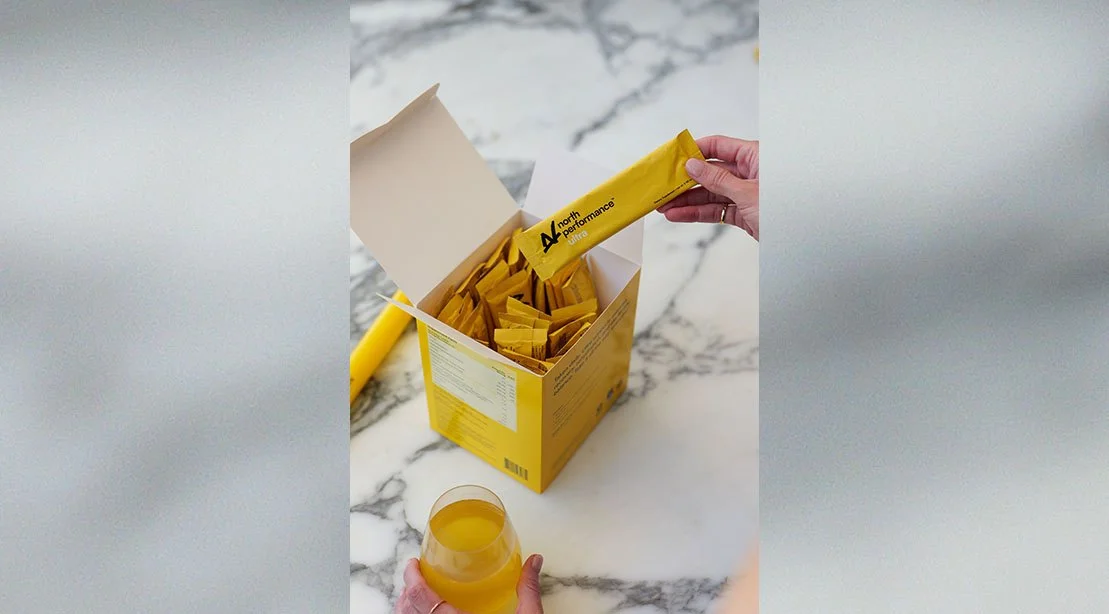
When he’s filming, North is part of his morning routine, but his priorities remain food, movement and recovery. The supplement is, in his words, “extra credit.” The foundation is the work he can fit into real life, whether that means a full session or a short block of mobility before the day takes over.
A different definition of fit
Eastwood’s latest film, Lucky Strike, is streaming on Hulu, and filming is one reason his routine has to adapt. The bigger point is that his approach now serves what he wants to do outside work, too. Strength still matters, but it has to support movement, flexibility and enough durability to keep surfing and training.
His view of fitness is less tied to appearance than it once was. “I think fit is more how you feel and less aesthetic,” he said. “[Looking good] is great, but if you’re in pain because you’re not doing it correctly, then who gives a shit about what you look like?”
For Eastwood, the next decade’s goal is to stay strong enough to be useful, mobile enough to move well and recovered enough to keep saying yes to the activities he enjoys. The real test of his routine won’t be a single workout. It’ll be whether he can keep showing up for the things that make him feel capable.

Discussion
Sign in to join the discussion.