Jefferson curls can build control and strength through spinal flexion, but light loads, careful progression and the right lifter matter.

The Jefferson curl asks lifters to control a position many strength programs train cautiously: a rounded spine under load. That can make it useful for athletes who need strength and mobility through spinal flexion, but its value depends on the lifter, the load and the reason for doing it. For most people, it’s an optional mobility drill with a narrower margin for error than more familiar exercises.
The movement involves slowly rounding the spine, segment by segment, while holding a light weight. It isn’t a test of how far you can reach or how much weight you can lift. Its purpose is to practice controlled flexion while the hamstrings, spinal erectors and other tissues along the back of the body are under tension.
What the movement trains
In many lifts, a stable trunk helps transfer force and protect technique. But the spine also bends during ordinary tasks and sport. Avoiding flexion in training doesn’t automatically prepare someone to control it when reaching, climbing, dancing or moving through other varied positions.
The Jefferson curl provides a way to practice that range deliberately. A slow descent and return can help a lifter notice how the spine moves, where mobility is limited and whether control fades as the range deepens. The exercise also loads the posterior chain across a longer range than many conventional strength movements.
That doesn’t make loaded spinal flexion essential. Strength coach Matt Wenning argues that most lifters can build the ability to generate, transfer and resist force while keeping the trunk stiff through other exercises. His point is practical: if the training goal doesn’t require loaded end-range flexion, there may be a more specific and controllable way to reach it.
How to perform a Jefferson curl
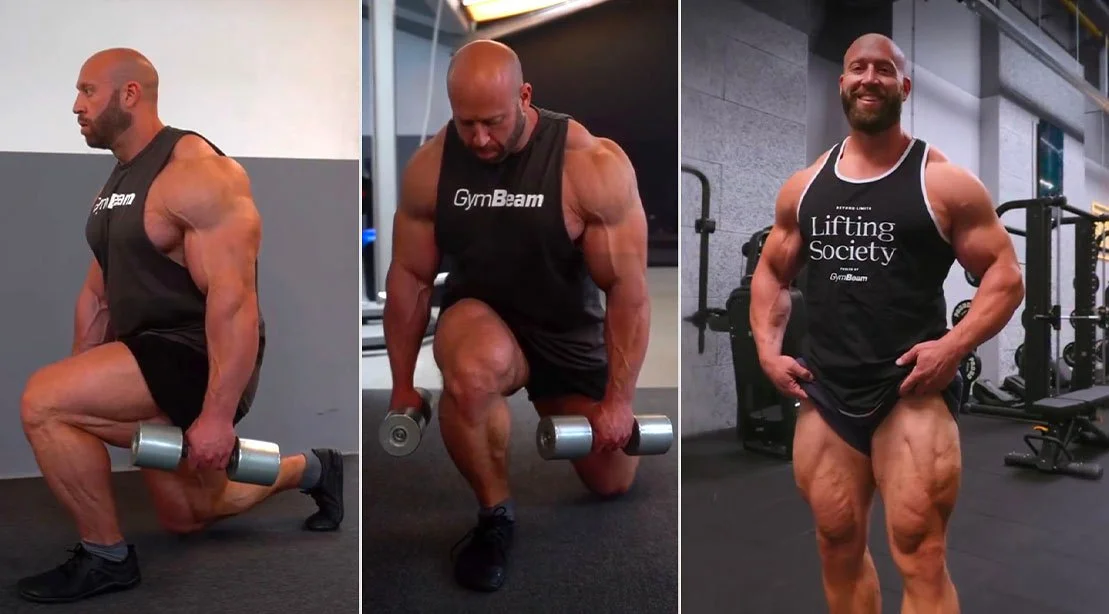
Start on a low, sturdy platform with feet roughly hip-width apart. Hold a very light dumbbell, kettlebell or barbell in front of you. Tuck the chin slightly, then round forward gradually, beginning through the upper back and continuing down the spine. Let the weight travel toward the feet, and stop at the deepest position you can control comfortably. Reverse the motion slowly until you’re standing tall.
The aim is smooth movement, not maximum depth. If the movement becomes abrupt, painful or difficult to control, reduce the range or stop. Adding weight should come only after the pattern is familiar, and the exercise should never turn into a strength test.
Physical therapist Bo Babenko recommends beginning with three to five repetitions and 15 to 20 pounds, treating the load as a stretch rather than a challenge. He suggests taking two or three deep breaths at the bottom, with a long exhale. The exercise can go after the main strength work or in a mobility session. The guidance provided is one to two sessions per week, with 90 seconds of rest between sets.
Where the benefits may lie
For lifters who tolerate the position well, the main draw is exposure to controlled spinal flexion. The exercise asks the spine to move in segments rather than as one rigid unit, which may improve body awareness and give athletes more options for managing their posture and movement.
It also combines mobility with active control. Passive stretching can increase how far a person moves; a Jefferson curl adds the task of producing and controlling force in that range. That distinction may matter to gymnasts, climbers, dancers and other athletes whose activities involve spinal flexion.
The movement can also make limitations easier to spot. Restricted hamstrings, a loss of control or a tendency to chase extra depth may show up quickly. That can inform training, though the exercise isn’t a substitute for a clinical assessment.
Babenko sees a place for the curl as a way to stretch the posterior chain and, in his words, “decompress the spine.” That’s one expert’s view of the exercise’s role; its benefits should be understood as potential training effects rather than established outcomes for every lifter.
The risks depend on the dose
Flexion itself isn’t automatically harmful, but repeated or prolonged flexion can change how passive tissues contribute to spinal support. A study published in 2013 found that 20 minutes of full lumbar flexion altered passive tissue contributions and increased the demand on spinal extensor muscles afterward. That exposure is quite different from a few slow repetitions, yet it illustrates why duration and total workload matter.
There’s no direct research establishing that Jefferson curls improve athletic performance, prevent low-back injuries or outperform other mobility and strength options. Wenning says evidence for those claims is insufficient. A 2023 study comparing spinal flexion and extension exercises with movements involving more trunk motion found improvements in spinal flexibility, including finger-to-floor distance. It supports the idea that spinal movement can be trained, but it doesn’t establish that Jefferson curls are the best way to do so.
Load, range, fatigue and volume can all raise the stress of the exercise. Babenko describes a patient who developed back pain after trying to build up to well over 150 pounds on Jefferson curls. That example captures the problem: a drill intended for light, controlled movement loses its purpose when someone keeps adding weight.
Who may benefit, and who should avoid it
Experienced lifters with good body awareness may consider Jefferson curls if they want to build posterior-chain mobility or need controlled spinal flexion for their sport. They should be able to maintain control through basic movements before adding a loaded version of this more demanding drill.
Beginners may be better served by learning fundamental movement patterns first. Wenning questions the value of deliberately loading spinal flexion for people who already struggle to control spinal position under load. For lifters whose goals can be met with hamstring stretches, hip-hinge drills or Romanian deadlifts, those options may offer a more straightforward route.
People with acute low-back pain, symptoms that worsen with flexion, numbness or tingling, pain that radiates down the leg, or a history of flexion-sensitive back problems should avoid the exercise unless a qualified clinician has advised otherwise. Anyone who tends to turn every movement into a weight challenge should also leave this one out.
A specialized option, not a default
The Jefferson curl offers a specific training effect: controlled movement through spinal flexion under light load. That can be useful for some healthy, experienced athletes, but the evidence doesn’t support treating it as a must-have for general strength or back health. Simpler exercises can address many of the same mobility goals.
My read is that the exercise earns its place when there’s a clear reason to train this range and the lifter can keep the load modest. Start with control, progress slowly and judge the drill by whether it serves a real training need. Flexion is part of human movement; the practical skill is knowing when and how to train it.

Discussion
Sign in to join the discussion.