Brett Wilkin shared two high-effort finishers: a no-rest chest superset and hack squat dropsets to close out leg day.
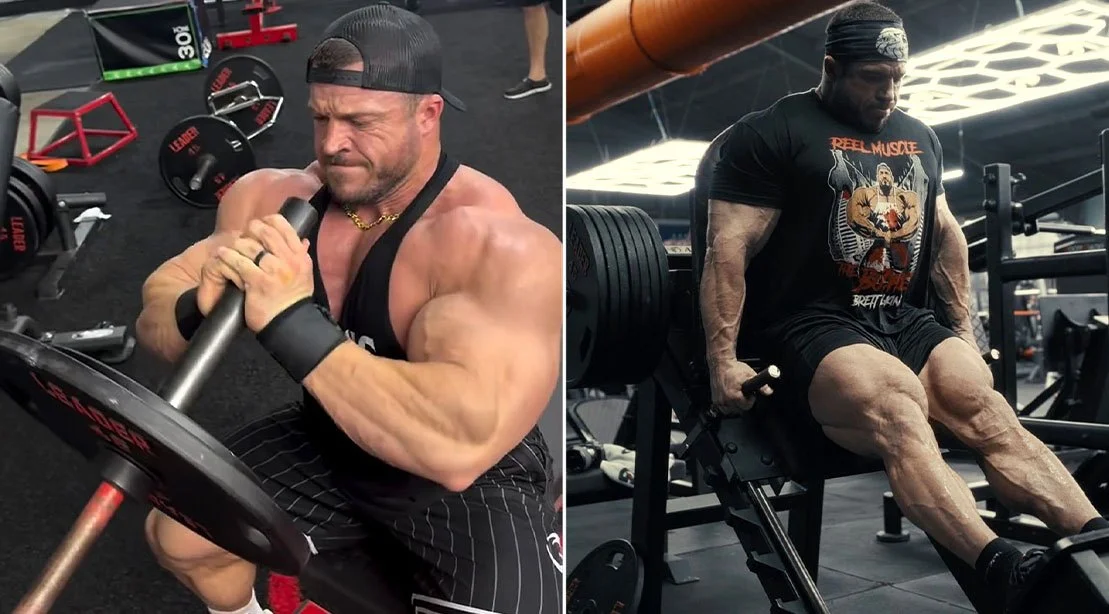
Brett Wilkin’s finishers show how he adds intensity at the end of upper and lower body sessions: a no-rest chest superset and hack squat dropsets pushed toward failure. The 2024 IFBB Legion Pro winner and 2025 Mr. Olympia finalist shared the routines on Instagram as he works to add muscle. The clips offer a glimpse of how he extends a session after its main exercises, when fatigue is already part of the equation.
Both sequences are designed to extend a workout after its main work. Wilkin alternates a superset for his chest with dropsets for his legs, using each finisher to keep effort high as he approaches failure. The methods differ, but they share a practical aim: keep the target muscles working while making the final portion of training more demanding. That’s a training choice, not a universal prescription; a finisher that suits a competitive bodybuilder may be excessive for someone whose weekly workload or recovery needs are different.
A chest superset with no pause
Wilkin starts with standing cable flyes, taking the set to failure before moving straight to landmine presses. “Stretching it out big to start, then pumping out the inner and upper chest for complete balance,” he said, describing the sequence to his more than 170,000 Instagram followers. He called it simple and effective. The order matters: the flyes place the chest under tension through a wide arc, then the pressing movement asks the chest and arms to continue working without a recovery break.
The pairing shifts the demand across the chest and arms without a rest break. Cable flyes work the shoulders and upper and lower chest, with some biceps involvement; a two-handed landmine chest press recruits the triceps more heavily. Wilkin, known to fans as “The Butcher,” uses the fly for a stretched position, then presses to finish. Here's the thing: moving immediately between exercises makes the sequence feel intense, but it also means the press begins with the chest already tired. That can limit the load or repetitions a lifter can manage, so the goal here appears to be accumulated effort rather than a fresh strength test.
A cable fly lets the hands travel apart and back together against resistance, while the landmine press follows a more fixed path set by the bar and its pivot. That difference gives the two movements distinct sensations and demands. It also helps explain the appeal of pairing them: one emphasizes a broad, controlled movement, and the other adds a pressing action that brings the triceps further into the work. There’s no need to treat the combination as a secret formula. It’s a straightforward way to extend a chest session.
Hack squat dropsets close leg day
For his lower body, Wilkin relies on hack squat dropsets. He has joked that dropsets build character, adding that he rarely sees other gym-goers use them. They remain a regular way for him to finish leg training. In a dropset, the lifter reduces the weight after reaching the point where another repetition is difficult, then continues with the lighter load. The short transition keeps the set going as fatigue accumulates.
Wilkin lowers deeply into each hack squat rep to work his quads and hamstrings. Once he reaches his limit, he takes only the time needed to remove plates, then starts again. He combines the changing load with controlled tempo and pushes through the final reps while breathing hard. The machine supports the movement along a set track, which makes it possible to focus on repeated knee and hip flexion as the load changes; it doesn’t remove the need to control each repetition, particularly when fatigue makes the movement harder.
That pairing of limited rest and deliberate reps is the point: both finishers keep the target muscles working as fatigue builds. Wilkin’s approach offers a clear template for advanced lifters who want a demanding end to a chest or leg session. But the clips don’t provide a full program, including the number of sets, the loads used, or how often he repeats the work. The useful takeaway is the structure, not a claim that everyone should copy the exact effort shown.
What the finishers suggest
This is more significant than it looks as a snapshot of training priorities: Wilkin is using finishers to add work after the central lifts, not presenting them as a replacement for the rest of the session. For bodybuilders, that distinction matters because a short, intense ending can make a workout feel complete while still depending on the larger program for its progression and balance. A social media clip captures the visible effort; it can’t show the full training plan or recovery context behind it.
If you're working in this space, the practical question is whether a finisher serves the session’s purpose and whether you can keep your form steady as fatigue rises. A no-rest superset and a dropset both compress recovery, so they can make a modest amount of work feel unusually taxing. And yet, the appeal is easy to understand: a clear sequence, a simple change in exercise or load, and a hard endpoint. (And this is the part most people overlook.) The final minutes may draw attention, but their value depends on what came before them.
For Wilkin, the routines fit the stated goal of adding muscle and his willingness to push sets toward failure. For other lifters, the lesson is more measured: finishers are tools, and intensity alone doesn’t tell you whether a workout is well designed. The hard part. Making the effort fit the plan.

Discussion
Sign in to join the discussion.