Hand placement shapes bar control, joint comfort and lifting mechanics. Find practical grip setups for presses and squats, and signs it’s time to adjust.
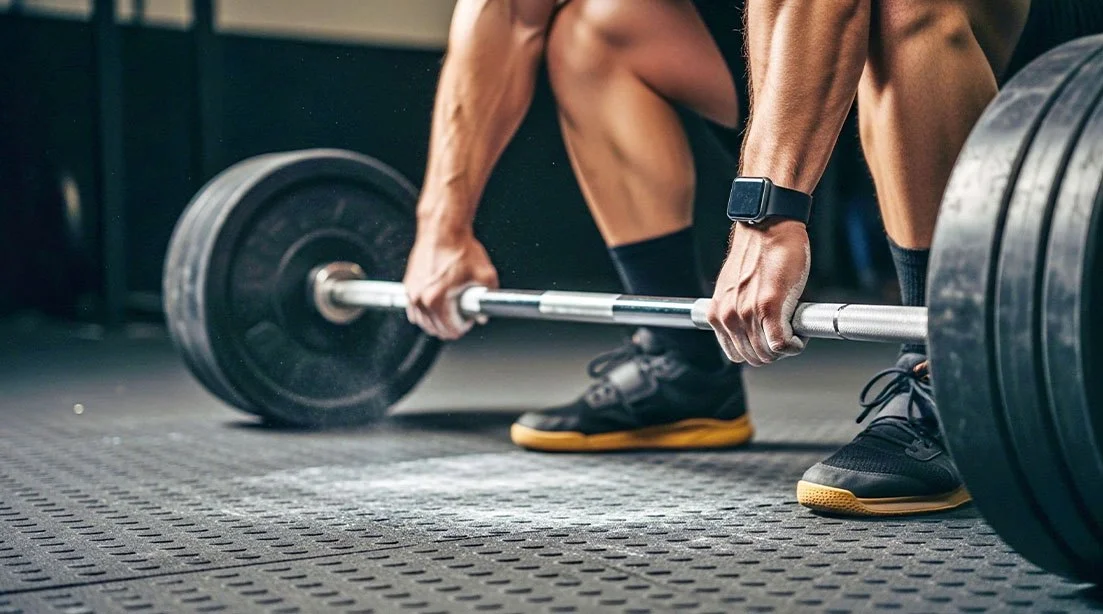
Grip is part of the setup, not a detail to fix after a lift starts to feel wrong. Where your hands sit can change how the bar lines up with your forearms, where your elbows travel, how stable the load feels and how much range of motion you use. A useful grip supports the lift while keeping discomfort from becoming the main thing you notice.
There isn’t one hand position that works for every lifter. Arm length, shoulder and wrist mobility, and training goals all affect what feels strong and sustainable. That’s especially relevant in presses and squats, where grip can be easy to overlook even though it influences the rest of the setup.
Bench press: balance bar control and shoulder comfort
The bar should rest toward the heel of your palm, with your hand, wrist and forearm working as a stable line. When the bar sits too close to your fingers, the wrist may bend back under the load. A better stack helps keep the bar supported by the forearm and gives you a steadier starting point.
For width, placing your pinky around the bar’s ring is a practical starting position. At the bottom of the rep, check whether your forearms are close to vertical. From there, adjust according to how your shoulders feel and what you want the lift to emphasize.
A wider grip shortens the bar’s travel and shifts more emphasis toward the pecs. It also places the shoulders in greater abduction, which some lifters tolerate well and others find uncomfortable. A narrower grip lengthens the movement and asks more of the triceps, as the elbows stay closer to the torso and the triceps work through a deeper stretch. Neither width is automatically preferable; the useful choice is the one that suits your body and purpose.
Most lifters should start with the thumb wrapped around the bar. That full grip gives you more security. Some find a thumbless grip more comfortable, but it provides less control if the bar shifts. Consider it only with that tradeoff in mind.
Overhead press: keep the bar over the forearms
The overhead press calls for the same basic idea: place the bar toward the heel of the palm so the load stays supported by the forearm. The wrist doesn’t have to be perfectly straight; some extension is normal. The aim is to prevent the bar from rolling so far back that the position becomes uncomfortable.
A grip just beyond shoulder width is a sound place to begin. Too wide can reduce leverage and shorten the press. Too narrow can leave the elbows and shoulders crowded at the bottom. Look from the front: your forearms should be close to vertical, and your elbows should sit slightly ahead of the bar.
As with the bench press, the full grip offers the most security and is a sensible default. A false grip may reduce wrist bend for some people, but it also makes the bar less secure. Choose the position that lets you keep a stable wrist and forearm line and press without irritating your shoulders or elbows.
Back squat: secure the bar without loading the wrists
Your hands don’t carry the squat’s main load, but they help secure the bar and build tension across the upper back. A thumbless grip, with the thumb resting alongside the fingers, can make it easier to keep the wrists aligned with the forearms. That alignment helps keep the hands from taking pressure that should be supported by your back.
A narrower grip may help pull the shoulder blades together and make the bar feel more locked in place. But forcing your hands closer together can backfire if your shoulders don’t have the mobility for it. The resulting position may irritate your wrists, elbows or shoulders.
Instead, find the narrowest width you can hold comfortably while keeping your upper back tight, your wrists aligned, your elbows comfortable and the bar secure on your back. If your wrists or the inside of your elbows start to ache before the squat itself, try moving your hands a little wider. The goal is a firm shelf for the bar, not a grip that turns into its own source of strain.
Front squat: choose how your hands support the rack
In the front squat, the bar should rest securely across the front of your shoulders. Your hands help keep it in position, but they don’t have to use a single prescribed grip. Three common setups offer different balances of mobility and control.
- Clean grip: This traditional front-rack position puts the fingers under the bar, with the elbows held high and the bar resting across the shoulders. Limited wrist or shoulder mobility, or tight lats and triceps, can make it difficult to reach.
- Cross-arm grip: Cross your arms in front of your body and place your hands on top of the bar. This option asks for less wrist and shoulder mobility, though it gives you less bar security than other setups.
- Strap-assisted grip: Loop lifting straps around the bar and hold their ends like handles. This lets you keep your elbows high without forcing your wrists into an uncomfortable position, and it can offer more control than the cross-arm setup.
Choose the option that lets the bar stay secure while your elbows remain high and your torso upright. There’s little value in forcing a clean grip if it prevents you from holding a sound front-rack position.
Four checks for a grip adjustment
Use the lift itself to judge whether your hand position is working. Four questions can help:
- Do your joints line up comfortably? Your wrists, elbows and shoulders should settle into positions you can maintain without fighting the setup.
- Does the grip cause irritation? If your wrists, elbows or shoulders complain, try changing the width, switching between a full and false grip, or choosing another front-squat setup.
- Can you control the bar and produce strength? A grip that improves control and lets you lift confidently, while keeping your technique, may be a better fit.
- Does the grip preserve your intended range of motion? If it cuts the movement short or pulls you into a poor position, it may need changing.
Make one small adjustment at a time and pay attention to the whole lift. The right grip should help you stay stable and express your strength, while keeping the bar secure and your joints comfortable. It’s a practical setup choice, and your own mechanics are a better guide than forcing every lift into the same hand position.

Discussion
Sign in to join the discussion.